Tehran’s Wartime Murals Turn City Walls Into Canvas of Defiance Amid Iran–US–Israel Conflict
Web Desk April 22, 2026Tehran: Since the outbreak of conflict involving Iran, Israel, and the United States, striking new murals have appeared across Tehran and other major Iranian cities, transforming public walls into powerful visual narratives of resistance, ideology, and wartime defiance.

Tehran: Since the outbreak of conflict involving Iran, Israel, and the United States, striking new murals have appeared across Tehran and other major Iranian cities, transforming public walls into powerful visual narratives of resistance, ideology, and wartime defiance.
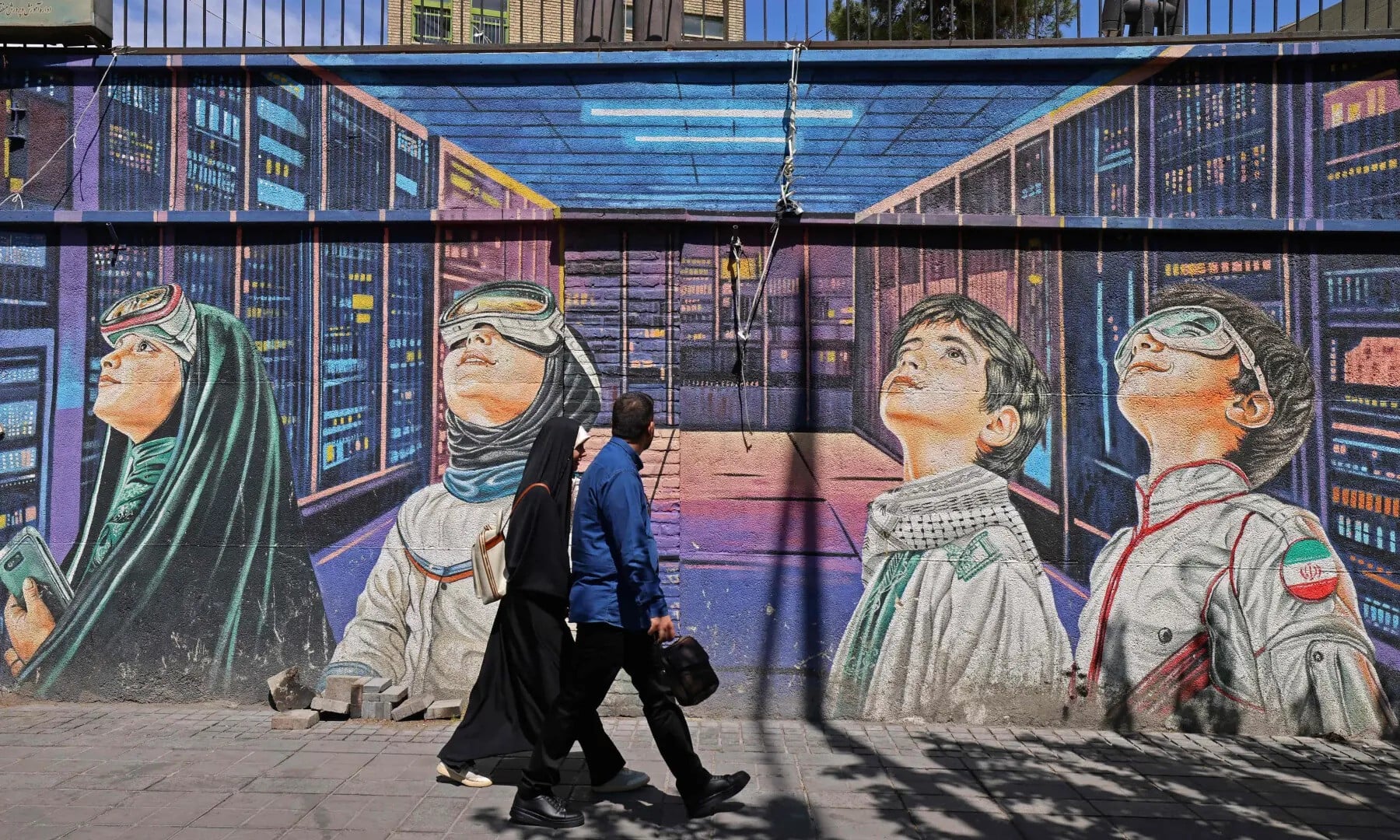
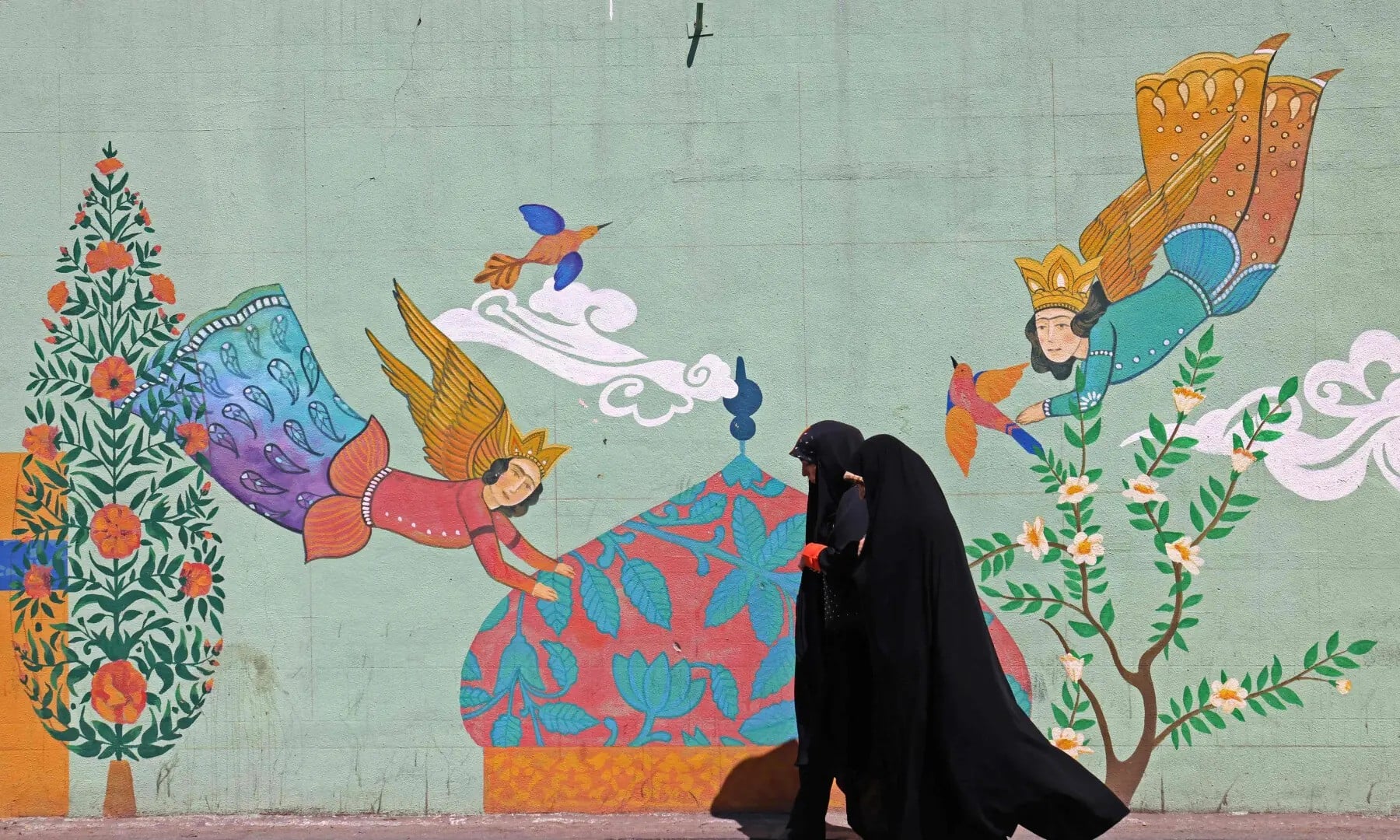
The murals—many of them large-scale and highly symbolic—reflect long-standing traditions in Iran where public art is used as a tool of political expression and state messaging. In the capital, especially in central squares and major roadways, these visual displays have historically mirrored the country’s political identity since the 1979 Islamic Revolution.
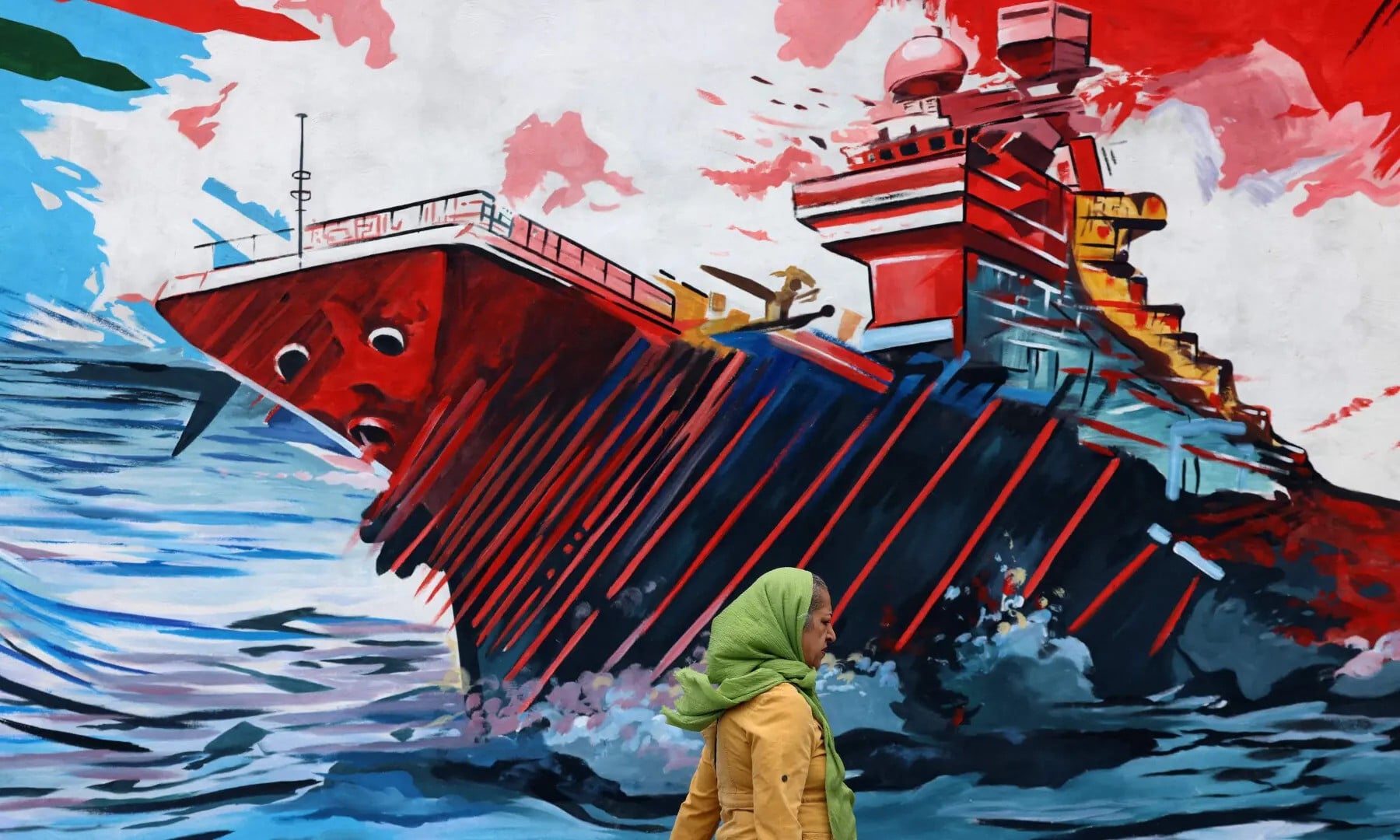
Recent installations across Tehran depict vivid wartime themes. One prominent mural shows a US aircraft carrier carrying rows of coffins draped in American flags, encircled by Iranian-flagged boats and military helicopters. The imagery underscores maritime confrontation in the region, particularly as tensions continue around the strategic Strait of Hormuz, a vital global energy corridor.
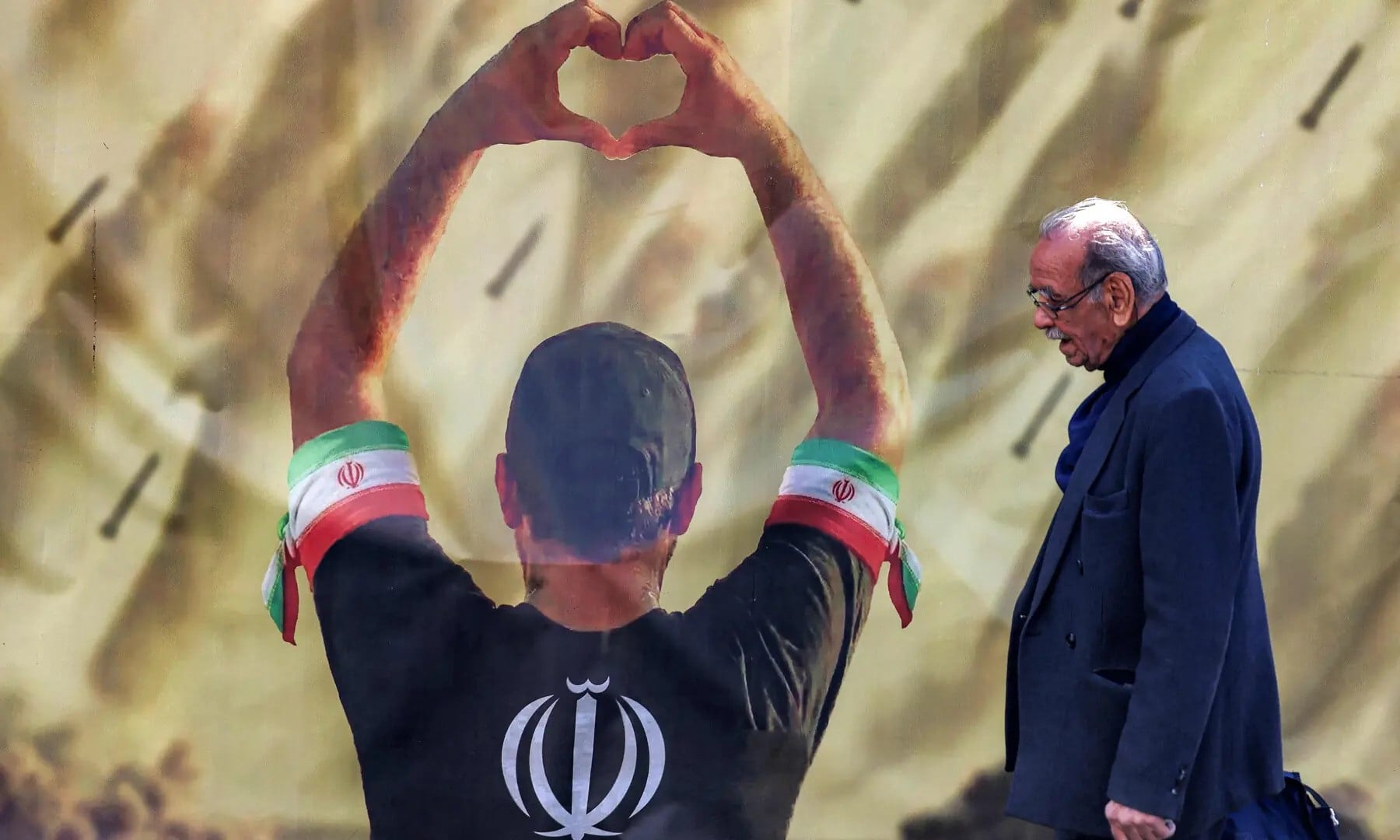
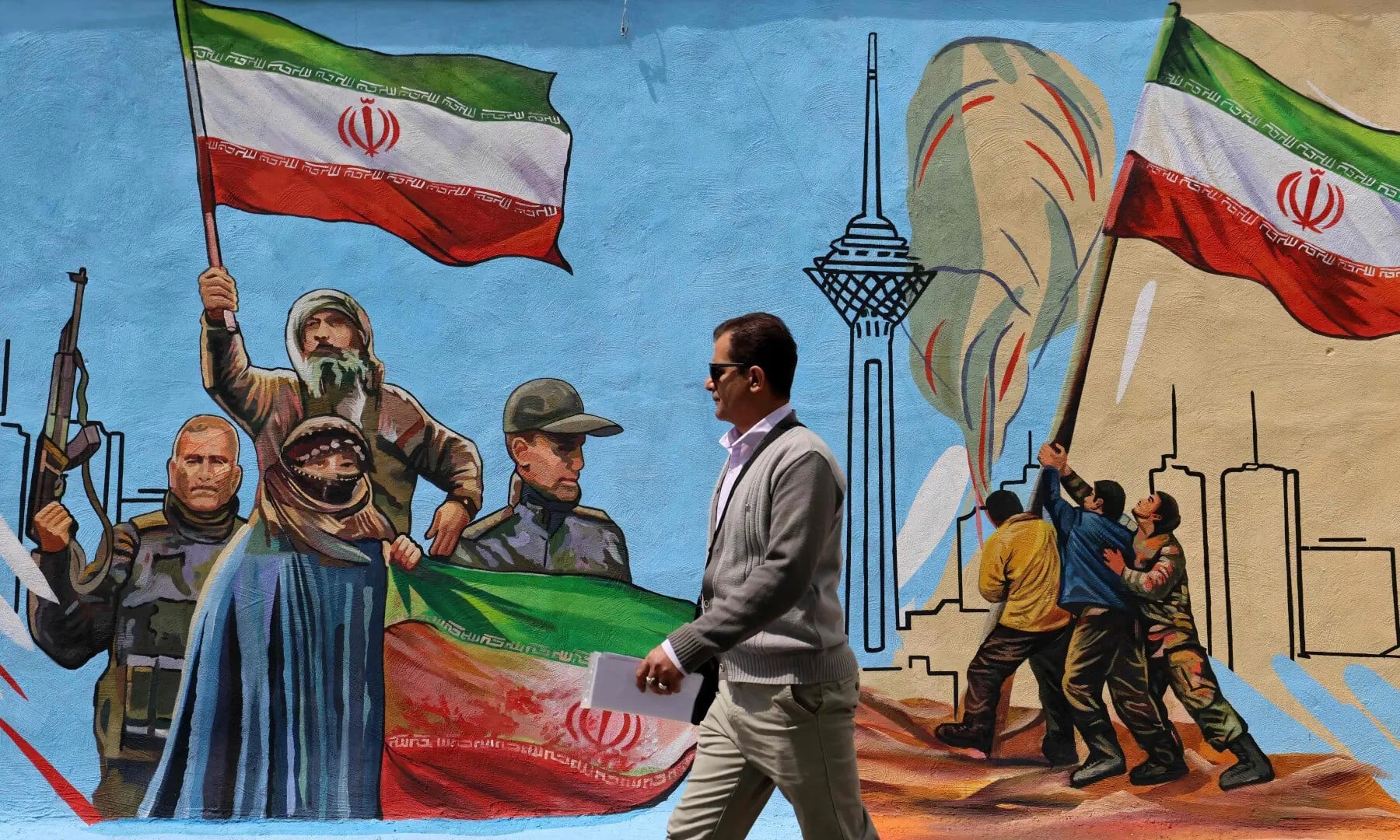
Another mural portrays a figure raising both arms wrapped in the Iranian flag, forming a heart shape—symbolising unity and national resilience amid conflict. Nearby artwork shows Iran’s flag flowing across walls with its central emblem shaped into a missile, while slogans referencing revolutionary sentiment such as “We have all come for the revolution” reinforce ideological continuity with the 1979 uprising.
Some murals depict a historical and political lineage of Iran’s leadership, beginning with the founder of the Islamic Republic, Ruhollah Khomeini, followed by Supreme Leader Ali Khamenei and references to his successor, Mojtaba Khamenei. These works aim to project continuity of governance and ideological endurance during wartime conditions.
Other striking visuals include Iranian drones striking the Star of David, symbolising Israel, and crowds gathered in Azadi Square chanting anti-US slogans. These scenes reflect official narratives of resistance and mobilisation during ongoing hostilities.
Long-standing murals around the former US Embassy in Tehran—now known as the “Den of Spies” museum—remain among the most prominent symbols of anti-American sentiment. One depicts a fractured Statue of Liberty with a broken arm amid destruction, while another replaces the stars on the US flag with skulls, reinforcing themes of opposition to Washington’s foreign policy.
Analysts say the resurgence of such imagery during the current conflict highlights how Iran continues to use public art as both political communication and psychological messaging, reinforcing national unity and framing external conflict through ideological symbolism.
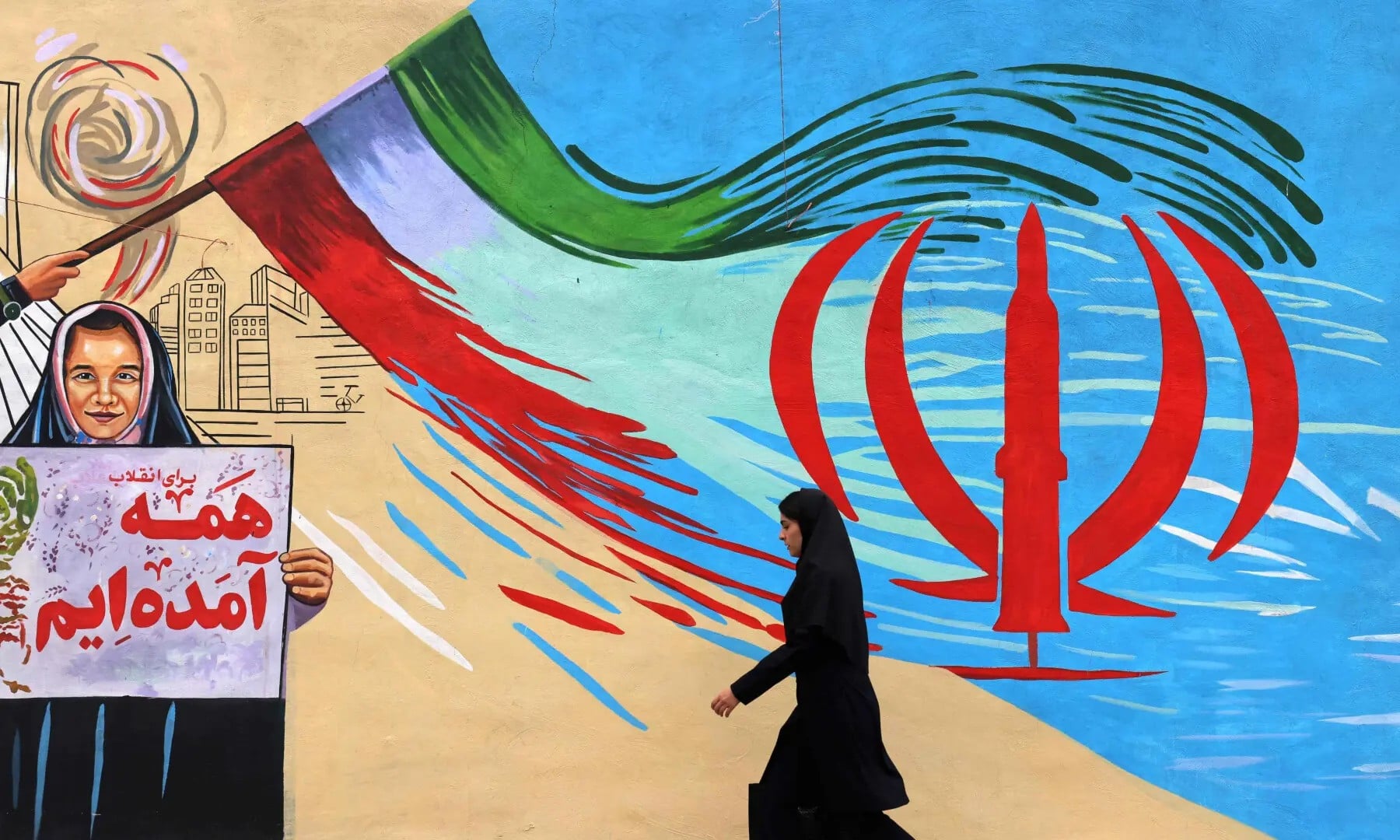
As tensions persist in the region, these murals have become part of the broader information landscape of the war—projecting state narratives into everyday urban life while shaping public perception amid an ongoing geopolitical crisis.