Muhammad Yasin Highlights Budget Reforms at Punjab Pre-Budget Session
Web Desk June 9, 2026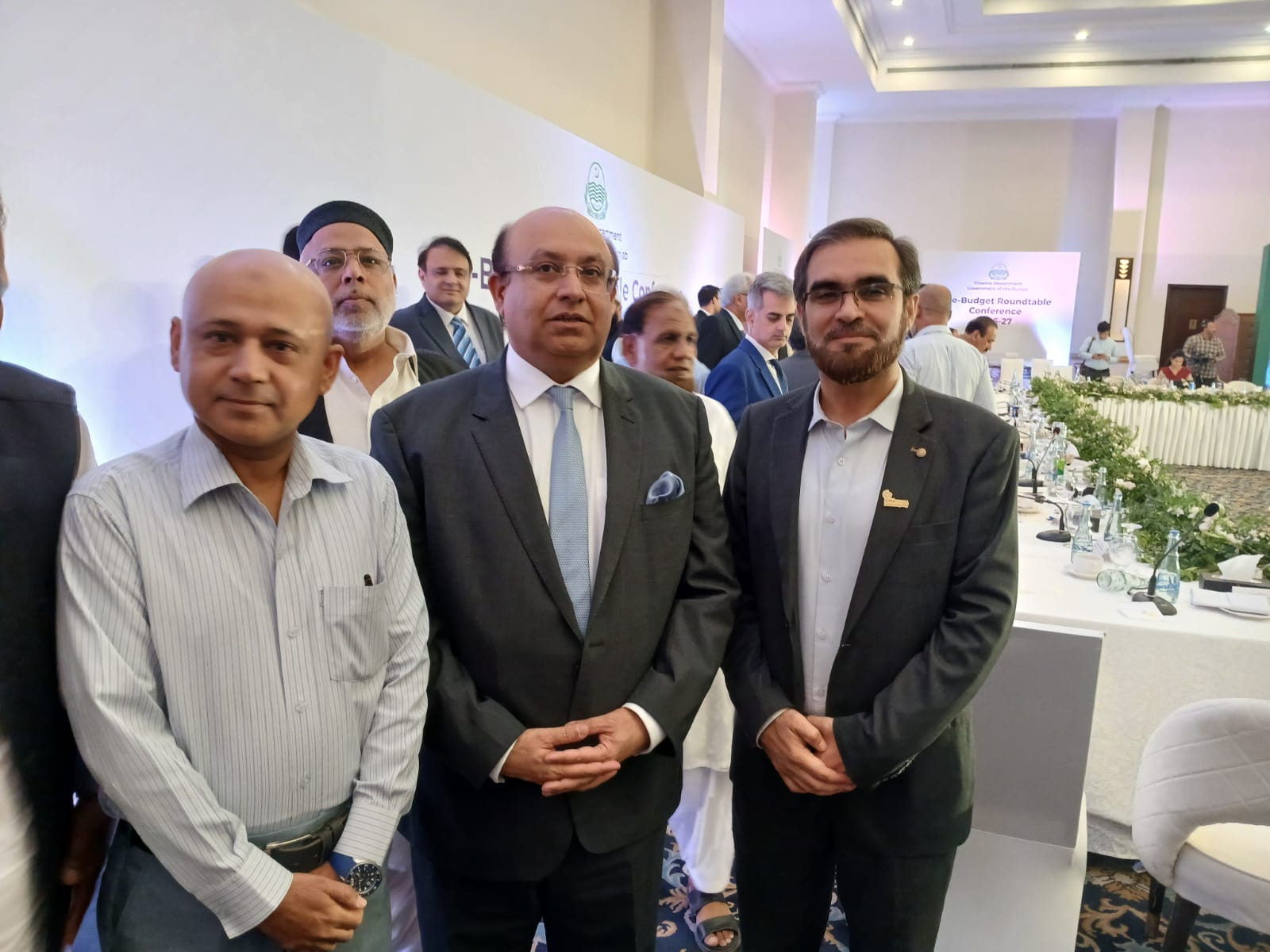
Muhammad Yasin participates in Punjab's FY 2026–27 pre-budget consultation session. PHOTO BY THE AZB
The Punjab Budget consultation process for FY 2026–27 brought together policymakers, financial experts, and professional bodies in Lahore. Among the participants, Muhammad Yasin, Vice President of ICMA Pakistan, presented several recommendations aimed at improving transparency, economic growth, and public sector efficiency.
The discussion is significant because the upcoming Punjab Budget will influence development priorities, agricultural support, industrial expansion, and resource allocation across the province. Moreover, the recommendations could shape future fiscal planning and governance reforms.
Muhammad Yasin Discusses Punjab Budget Priorities
Muhammad Yasin, FCMA, Vice President of the Institute of Cost and Management Accountants of Pakistan (ICMA), represented the institute at the Punjab Pre-Budget Consultative Session for FY 2026–27.
The session was chaired by Finance Minister Mujtaba Shuja ur Rehman and brought together stakeholders from various sectors. Participants exchanged views on fiscal priorities, revenue mobilization, development planning, and public sector reforms.
Furthermore, the forum provided an opportunity for experts to share recommendations that could strengthen economic management and improve service delivery.
Muhammad Yasin Supports Outcome-Based Budgeting
During the session, Muhammad Yasin emphasized the importance of transparent and accountable budgeting. He stated that budget allocations should focus on measurable outcomes rather than expenditure alone.
According to his remarks, government spending should be linked to economic productivity, employment generation, and direct public benefit. As a result, policymakers can better evaluate the effectiveness of development initiatives.
He also noted that outcome-based budgeting may improve resource utilization and strengthen public confidence in government programs.
Punjab Budget Focuses on Agricultural Support
Muhammad Yasin reportedly suggested digitizing subsidies for seeds and pesticides through a structured digital mechanism.
He stated that the model could follow the government’s existing petrol subsidy framework. Consequently, authorities could improve transparency, reduce leakages, and enhance monitoring systems.
In addition, he explained that the approach would help ensure that deserving beneficiaries receive support directly. The proposal particularly targets farmers and low-income groups connected to the agriculture sector.
Muhammad Yasin Recommends Industrial Zones
Another key recommendation focused on the establishment of industrial zones across Punjab.
According to the discussion, well-planned industrial zones can encourage investment, create employment opportunities, and strengthen exports. Moreover, they may support sustainable industrial development throughout the province.
Muhammad Yasin observed that such initiatives could attract both local and foreign investors. Therefore, the manufacturing sector could expand while contributing more effectively to national economic growth.
Punjab Budget Includes PPP Development Proposals
Muhammad Yasin also recommended introducing Public-Private Partnership (PPP) models in Public Sector Development Programme projects.
He stated that PPP-based projects can improve execution capacity and attract private investment. Additionally, they may help ensure the timely completion of infrastructure and public service initiatives.
According to his remarks, the model could reduce pressure on public finances while improving efficiency. As a result, development schemes may achieve better outcomes and faster delivery.
ICMA Supports Punjab Budget Consultation Process
ICMA Pakistan appreciated the Government of Punjab for engaging professional bodies and stakeholders in the consultation process.
The institute reaffirmed its commitment to providing policy recommendations focused on fiscal discipline, transparency, economic documentation, sustainable development, and inclusive growth.
Meanwhile, the consultative session highlighted the importance of collaboration between government institutions and professional organizations. Such engagement may contribute to more informed decision-making as Punjab prepares its FY 2026–27 budget framework.