
TAPI Pipeline Talks Advance as Turkmenistan and Afghanistan Seek Closer Energy Cooperation
Gurbanguly Berdimuhamedov and Abdul Ghani Baradar discuss the TAPI project, gas-sector training, transport links and a new framework for bilateral economic cooperation.
Turkmenistan and Afghanistan officials discuss the TAPI pipeline and wider economic cooperation during high-level talks.
ASHGABAT, August 14, 2026: Turkmenistan and Afghanistan have discussed steps to advance the Turkmenistan-Afghanistan-Pakistan-India (TAPI) gas pipeline project during high-level talks between the two countries.
National Leader of the Turkmen people and Chairman of the Halk Maslahaty Gurbanguly Berdimuhamedov held talks with Afghanistan’s Deputy Prime Minister for Economic Affairs Abdul Ghani Baradar during a working visit connected to the Afghan-Turkmen border area.
The discussions focused on energy, transport, trade and economic cooperation. The TAPI pipeline was among the main projects highlighted during the meeting.
The talks also covered the Serhetabat-Herat section of the pipeline, known as “Arkadagy? ak ýoly” or “Arkadag’s White Path”.
TAPI project takes centre stage
Both sides described the pipeline as an important symbol of cooperation between Turkmenistan and Afghanistan.
Baradar called for a joint mechanism involving relevant agencies from both countries to maintain regular coordination on the TAPI project.
Petrol Dealers Call Off Strike After Government Approves Margin Increase
He also expressed Afghanistan’s interest in learning from Turkmenistan’s experience in training specialists for the gas industry.
The issue has particular importance as the TAPI project is expected to create demand for skilled workers in Afghanistan’s energy sector.
The TAPI pipeline is designed to transport Turkmen natural gas through Afghanistan and Pakistan to India.
Turkmenistan and Afghanistan expand economic ties
The two sides said trade and economic relations were developing on the basis of good-neighbourly relations.
Bilateral cooperation also covered fuel and energy, transport infrastructure and power projects.
Berd Berdimuhamedov proposed establishing a Turkmen-Afghan commission on economic cooperation to strengthen coordination and provide a stronger legal framework for joint projects.
The proposal is intended to support closer institutional cooperation between the two countries.
Officials also discussed opportunities to expand humanitarian, cultural, scientific and educational exchanges.
Afghan students and gas-sector training discussed
The two sides reviewed plans to increase the number of Afghan students studying in Turkmenistan.
Particular attention was given to specialist training for the gas sector.
The training could support the development of skilled workers for projects linked to the TAPI pipeline and other energy initiatives.
The discussions reflected a broader effort to connect economic cooperation with education and workforce development.
Transport corridor also on agenda
Transport and logistics formed another major part of the talks.
The officials highlighted the importance of the Lapis Lazuli international transport corridor in connecting Central and South Asia.
The corridor links Afghanistan, Turkmenistan, Azerbaijan, Georgia and Türkiye.
The five countries signed an agreement establishing the corridor in Ashgabat in 2017.
Turkmenistan has proposed measures aimed at increasing the corridor’s efficiency and strengthening its role in regional trade.
New gas-sector agreement signed
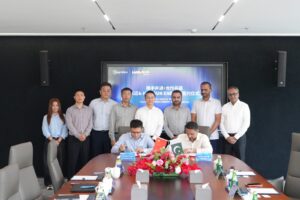
Following the talks, a Memorandum of Understanding was signed between Turkmenistan’s state concern Türkmengaz and Afghanistan’s state corporation Afghan Gas.
The agreement was signed during a ceremony attended by Berdimuhamedov and Baradar.
Videos showing progress on the Serhetabat-Herat pipeline were also presented during the event.
The ceremony concluded with the recitation of verses from the Holy Quran and a traditional sadaka held in connection with the occasion.
The latest discussions underline the importance both countries place on energy, transport and economic cooperation as they seek to strengthen their regional links.