

Mars Mission: Japan Races China to Bring Samples From Martian Moon to Earth
JAXA’s MMX mission will land on Phobos and collect material that could help scientists understand how Mars, its moons and the early Solar System formed
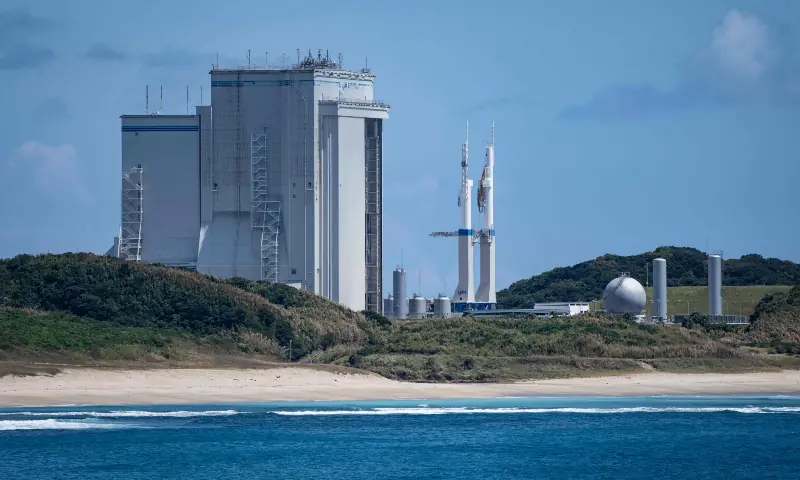
Japan’s MMX spacecraft prepares to explore Phobos and return samples from the Martian moon to Earth.
TOKYO, August 2026 — Mars mission plans are entering a new phase as Japanese scientists prepare to send a spacecraft to Phobos, one of the Red Planet’s two moons, in a bid to bring samples back to Earth.
Japan’s Martian Moons eXploration (MMX) spacecraft is scheduled to launch from the Tanegashima Space Centre in the coming months. The mission could also become an important step towards future human exploration of Mars.
The spacecraft will spend about three years operating around Mars. It will attempt to land on Phobos and collect at least 10 grams of surface material.
Scientists Seek Clues to Mars’ Origins
MMX will also study Deimos, Mars’ second moon. The spacecraft will observe Deimos without attempting a landing.
After completing its observations, a return capsule will carry the collected material back to Earth. Scientists expect the capsule to land in Australia around 2031.
Researchers hope the samples will help answer a major question: how did Mars and its moons form?
One theory suggests that Phobos and Deimos formed after a large object struck Mars. Another theory says they may be asteroids that Mars captured with its gravity.
Finding the correct explanation could help scientists understand how the Solar System developed.
Samples Could Reveal Ingredients for Life
The mission could also provide clues about how Earth and other rocky planets became suitable for life.
JAXA says MMX will examine how water, organic compounds and other materials moved from the outer Solar System toward the inner planets.
Patrick Michel, a French astrophysicist working on the Idefix rover, said Phobos and Deimos could preserve evidence of these early processes.
The Idefix rover will explore the surface of Phobos and conduct detailed observations. Its name comes from the French name for the dog belonging to the comic-book character Asterix.
Phobos Could Help Future Mars Exploration
JAXA also sees MMX as a technology test for future human missions.
Scientists want to explore whether Phobos could eventually serve as a natural space station. The mission will test systems needed for a round trip between Earth and Mars.
Landing on Phobos presents major technical challenges. Its gravity is extremely weak, making it difficult for a spacecraft to remain stable after touching down.
Akinari Uehara, an engineer at Mitsubishi Electric, said the landing legs must absorb the impact and prevent the spacecraft from falling.
Japan has already gained experience with difficult space landings. Its SLIM spacecraft, known as the “Moon Sniper”, tipped over after landing on the Moon in 2024 but continued sending scientific data.
BTS Faces Fan Backlash After RM and J-Hope Attend Chris Brown Concert
Japan Has Experience Returning Space Samples
JAXA also has a strong record in sample-return missions.
Its Hayabusa-2 spacecraft returned 5.4 grams of rock and dust from an asteroid in 2020. The asteroid was hundreds of millions of kilometres from Earth.
That experience will help Japanese scientists prepare for the much more complex task of collecting material from a Martian moon and bringing it home.
MMX involves JAXA, France’s CNES, Germany’s DLR, NASA and the European Space Agency, along with universities and technology companies.
China Could Beat Japan in Sample Return
Japan is not alone in the race to bring material from Mars back to Earth.
NASA’s Perseverance rover has collected samples on Mars since landing in 2021. Those samples could eventually return to Earth, although the US programme has faced major political and funding challenges.
China is also preparing the Tianwen-3 mission. Beijing plans to launch it around 2028 and return Martian samples to Earth around 2031.
That schedule could put China ahead of Japan’s MMX mission in the race to return Mars-related material to Earth.
China has already demonstrated its ability to operate on Mars. Its Tianwen-1 mission successfully landed the Zhurong rover on the planet in 2021.
The growing competition between Japan, China and other space powers could accelerate efforts to understand Mars and its moons. For scientists, the samples from Phobos may offer something even more valuable: clues about the ancient Solar System and the conditions that helped life emerge on Earth.