
Makkah Pact: Egypt Could Join Turkey, Pakistan and Saudi Arabia Defence Alliance, Fidan Says
Turkey’s foreign minister says Egypt is likely to join the new defence framework once technical issues are resolved, as members plan a broader regional security structure.
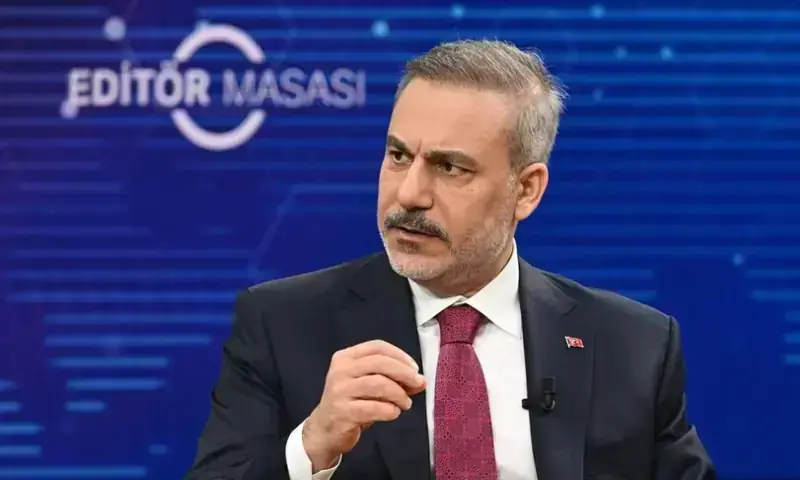
Turkey, Pakistan and Saudi Arabia launch a new regional defence alliance as Egypt considers joining.
Turkey’s Foreign Minister Hakan Fidan has said Egypt could become the next member of a new defence alliance formed by Turkey, Pakistan and Saudi Arabia, once outstanding technical issues are resolved.
Speaking to Turkey’s state-run Anadolu news agency on Saturday, Fidan described Egypt as a “natural partner” and said Ankara expected Cairo to eventually join the agreement. He said the three founding countries had already been working with Egypt in a manner similar to an alliance.
The Makkah Pact was signed in Saudi Arabia on Friday with the aim of strengthening collective deterrence. Under the agreement, an attack on one of the three signatories would be treated as an attack on all, establishing a mutual-security commitment similar in principle to NATO’s Article 5.
Fidan said several other countries had also shown interest in joining the arrangement, although some had requested that their identities remain undisclosed. The founding members are considering an expansion model under which Turkey, Saudi Arabia and Pakistan would remain the core states responsible for setting the alliance’s principles, standards and long-term framework.
Other countries could then join with the approval of the three founding members.
“Under our president’s vision, we should not remain limited to three countries. We should grow,” Fidan said, signalling that Ankara sees the agreement as the beginning of a wider regional security structure rather than a three-country arrangement.
The Turkish minister also stressed that Pakistan’s participation gives the initiative a geographical scope extending beyond the traditional boundaries of the Middle East. Islamabad’s strategic position, he said, means the agreement represents a broader regional approach to security and cooperation.
Fidan compared the mutual-defence principle of the agreement with NATO’s Article 5, which treats an attack on one member as an attack on the alliance as a whole. However, he noted that the practical response under the new pact would depend on consultations and decisions by the participating countries.
A member facing an attack would request assistance and identify the type of support required. Such assistance could include intelligence, logistics, ammunition or, depending on the severity of the threat, military personnel.
The participating countries would then determine the scale and nature of their response through consultations. Fidan emphasised that the agreement was not designed to target Iran or any other country.
Instead, he described it as a general security commitment intended to protect the signatories and strengthen regional stability. He said discussions over the initiative had begun before the current regional conflict environment, indicating that the agreement was not created solely in response to recent tensions.
Fidan portrayed Turkey, Saudi Arabia and Pakistan as countries focused primarily on protecting their borders, addressing domestic challenges and pursuing economic development. He said the three states had different military capabilities and strategic approaches but could combine their strengths in a defence-oriented framework.
According to Fidan, the alliance is intended to be defensive rather than offensive. It would not seek confrontation with another country unless one of its members came under attack.
He called the agreement an important step toward achieving greater and more lasting stability in the region, while acknowledging that turning the political agreement into an effective security mechanism would require significant institutional work.
Arena by Pearl-Continental DHA Multan Officially Opens as Premium Event Destination
The alliance is expected to operate through a political and military committee involving foreign ministers, defence ministers and chiefs of general staff. The body would translate decisions made by national leaders into practical policies and oversee the development of the alliance.
A permanent secretariat is also planned in Saudi Arabia. Its structure, responsibilities and additional units will be determined through consultations among the founding members.
Fidan said the alliance would cover a wide range of military cooperation, including interoperability, joint exercises, training, logistics, intelligence sharing, threat assessments and defence-industry cooperation.
Joint military exercises would be particularly important, he said, because the participating countries would need to ensure that different weapons, communications and military systems can work effectively together in a potential common operational environment.
The development of common standards and procedures would therefore be a major task once the secretariat becomes operational.
Fidan said the agreement had received considerable support across the Muslim world, including from countries that are not currently members. He also said some Western countries had expressed support after understanding the purpose and structure of the initiative.
He argued that constructive regional alliances could help transform the Middle East from a region associated with conflict into one capable of generating greater economic, political and strategic value.
Fidan said the leaders of Turkey, Saudi Arabia and Pakistan had created significant expectations both regionally and internationally through the agreement. He added that officials from the three countries now faced the responsibility of turning that political commitment into a functioning and professional security framework.
The immediate focus will likely be on establishing the alliance’s institutions, resolving technical issues surrounding potential new members such as Egypt and developing the military mechanisms needed for cooperation among the founding states.