Hearing Loss: Everyday Noise May Be Damaging Your Ears More Than You Think
Health experts warn that common activities, from listening to headphones to mowing the lawn, can cause permanent hearing damage if proper protection is ignored.
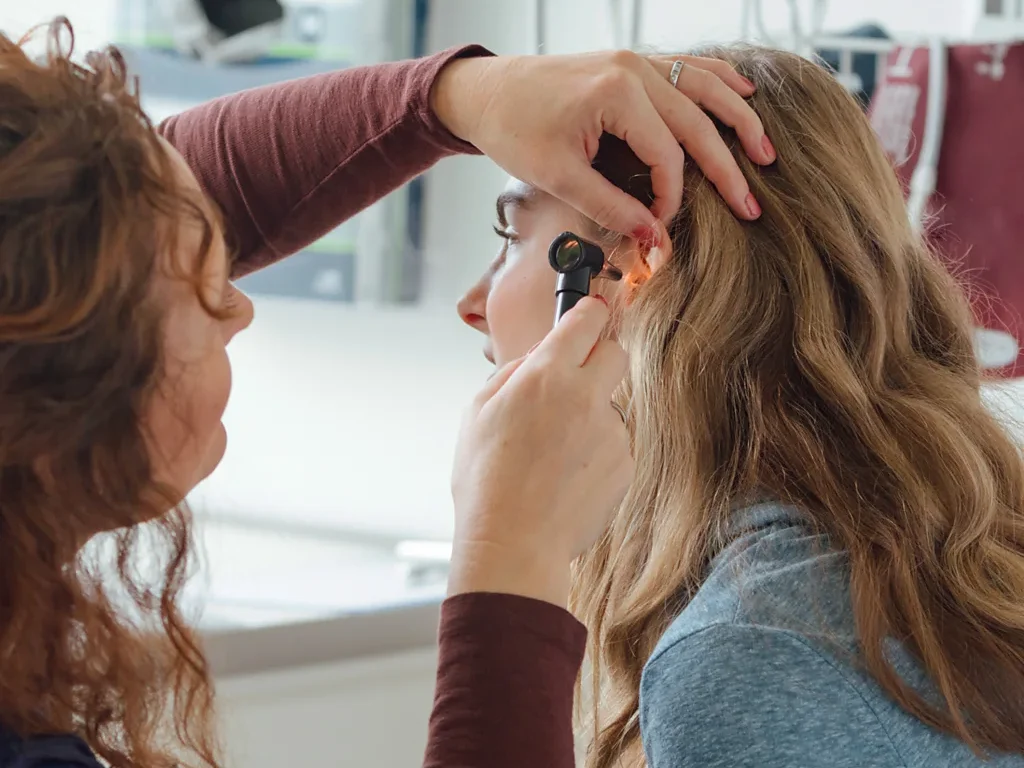
An audiologist demonstrates hearing protection to help prevent long-term hearing damage.
Hearing Loss is no longer a concern limited to ageing or extremely loud environments. Audiologists say everyday activities such as using headphones, attending concerts, operating power tools and even driving with car windows open can gradually damage hearing, with effects that cannot be reversed.
Experts explain that the inner ear contains thousands of microscopic hair cells inside the cochlea, a fluid-filled structure responsible for converting sound waves into electrical signals for the brain. These delicate cells bend in response to sound, but prolonged exposure to loud noise can permanently damage or destroy them. Unlike many other cells in the body, they do not regenerate.
Valerie Pavlovich Ruff, an audiologist at the Cleveland Clinic, said hearing is permanent once lost because people are born with all the hair cells they will ever have. Although researchers are investigating gene therapies that may one day regenerate these cells, no treatment currently exists to restore them.
Airfares: CAP Urges CCP to Probe High Ticket Prices Despite Government Relief
Audiologists are also reporting hearing problems in increasingly younger patients, including teenagers and children under the age of 10. Experts say repeated exposure to loud sounds during childhood can accumulate over time and lead to noticeable hearing loss later in life.
Concerts, music festivals and sporting events are among the highest-risk environments because sound levels often exceed safe limits. Specialists warn that exposure to these volumes can begin damaging the inner ear within 10 to 15 minutes. They recommend using high-fidelity earplugs, which reduce sound intensity without compromising audio quality.
Headphones remain one of the most common sources of prolonged noise exposure. Hearing specialists advise users to respect built-in volume limits and avoid listening at levels that prevent normal conversation. If someone standing nearby must raise their voice to be heard, the volume is likely too high.
Research suggests that as many as 1.35 billion people under the age of 35 may face an increased risk of premature hearing loss because of prolonged exposure to amplified sound through personal listening devices.
Experts also highlight the dangers of routine household tasks. Lawnmowers, leaf blowers, chainsaws and other power tools can generate noise levels capable of causing hearing damage. They recommend wearing earplugs, protective earmuffs or both during noisy activities and choosing hearing protection with a high Noise Reduction Rating (NRR).
Driving with the windows down on motorways can also expose people to prolonged wind noise that may harm hearing over time. Audiologists say many drivers unknowingly increase the volume of their car stereo to overcome wind noise, creating even greater exposure to damaging sound levels.
Motorcyclists are encouraged to wear specialised high-fidelity earplugs that reduce engine and wind noise while still allowing important traffic sounds, including emergency vehicle sirens, to remain audible.
While earplugs play an important role in hearing protection, specialists advise against wearing them continuously, especially overnight. Frequent use can push earwax deeper into the ear canal, increasing the risk of blockages, infections and temporary hearing problems.
Experts also discourage using cotton buds to clean inside the ear canal because they often force wax closer to the eardrum rather than removing it. Instead, people experiencing blocked ears or hearing difficulties should seek medical advice or use approved earwax-softening treatments.
Untreated hearing loss can affect more than hearing alone. Studies have linked age-related hearing loss to social isolation and cognitive decline, although researchers have not established a direct cause-and-effect relationship. Specialists say hearing difficulties can reduce communication, increase loneliness and affect overall quality of life.
Audiologists recommend hearing tests whenever people notice persistent ringing in the ears, known as tinnitus, or experience difficulty following conversations in noisy environments. Early diagnosis can help identify hearing problems before they significantly affect daily life.
Until new treatments become available, experts agree that prevention remains the most effective strategy. Limiting exposure to loud noise, wearing appropriate hearing protection and seeking early hearing assessments can help preserve hearing for decades.