

SpaceX Slides as Elon Musk’s AI Spending Spree Overshadows Revenue Growth
Strong revenue and rising Starlink profits failed to reassure investors after soaring artificial intelligence investment pushed SpaceX deeper into losses.
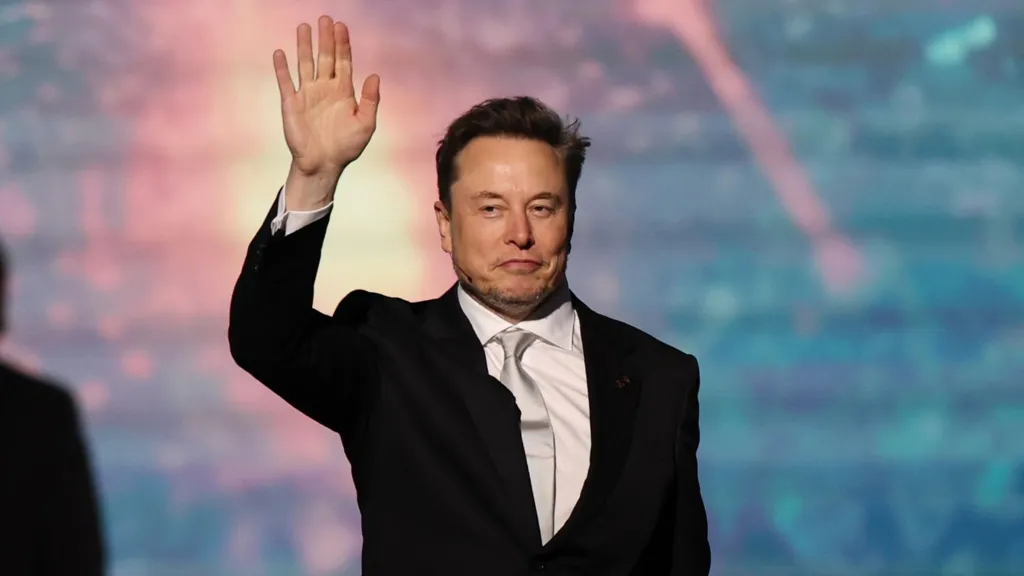
SpaceX investors react to soaring AI spending despite strong revenue growth.
SpaceX shares fell sharply after the aerospace and technology company reported its first earnings as a publicly traded business, revealing that aggressive investment in artificial intelligence had significantly increased spending despite strong revenue growth.
SpaceX reported quarterly revenue of $7.8 billion, nearly double the figure recorded a year earlier. However, total spending surged to $18.3 billion, more than six times higher than the same period last year, with most of the increase linked to expanding AI infrastructure. The unexpected rise in costs unsettled investors, sending the company’s stock down almost 9% in after-hours trading.
The company posted a net loss of $143 million for the three months ending in June, while losses for the first half of the year reached $2 billion. Despite the disappointing earnings, Chief Executive Elon Musk insisted investors were underestimating the company’s long-term potential.
Starlink remained the strongest performer within the business, generating $1.6 billion in second-quarter profit. Musk predicted the satellite internet service would continue expanding rapidly and could eventually provide internet access to most of the world.
He also highlighted the company’s fast-growing AI computing division, which supplies computing power for artificial intelligence projects to customers including Google and Anthropic. SpaceX currently operates 1.4 gigawatts of AI computing capacity and expects that figure to exceed 10 gigawatts next year through major data centre expansion.
While Musk described building data centres as far less challenging than developing reusable rockets, the company’s traditional space business continued to struggle. The space division recorded a $542 million loss against $962 million in quarterly revenue, while the AI business also posted a $1.2 billion loss despite generating $2.5 billion in revenue.
Chief Financial Officer Bret Johnson said capital expenditure would remain at similar levels for the rest of the year as the company continues investing heavily in AI infrastructure.
Even so, Musk remained optimistic about SpaceX’s future, saying the company could generate $1 trillion in annual revenue by 2030, one year earlier than he had previously forecast.
Market analysts said the company’s strategy is rapidly transforming its identity. Matt Britzman, senior equity analyst at Hargreaves Lansdown, said SpaceX could increasingly resemble an AI infrastructure company with a world-leading space business alongside it, as artificial intelligence becomes its primary financial growth engine over the coming years.
Other analysts were more cautious. Brady Wang of Counterpoint Research noted that Starlink remains the company’s only consistently profitable business unit, while IG analyst Fabien Yip argued that continued losses in AI make it difficult to conclude the company is being undervalued.
Carré Partners Chief Executive Wendy Souvannarath defended the company’s AI investment strategy, saying heavy spending is common across the technology sector and should begin generating returns within a year. She added that Starlink continues to address one of the world’s biggest connectivity challenges by delivering internet access to regions beyond the reach of traditional cable networks.
Analysts also warned that Elon Musk’s political controversies remain a potential risk to investor confidence. Since completing one of the largest public listings in history, SpaceX shares have struggled to maintain early momentum and have traded below their $135 listing price for several weeks after reaching a peak of $176 shortly after the market debut.