

Connected Care Reshapes the CPAP Market as Digital Sleep Therapy Drives Global Growth
Web Desk August 5, 2026A new industry analysis projects steady expansion through 2035, with remote monitoring, patient adherence and connected healthcare ecosystems becoming the key drivers of competition.
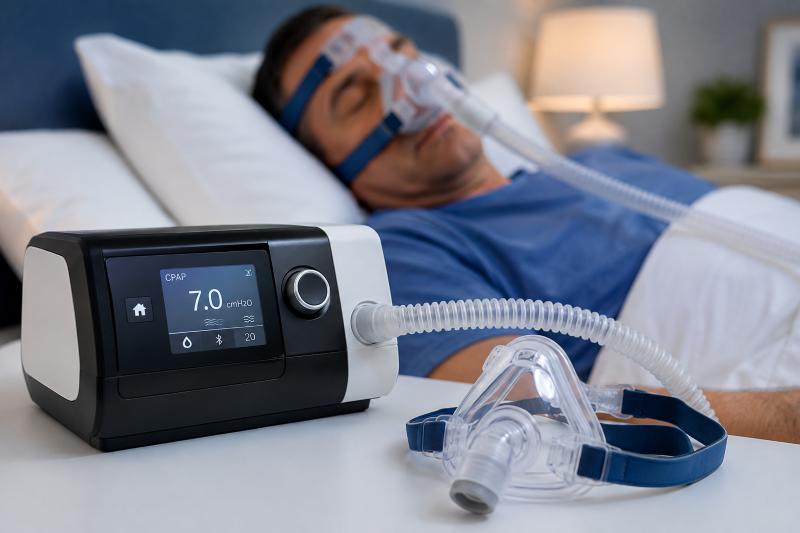
Connected CPAP technology is transforming sleep apnea treatment worldwide.
The global CPAP Market is entering a new phase of growth as manufacturers shift their focus from hardware sales to connected sleep care solutions that improve patient outcomes and long-term therapy adherence. According to DataM Intelligence, the global continuous positive airway pressure (CPAP) devices market is expected to grow from US$1.97 billion in 2026 to US$3.02 billion by 2035, registering a compound annual growth rate (CAGR) of 4.88% during the forecast period.
The report suggests that the industry is undergoing a structural transformation in which digital health services, remote patient monitoring and comfort-focused product design are becoming as important as the devices themselves. Companies are increasingly investing in cloud-based technologies, digital adherence tracking and patient engagement platforms to strengthen therapy outcomes while creating new commercial opportunities.
Connected Healthcare Is Redefining the CPAP Market
CPAP Market trends indicate that connected healthcare ecosystems are replacing traditional device-centric business models. Healthcare providers are increasingly adopting remote monitoring systems that allow clinicians to track patient usage, identify treatment challenges early and improve long-term compliance. This approach also generates real-world clinical evidence, helping providers and manufacturers demonstrate measurable treatment outcomes.
Business Leaders Gather as Shariq Vohra Hosts Grand Wedding Reception for His Daughter in Karachi
Manufacturers Expand Digital Sleep Therapy Solutions
Leading manufacturers continue to expand their digital capabilities throughout 2026. ResMed has strengthened its connected care ecosystem by integrating cloud-based monitoring tools and digital adherence tracking across its CPAP portfolio. Philips has continued enhancing patient interface design while maintaining its focus on product quality, regulatory compliance and digital therapy management.
Fisher & Paykel Healthcare has advanced mask comfort technologies and humidification systems to improve the patient experience, while Drive DeVilbiss Healthcare and React Health have focused on accessible home respiratory care solutions with simplified interfaces and adherence support features. Meanwhile, Löwenstein Medical has expanded connectivity features across its sleep therapy systems to support both clinicians and patients through digital integration.
Patient Adherence Remains the Biggest Challenge
Despite the proven effectiveness of CPAP therapy in treating obstructive sleep apnea, patient adherence remains one of the industry’s biggest challenges. Many users discontinue treatment because of discomfort, poor mask fit, device noise, dryness or inadequate clinical follow-up. Industry experts believe that remote monitoring, personalized therapy and ergonomic product design can significantly improve compliance and long-term treatment success.
Healthcare providers are also seeking technologies that reduce follow-up appointments while improving patient outcomes. The demand for real-world adherence data continues to grow as insurers and healthcare systems increasingly link reimbursement to measurable clinical performance.
Emerging Growth Opportunities
The report identifies several key growth opportunities, including partnerships with telehealth platforms, subscription-based adherence services, advanced humidification systems, adaptive pressure technologies and expanded digital patient engagement programs. Companies are also investing in screening initiatives and long-term patient management strategies to improve diagnosis rates and therapy continuity.
Regional Markets Drive Industry Expansion
Regionally, North America continues to lead market adoption due to advanced reimbursement systems and widespread digital health integration. Europe remains a strong market driven by evidence-based healthcare policies, while Asia-Pacific is experiencing steady growth supported by expanding healthcare infrastructure and increasing awareness of sleep disorders.
The United States benefits from value-based care initiatives and established sleep medicine networks, while Japan’s aging population supports continued demand for precision respiratory care. Germany emphasizes clinically validated outcomes through its reimbursement framework, and South Korea is leveraging its advanced digital healthcare infrastructure to accelerate the adoption of connected CPAP systems.
Leading Companies Shape the Competitive Landscape
Major companies operating in the market include ResMed, Koninklijke Philips N.V., Fisher & Paykel Healthcare Limited, BMC, Wellell Inc., Oxymed India, DeVilbiss Healthcare LLC, Hamilton Medical, Löwenstein Medical SE & Co. KG and Lincare Holdings Inc.
Analysts conclude that future competition will increasingly depend on therapy success rather than device sales alone. Companies capable of combining connected technology, patient engagement and comfort-focused innovation are expected to strengthen their position as healthcare systems place greater emphasis on measurable clinical outcomes and long-term patient adherence.
This transition toward connected care is expected to redefine the global CPAP market over the coming decade, making digital integration and patient engagement the key differentiators for long-term commercial success.