Trump Says Fresh US Strikes on Iran Highly Unlikely If Peace Talks Progress
The US president says Washington has identified potential infrastructure targets if military action resumes, while reports of vessel attacks in and around the Strait of Hormuz deepen regional tensions.
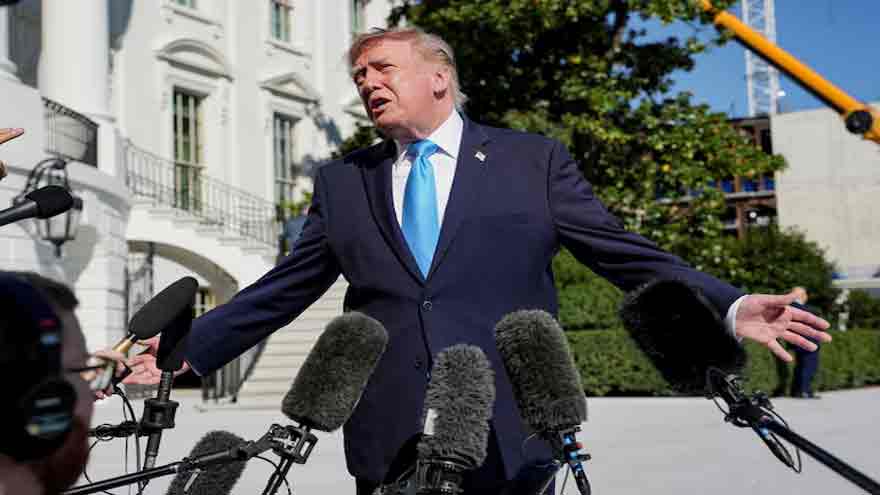
Iran Strikes: Trump says renewed US military action remains unlikely if negotiations progress.
US President Donald Trump has said he is highly unlikely to order fresh military strikes on Iran if negotiations to end the conflict continue to make progress.
In a telephone interview with CNN on Sunday, Trump linked any decision to resume attacks to the outcome of ongoing diplomatic efforts.
“It depends on whether or not they sign a very strong agreement,” Trump told CNN. “The answer is, highly unlikely it’s going to be necessary.”
CNN did not specify the exact question that prompted his response. However, Trump said the United States had identified potential infrastructure targets if military operations resumed.
He cited 38 bridges as possible targets, saying US forces could destroy them “in literally one hour.”
Trump had hinted at renewed major attacks on Iran following last week’s US midterm elections. However, no large-scale American military operation has emerged so far.
Iran has warned that it would retaliate against US and Israeli targets if Washington launches further strikes.
Explosions Reported in Southern Iran
Reports of explosions in southern Iran on Saturday raised fresh concerns about a possible escalation.
Iranian media suggested the blasts were linked to Iranian military activities rather than American attacks.
Thai Cultural Troupe Nataya Chula Wins Warm Reception at World Culture Festival 2026 in Karachi
Iran’s state television said officials had not confirmed any missile strikes on Iranian territory. Reports described explosions in several areas, including Qeshm Island in the Strait of Hormuz.
The Tasnim news agency, however, reported that two missiles had struck the island. Neither Iranian nor US authorities commented on that report, and no official information about possible damage emerged.
Iranian state television later suggested that the explosions could have resulted from military activities in the strategic waterway.
Washington said on November 2 that it had carried out a limited defensive strike on the island. It said the operation targeted Iranian personnel using surface-to-air missiles against US assets.
Vessels and Oil Tankers Reportedly Hit
Maritime incidents have continued to threaten commercial shipping through the Strait of Hormuz.
Since the United States and Israel began attacking Iran in February, Tehran has targeted vessels in the waterway to disrupt Gulf energy exports. Meanwhile, US forces began blockading movements to and from Iranian ports in April.
On Saturday evening, the US military said its air force had fired at the stern of a commercial vessel in the Gulf of Oman. The attack disabled the vessel as it attempted to pass through the American blockade.
Iran’s Revolutionary Guards Navy said two oil tankers caught fire after striking mines. It alleged that the vessels had attempted to use an unauthorised route through the Strait of Hormuz.
The semi-official Fars news agency later reported that a third tanker had also suffered an explosion and caught fire.
Reuters said it could not independently confirm the reported strikes.
The United Kingdom Maritime Trade Operations (UKMTO) also reported an incident involving a bulk carrier and military forces in the Gulf of Oman. The incident occurred approximately 18 nautical miles east of Khor Fakkan in the United Arab Emirates. Authorities had not established the extent of the damage or confirmed whether it was connected to the reported US attack.
Saudi Aramco Building Damaged in Riyadh
The wider regional conflict has also intensified tensions involving Iran-aligned groups and Saudi Arabia.
Saudi Arabia’s Energy Ministry said on Sunday that falling debris damaged an administrative building belonging to state oil company Saudi Aramco in Riyadh.
The damage followed an attempted attack, according to the ministry. Authorities reported no injuries or fatalities.
The incident came amid an escalation involving Iran-aligned Houthi forces in Yemen and Saudi Arabia.
Qatar Says Negotiations Continue
Qatar has continued diplomatic efforts to help end the conflict. On Saturday, it rejected reports that Washington and Tehran had failed to reach an agreement.
The Qatari prime minister reaffirmed that both sides were continuing to work towards a deal, according to the government.
A senior Iranian official told Reuters on Thursday that Tehran had submitted a nuclear proposal to Washington through Qatar. The official said the United States was reviewing the proposal.
However, further discussions would depend on Washington addressing seven Iranian demands, the official added.
Iran’s demands reportedly include sanctions relief, access to frozen assets and war reparations. Washington, meanwhile, insists that nuclear issues must form part of the initial negotiations.
US Announces New Measures Against Iran
Alongside diplomatic efforts, Washington is pursuing additional economic and security measures against Tehran.
The US military announced on Saturday that it was launching a task force to restrict the movement of advanced weapons and other sanctioned materials into Iran.
The initiative will target supply routes across Iran’s land borders and the Caspian Sea. Washington sees the measure as part of its wider effort to increase economic pressure on Tehran.
Iran’s Revolutionary Guards dismissed the initiative as “wordplay.” They said the measures would not succeed because Iran had prepared for such restrictions and maintained close communication with neighbouring countries.
Despite Trump’s latest remarks, tensions remain high. Reports of maritime incidents, competing military claims and unresolved nuclear demands continue to complicate efforts to reach an agreement.