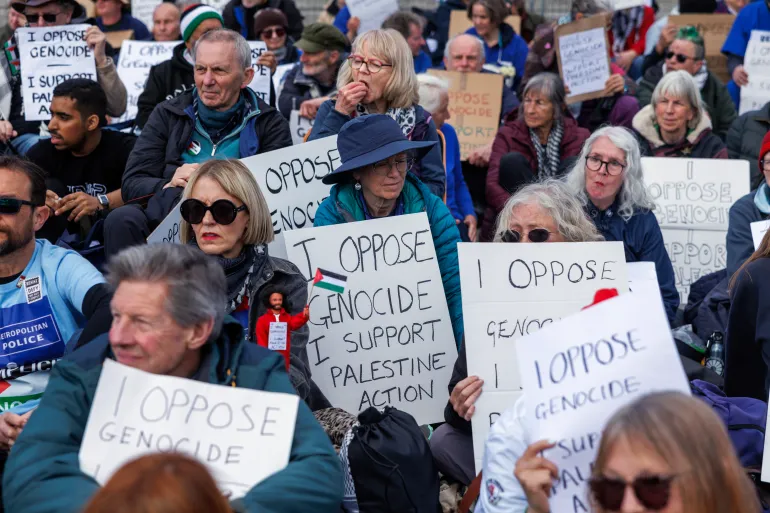
Palestine Action activists arrive at a UK court ahead of sentencing.
The Palestine Action case has returned to the spotlight as four activists face sentencing in the United Kingdom. Although a jury convicted them of criminal offences rather than terrorism charges, the court may consider whether their actions had a terrorist connection.
As a result, the sentencing hearing has drawn attention from campaigners, legal observers, and protest groups. The outcome could influence future cases involving direct-action protests and national security laws.
Palestine Action Sentencing Draws Attention
The four activists were convicted last month at Woolwich Crown Court in London. The convictions stemmed from a 2024 raid on a factory in Filton, Bristol, operated by Israeli defence company Elbit Systems.
Jurors found the defendants guilty of criminal damage. In addition, one defendant was convicted of striking a police officer with a sledgehammer during the incident.
However, attention has shifted to sentencing. The judge is expected to decide whether the offences carried a terrorist connection. If that finding is made, it could affect the severity of the sentences imposed.
Elbit Systems Factory Raid Remains Central
The case centers on actions taken during the Bristol factory raid. Prosecutors argued that the activists caused damage while targeting a site linked to military production.
Supporters of the defendants contend that the protest was politically motivated rather than terrorist in nature. Consequently, demonstrations have taken place ahead of the sentencing hearing.
Meanwhile, legal observers continue to watch how the court interprets the connection between political protest and terrorism legislation.
Palestine Action Became Proscribed Group
The Palestine Action movement was launched in July 2020. The group states that it seeks to end international involvement in what it describes as Israel’s actions in Palestine.
According to its public statements, the movement uses disruptive protest tactics against companies connected to weapons manufacturing for Israel. Its campaigns have targeted facilities linked to Elbit Systems, Leonardo, Thales, and Teledyne.
In July 2025, the UK Parliament voted to proscribe Palestine Action as a terrorist organisation. Therefore, the group entered the same legal category as other banned organisations under British law.
UK Parliament Decision Changed Legal Landscape
The UK government’s decision followed a series of high-profile actions by activists. Notably, the proscription came days after members reportedly entered an air force base in southern England.
Since then, legal challenges and public debate have continued. Critics argue that the designation affects civil liberties and protest rights. Supporters of the ban, meanwhile, maintain that stronger measures are necessary to address unlawful actions.
As the sentencing hearing proceeds, the court’s decision may become an important reference point for future protest-related prosecutions.
Palestine Action Case May Influence Future Protests
The sentencing outcome could have implications beyond the defendants involved. Legal experts suggest the ruling may help define how UK courts assess politically motivated criminal offences.
Furthermore, campaign groups on different sides of the debate are closely monitoring developments. The case has become part of a broader discussion about protest movements, public safety, and counterterrorism laws.
For now, attention remains focused on the court’s decision and whether the offences will be formally linked to terrorism during sentencing proceedings.