OIC Women: Pakistan Urges Equal Access to AI and Digital Technology for Women Across Muslim World
Law Minister Azam Nazeer Tarar tells OIC member states that inclusive digital policies are essential to prevent artificial intelligence from widening inequality.
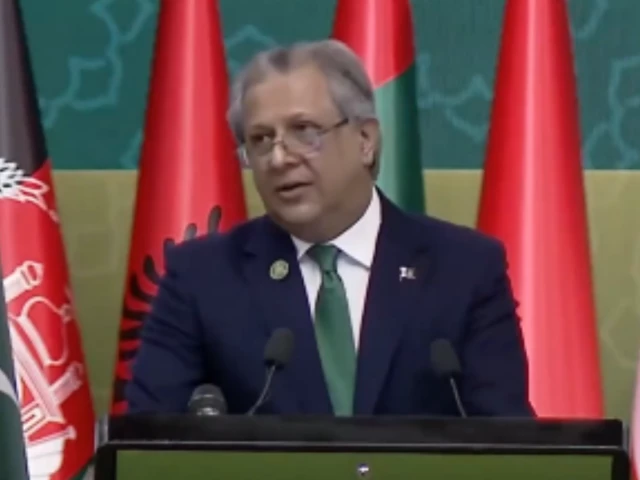
Law Minister Azam Nazeer Tarar addresses delegates at the 9th OIC Ministerial Conference on Women in Islamabad.
OIC Women took centre stage at the 9th OIC Ministerial Conference on Women in Islamabad, where Pakistan’s Law Minister Azam Nazeer Tarar called on member states to ensure women and girls receive equal access to artificial intelligence and emerging digital technologies.
Addressing delegates on the second day of the conference, Tarar said artificial intelligence and digital innovation are reshaping societies at an unprecedented pace. He stressed that governments must adopt inclusive policies so technological progress becomes “a bridge to inclusion” rather than “a barrier to equality.”
“If governed wisely, these technologies can expand access to employment, healthcare, entrepreneurship and financial inclusion,” Tarar said. “If ignored, they risk creating new forms of inequality, discrimination and exclusion.”
He said women across the Muslim world continue to drive economic growth, scientific advancement, entrepreneurship, public service and humanitarian efforts. However, millions of women and girls still face obstacles that restrict their opportunities and limit their contribution to national development.
Mauritania: The Hidden Sahara Nation of Ancient Cities and Desert Wonders
Tarar described the conference theme—focused on the socio-economic and political empowerment of women in OIC member states—as both timely and forward-looking. He said empowering women is not only a social responsibility but also an economic necessity, adding that no country can achieve its full potential while half of its population lacks equal opportunities to learn, innovate, work and lead.
Highlighting Islam’s principles on women’s rights, the minister said the faith recognised the dignity, legal identity and rights of women more than 14 centuries ago. He added that the responsibility of governments today is to remove the barriers preventing women from realising their full potential.
The minister praised the Organisation of Islamic Cooperation’s initiatives, including its Plan of Action for the Advancement of Women and the Women’s Development Organisation, describing them as strong frameworks for collaboration among member states. He said sharing successful policies and strengthening institutional partnerships would accelerate progress while respecting different legal systems and cultural contexts.
Tarar said Pakistan considers its chairmanship of the conference a responsibility to build consensus and transform shared commitments into practical action across the Islamic world.
Outlining Pakistan’s domestic agenda, he said women’s empowerment remains a national priority supported by constitutional guarantees, legislative reforms and government policies under Prime Minister Shehbaz Sharif. He highlighted the implementation of the National Gender Policy Framework 2025 and the Prime Minister’s Women Empowerment Package, which aim to expand women’s leadership, strengthen financial inclusion, promote entrepreneurship, reduce the digital divide, improve access to justice and create safer workplaces.
He noted that women in Pakistan now serve prominently as parliamentarians, judges, diplomats, civil servants, entrepreneurs, scientists, academics and members of the armed forces. Their growing presence in leadership roles, he said, demonstrates the country’s belief that empowering women strengthens families, builds resilient societies and drives national prosperity.
The minister also emphasised that sustainable progress requires the active participation of men and boys in promoting equality, respect and shared responsibility. He said genuine empowerment extends beyond legal protections and must include equal access to education, technology, finance, decision-making and economic participation.
Addressing humanitarian concerns, Tarar expressed solidarity with women and girls affected by conflict and occupation, particularly in Palestine, including Gaza. He also highlighted the challenges faced by women in Afghanistan and Indian Illegally Occupied Jammu and Kashmir, saying empowerment must also guarantee protection, dignity, justice and hope.
Concluding his address, Tarar urged OIC member states to convert their commitments into measurable action for nearly 940 million women across the Islamic world.
“The next generation of Muslim women must not merely participate in the digital economy; they must help lead it,” he said.