Iran-Israel Escalation: Trump Urges Netanyahu Restraint
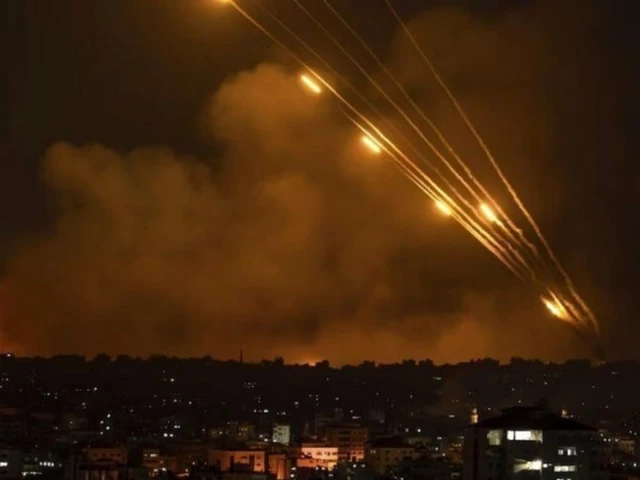
Missile trails and geopolitical tension symbolizing Iran Israel conflict escalation in the Middle East. PHOTO BY BBC
Iran Israel tensions escalated sharply after Iran’s Revolutionary Guards issued new warnings and claimed fresh missile actions. The Iran Israel situation is now tied to broader regional strikes involving Israel, the United States, and Lebanon.
The Iran Israel conflict intensified as the Islamic Revolutionary Guard Corps (IRGC) reportedly described recent attacks on Israel as a “warning” of wider retaliation. According to statements, further escalation could include US and Israeli assets across the Middle East. Meanwhile, diplomatic pressure from Washington added new uncertainty to the crisis.
Iran Israel Missile Escalation Update
Iran Israel tensions rose after the IRGC claimed it targeted Israel’s Ramat David air base with ballistic missiles. The group said the strike served as a warning message.
According to the IRGC, any repeated “aggression” could trigger broader retaliation. This may reportedly include strikes beyond Israel, extending to regional US-linked sites.
The statement also linked ceasefire conditions to full cessation of fire across all fronts. However, Iran claimed the US and Israel did not fully comply with commitments.
Meanwhile, regional military movements continued, adding pressure on already fragile diplomacy.
Trump Urges Netanyahu Iran Israel
Donald Trump has publicly urged restraint amid the Iran Israel escalation. He reportedly planned to call Israeli Prime Minister Benjamin Netanyahu to discourage retaliation.
Trump stated that Iranian strikes “didn’t hurt anybody” and suggested that further escalation would be unnecessary. He also emphasized that both sides had already exchanged strikes.
According to his remarks, Washington is “very close to a final deal” with Iran. He described it as a potentially “good deal” that could stabilize the region.
He further warned that renewed conflict could extend decades of Middle East instability.
IRGC Targets Israel US Bases Warning
Iran’s IRGC also expanded its warning scope in the Iran Israel crisis. Officials reportedly suggested that US and Israeli assets in the region could become legitimate targets.
Separately, Iranian parliamentary figures echoed strong language following Israeli strikes in Lebanon. One senior lawmaker claimed that Iran would deliver a “decisive and painful response.”
Reports also indicated missile activity involving US bases in Kuwait and Bahrain. Some missiles were intercepted, and authorities noted limited material damage.
These developments suggest a widening risk zone that now includes multiple Gulf states.
Beirut Strike Intensifies Iran Israel Tensions
A Beirut strike further intensified Iran Israel tensions after Israel reportedly targeted southern outskirts of the Lebanese capital. The area is known as a Hezbollah stronghold.
Israeli officials said the strike responded to cross-border projectiles. Evacuation warnings were also issued for parts of southern Lebanon, including Tyre.
Iranian-linked political voices described the strike as a violation of ceasefire-related expectations. Some officials on social media warned of an imminent response.
Funeral ceremonies in Beirut added to the emotional and political pressure in the region.
Washington Tehran Deal Negotiation Pressure
Diplomatic efforts between Washington and Tehran continue under heavy pressure. The Iran Israel conflict is increasingly tied to these negotiations.
President Trump has suggested that military escalation could derail ongoing talks. He also claimed that both sides are close to a preliminary agreement.
However, Iranian officials have linked any potential deal to conditions in Lebanon and broader regional ceasefire compliance.
Despite statements about progress, both sides continue to exchange warnings and limited strikes. This has created a fragile and unpredictable security environment.