Iran Blames US and Israel for Strait of Hormuz Blockade as Tensions Escalate Over Global Shipping Route
Web Desk April 30, 2026TEHRAN: Iranian President Masoud Pezeshkian has accused the United States and Israel of being responsible for the ongoing disruptions in the Strait of Hormuz, reiterating Tehran’s stance that the strategic waterway must remain closed to what it calls “hostile countries,” according to Iranian state media and Al Jazeera.
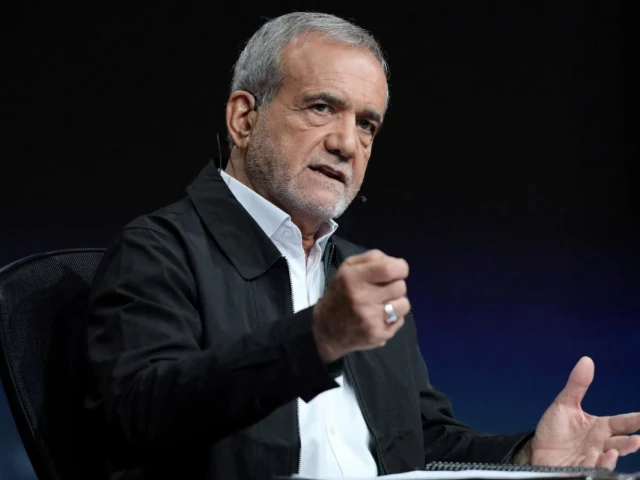
TEHRAN: Iranian President Masoud Pezeshkian has accused the United States and Israel of being responsible for the ongoing disruptions in the Strait of Hormuz, reiterating Tehran’s stance that the strategic waterway must remain closed to what it calls “hostile countries,” according to Iranian state media and Al Jazeera.
In a message marking National Persian Gulf Day, Pezeshkian described the Strait of Hormuz as a “symbol of the great Iranian nation’s resistance,” defending Iran’s position amid growing international concern over stalled maritime traffic.
He said responsibility for insecurity in the region lies with the United States and what he referred to as the “Zionist regime,” escalating diplomatic rhetoric amid rising geopolitical tensions.
The developments come as the United States continues efforts to form a new international coalition aimed at restoring shipping through the Strait of Hormuz. According to a Wall Street Journal report citing a US State Department cable, Washington has proposed a “Maritime Freedom Construct” to coordinate intelligence sharing, diplomatic engagement, and sanctions enforcement to reopen the critical shipping route.
The US initiative follows weeks of disrupted maritime movement in the region. Former President Donald Trump had earlier declared the Strait “completely open and ready for business,” although vessel traffic reportedly remains significantly restricted amid the standoff.
Reports also indicate that Iran has taken defensive measures in the waterway, while the United States has enforced restrictions on vessels linked to Iranian ports. The situation has further intensified ongoing diplomatic deadlock over Iran’s nuclear programme.
Iranian military adviser Mohsen Rezaei warned that any continued blockade would fail, stating that Tehran possesses multiple ways to bypass restrictions and could respond with confrontation if necessary. He also warned of potential escalation scenarios involving attacks and instability within Iranian territory if tensions continue.
The Strait of Hormuz, through which a significant portion of global oil trade passes, remains a key flashpoint in broader regional tensions involving Iran, the United States, and Israel.
The situation has already contributed to volatility in global energy markets and heightened concerns over potential military escalation in the Middle East.