Budget Seminar: IBA Karachi Hosts Experts to Examine Federal Budget 2026–27
Economists, policymakers and tax experts discuss fiscal reforms, trade, investment and economic growth at IBA Karachi.
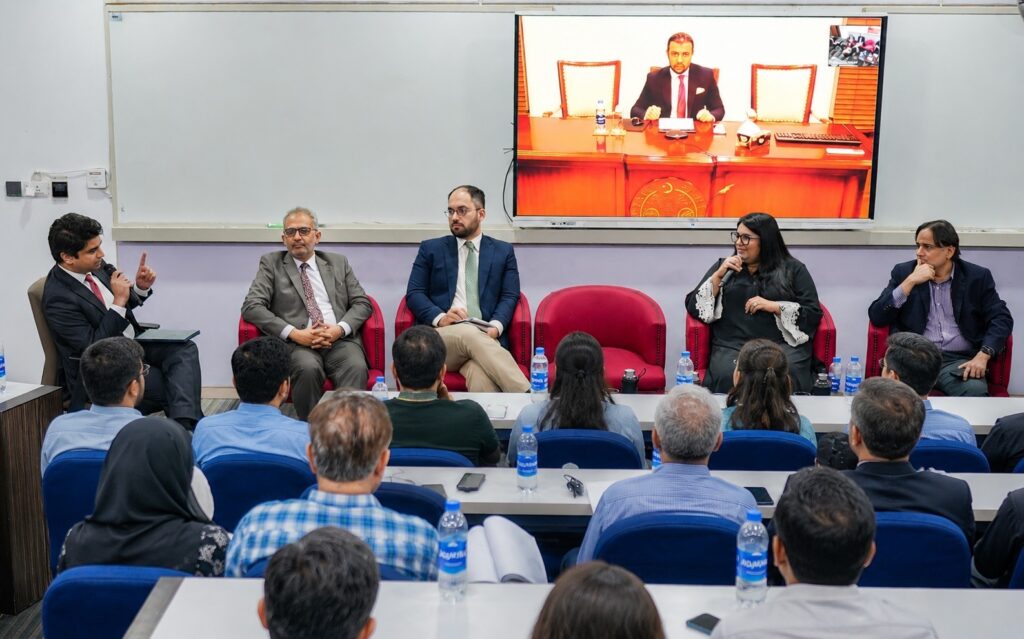
Experts discuss Pakistan's Federal Budget 2026–27 during a seminar at IBA Karachi.
KARACHI, July 6, 2026: Budget Seminar discussions took centre stage at IBA Karachi as the institute hosted a post-Federal Budget 2026–27 seminar, bringing together leading economists, policymakers and public finance experts to examine the budget’s impact on Pakistan’s economy, taxation, fiscal reforms, trade and investment.
The event opened with remarks from Dr. Lubna Naz, Director of the Center for Business & Economic Research (CBER), who stressed the need for sustained dialogue and closer collaboration between academia and policymakers. Dr. S. Akbar Zaidi, Executive Director of IBA Karachi, welcomed participants and highlighted the institution’s role in encouraging informed debate on national economic challenges while promoting greater student engagement in public policy.
Kharadar General Hospital Hosts Nursing Research Seminar to Promote Medical Innovation
The discussion was moderated by Ammar Habib, Assistant Professor of Practice at the School of Business Studies (SBS). The panel featured Khurram Schehzad, Adviser to the Finance Minister; Dr. Ali Salman, Chief Executive Officer of the Policy Research Institute of Market Economy (PRIME); Dr. Ali Hasanain, Associate Professor of Economics at LUMS; Dr. Zehra Farooq, Staff Officer to Member IR Operations at the Federal Board of Revenue (FBR); and Dr. Aadil Nakhoda, Assistant Professor at the School of Economics and Social Sciences (SESS).
Khurram Schehzad outlined the government’s approach to strengthening fiscal stability, attracting investment, advancing industrial policy and implementing reforms to support sustainable economic growth. Dr. Ali Salman said tariff reforms could help expand export-oriented industries and improve Pakistan’s competitiveness in international markets.
Dr. Ali Hasanain called for stronger institutions and better coordination between trade and industrial policies to address Pakistan’s long-standing anti-export bias. Dr. Zehra Farooq discussed revenue mobilisation, tax reforms, enforcement measures and the Federal Board of Revenue’s ongoing digital transformation initiatives. Dr. Aadil Nakhoda explained how simplified tariff structures could improve export competitiveness and help Pakistan integrate more effectively into global value chains.
The seminar concluded with an interactive question-and-answer session, reflecting IBA Karachi’s commitment to promoting evidence-based policy discussions and informed decision-making on issues affecting Pakistan’s economic future.