US-Iran Agreement: Ishaq Dar Tables Three-Page Accord in National Assembly, Outlines Next Phase of Talks
Pakistan’s foreign minister says the agreement enters a technical phase covering nuclear issues, sanctions, frozen assets and Lebanon, while highlighting Islamabad’s role as a mediator between Washington and Tehran.
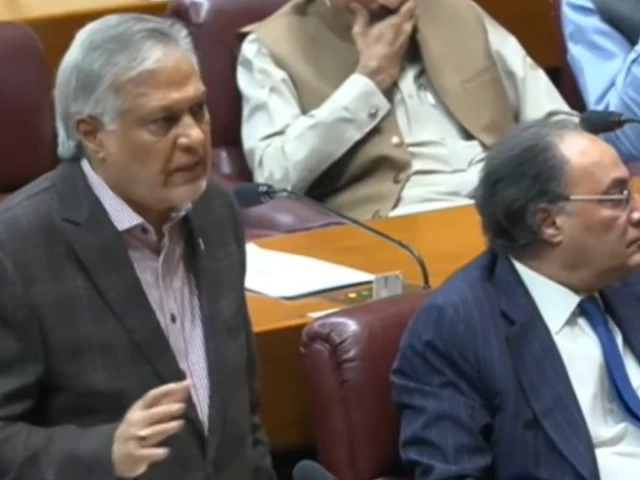
Ishaq Dar addresses the National Assembly on the US-Iran agreement.
US-Iran Agreement: Foreign Minister Ishaq Dar on Wednesday presented the three-page US-Iran agreement before the National Assembly, saying the next phase of the process would focus on technical negotiations concerning nuclear matters, sanctions, frozen assets and Lebanon.
Addressing lawmakers, Dar said he had placed the agreement on the parliamentary record alongside the joint communiqué issued on June 22 by the United States, Iran, Qatar and Pakistan. He said the document had been widely misunderstood and misquoted, making it necessary to provide members with direct access to the original text.
The foreign minister said each page of the agreement carried the initials of the parties involved, while the final page contained full signatures. He added that Pakistan’s Foreign Office had also published the document and related communiqué to ensure transparency regarding the roadmap agreed by all sides.
France Ebola Case: Country Confirms First Infection Linked to DR Congo Outbreak
Dar told the assembly that a breakthrough emerged after a 21-hour round of negotiations held on April 10 and 11. The talks continued through six sessions and lasted until dawn, with both delegations agreeing to sit together only if Pakistan acted as mediator.
According to Dar, the US delegation included Vice President JD Vance, Steve Witkoff and Jared Kushner, while Iran was represented by senior officials led by Bagher Ghalibaf. Pakistan’s delegation included Dar, Chief of Army Staff Field Marshal Asim Munir and the Director General of Inter-Services Intelligence (ISI).
He said the negotiations faced setbacks after both sides sought approval from their respective leaderships, raising concerns that the process could collapse. However, Prime Minister Shehbaz Sharif, Field Marshal Munir and Pakistan’s diplomatic team continued their efforts despite growing uncertainty.
Dar also highlighted the involvement of a regional forum comprising Saudi Arabia, Pakistan, Egypt and Türkiye, which held a series of meetings in Riyadh, Antalya, Islamabad and Egypt to support diplomatic efforts.
Explaining the signing process, the foreign minister said the agreement was initially scheduled to be signed in Geneva on June 19. However, a last-minute change led US President Donald Trump to sign the document electronically while attending the G7 summit. Iranian President Masoud Pezeshkian later signed the agreement, followed by Prime Minister Shehbaz Sharif in Pakistan’s role as mediator.
The subsequent ceremony took place in Switzerland, where discussions among the four parties resulted in the June 22 joint communiqué.
Screenless Tech: Can AI Wearables Finally Replace Smartphone Habits?
Dar said Pakistan maintained strict neutrality throughout the negotiations and refused to share draft documents without the consent of both parties. He described Islamabad as a trusted and impartial mediator that avoided favouring either side.
The foreign minister said the agreement had been structured in two phases. He noted that the first phase had already produced tangible outcomes, including measures to cushion the impact of rising fuel prices on consumers.
The second phase, he said, would centre on three key areas: nuclear issues, sanctions and frozen assets, and the situation in Lebanon. Dar added that renewed hostilities involving Lebanon briefly delayed negotiations before a ceasefire allowed talks to continue.
He also claimed that economic conditions had improved following the agreement, citing lower prices, the end of a US naval blockade and the removal of additional fees and permit requirements by Iran.
Discussing Pakistan’s international standing, Dar said US officials had recently described Pakistan as a “net security provider” in the region because of its role in facilitating dialogue between Washington and Tehran.
The foreign minister also acknowledged China’s diplomatic support, referring to a five-point peace initiative jointly announced by Islamabad and Beijing earlier this year. He said the proposal received backing from several countries, including European states.
Dar concluded by saying Pakistan had upheld neutrality throughout the process, even withholding documents from close partners. He added that Iranian officials had expressed appreciation for Pakistan’s support during difficult times, while crediting the success of the mediation effort to Prime Minister Shehbaz Sharif, Field Marshal Asim Munir, the Foreign Ministry and divine guidance.