US Iran Agreement Text Sparks Debate Over Nuclear Deal Transparency
US and Iran draft agreement sparks debate over transparency and nuclear terms.
The Iran Nuclear Deal negotiations between the United States and Iran have entered a sensitive phase as officials prepare to release a draft memorandum of understanding. According to US officials cited in reports, the Iran Nuclear Deal text is intentionally vague and designed to create space for continued technical negotiations.
The Iran Nuclear Deal framework has raised questions over transparency, sanctions relief and the extent of Iran’s nuclear commitments. Officials argue that the agreement is more of a political foundation than a binding technical treaty.
Telegram Challenges India Ban Over NEET Exam Paper Leak Crackdown
US Iran Nuclear Deal Draft Agreement
US officials described the Iran Nuclear Deal draft as a short and flexible document meant to enable further in-person talks. Vice President JD Vance reportedly said the memorandum of understanding is around one-and-a-half pages long.
Moreover, officials stated that the text is designed to allow both sides to present the agreement positively to domestic audiences. As a result, the language is intentionally broad rather than highly detailed.
However, critics argue that the lack of specificity could create uncertainty in implementation. Therefore, concerns remain over how commitments will be verified in practice.
Iran Nuclear Deal Sanctions Relief Structure
The Iran Nuclear Deal framework reportedly includes provisions for sanctions relief tied to progress in negotiations. Officials said Iran could gain access to financial benefits, including a large development fund, if it meets agreed conditions.
Additionally, the agreement suggests Iran may be able to resume oil and petrochemical exports under sanction waivers. As a result, economic incentives are a central component of the deal structure.
However, the timing of asset unfreezing and financial access remains unclear. Therefore, the agreement appears to rely heavily on phased implementation.
US Iran Nuclear Negotiations Backchannel Talks
US officials stated that some of Iran’s commitments were communicated through backchannel negotiations rather than written clauses. These include assurances related to nuclear material management and cooperation with international monitoring bodies.
Moreover, officials claimed Iran has signaled willingness to allow oversight in coordination with the International Atomic Energy Agency. However, these commitments are not explicitly detailed in the written memorandum.
As a result, observers say much of the Iran Nuclear Deal depends on trust-based diplomatic understandings rather than enforceable text.
Donald Trump Iran Deal Political Response
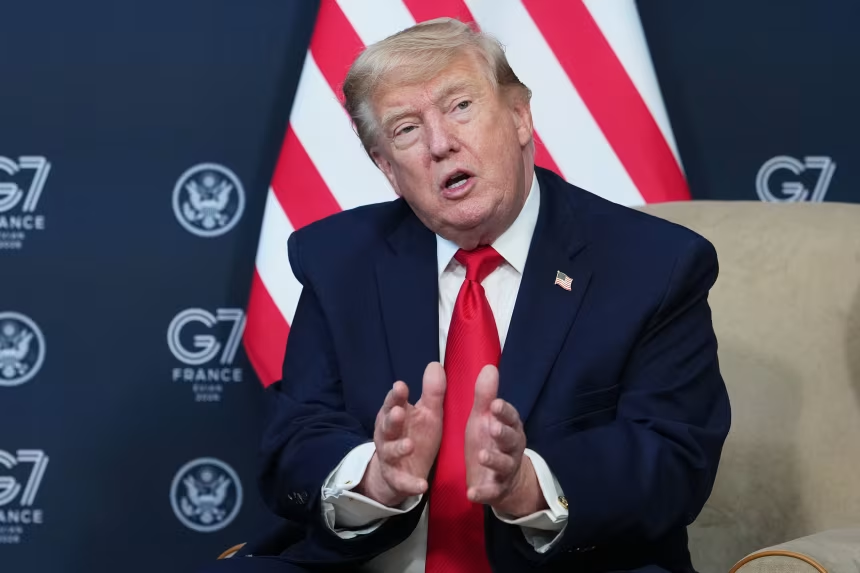
The Iran Nuclear Deal has also triggered political debate in Washington over transparency and long-term consequences. Donald Trump has defended the negotiations, stating that the framework is part of a broader effort to end conflict and stabilize energy markets.
Additionally, some political allies have questioned why the agreement has not been fully released to the public. Therefore, domestic scrutiny is increasing alongside international attention.
Officials involved in the process argue that diplomatic sequencing is necessary to protect sensitive negotiations. However, critics continue to demand clearer disclosure of commitments.
Iran Nuclear Deal G7 Summit Discussions
The Iran Nuclear Deal draft has reportedly circulated among officials attending the G7 Summit in France. Leaders are said to have reviewed aspects of the agreement during meetings in Évian-les-Bains.
Moreover, discussions focused on sanctions relief mechanisms and nuclear verification concerns. As a result, allied governments are seeking further clarity from Washington.
Officials indicated that a formal public release is expected soon, depending on diplomatic timing. Therefore, the agreement remains in a fluid and evolving stage.
Iran Nuclear Deal Next Round Talks
The next phase of Iran Nuclear Deal negotiations is expected to involve highly technical discussions between US and Iranian delegations. These talks will focus on nuclear compliance mechanisms, sanctions implementation and verification systems.
Additionally, officials described this phase as a trial period for assessing Iran’s commitment to the agreement. Therefore, outcomes from these talks will determine the future direction of the deal.
In conclusion, the Iran Nuclear Deal remains politically sensitive, with ongoing debates over transparency, enforcement and diplomatic strategy shaping its future.