US-Iran Peace Deal Includes $300 Billion Fund and Lebanon Ceasefire Clause
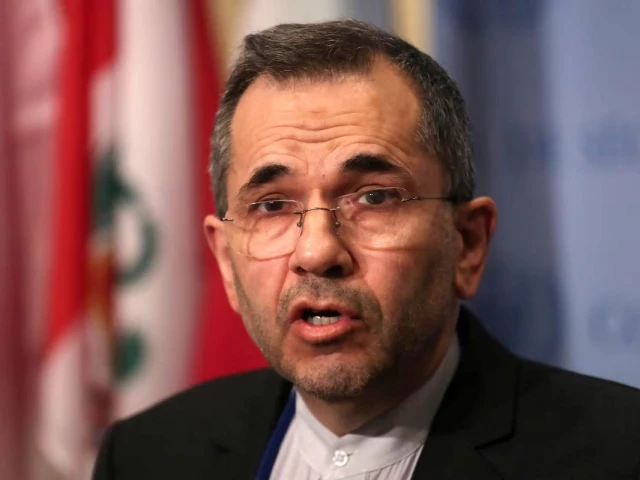
US and Iran representatives prepare to sign the memorandum of understanding in Switzerland, marking a potential turning point in the Middle East conflict.
The memorandum of understanding, signed electronically on Sunday, includes a major clause requiring an end to military operations across all fronts — including Lebanon. Furthermore, it outlines a $300 billion private investment fund, with more than half already committed by international companies.
For more: US Iran Agreement Text Sparks Debate Over Nuclear Deal Transparency
The US-Iran deal marks one of the most significant diplomatic shifts in the region in decades. It sets a 60-day window for negotiating a permanent truce. Meanwhile, the Strait of Hormuz is reopening, and Iranian oil tankers are already moving again.
Iran Deputy FM Confirms Lebanon Clause in MoU
Iranian Deputy Foreign Minister Majid Takht-Ravanchi confirmed on Wednesday that the agreement contains an explicit clause. That clause requires an end to military operations on all fronts, including Lebanon. He also confirmed a mechanism exists to address Israeli violations of the deal.
According to Drop Site News, the mechanism activates if Israel breaches the ceasefire through attacks on Lebanon. Foreign Minister Abbas Araghchi added that any further Israeli military action in Lebanon would constitute a clear violation. He stated that ending the war on Lebanon is inseparable from broader regional peace.
Hezbollah and Lebanese Parliament Credit Iran’s Role
Hezbollah Secretary-General Naim Qassem publicly thanked Iran for its role in the agreement. In a letter shared by Drop Site News, he said Iran made halting the Lebanon war a “first and fundamental clause” of the MoU. He described Iran as turning “the only effective glimmer of hope” into reality.
Lebanese Parliament Speaker Nabih Berri separately thanked Iran and Iranian Parliament Speaker Mohammad Bagher Ghalibaf. According to an Iranian readout, Ghalibaf stated that Israeli forces must withdraw from occupied Lebanese territory. He also said that residents of southern Lebanon must be allowed to return home with dignity.
$300 Billion Investment Fund Takes Shape
A source with direct knowledge of the deal told Reuters that a $300 billion private fund is outlined in the US-Iran framework. Importantly, more than half of that amount has already been committed. The fund will consist entirely of private-sector financing — no government money or grants are included.
Companies from South Korea, Japan, Singapore, Malaysia, and the United States are among those that have made commitments. Investments span energy, logistics, manufacturing, and transport sectors. The fund will be named the Reconstruction and Development Fund and will only become operational after a final deal is signed.
Iran’s Oil Exports Resume After Two-Month Blockade
Iranian crude oil tankers have already begun exiting the US Navy blockade zone. TankerTrackers reported that at least two supertankers — DIONA and HERO2 — left carrying a combined 3.8 million barrels of crude oil. A third tanker carrying 1 million additional barrels also reportedly exited.
A senior US official confirmed that the deal allows Iran to immediately begin selling oil and fuel. The agreement also includes banking, transportation, and insurance services to support those sales. This marks Iran’s first crude oil exports in two months.
Amnesty International Warns of War Crimes in Lebanon
Amnesty International warned on Wednesday that Israel’s mass displacement orders in Lebanon may amount to war crimes. The group stated that Israel’s forced displacement of civilians and prevention of their return constitutes unlawful transfer under international law.
According to the statement, the Israeli military declared approximately 4.6% of Lebanon a no-go zone in November 2024. By April 2026, that area expanded to around 6% of the country. Lebanese officials say Israel’s offensive since March 2 has killed more than 3,820 people and displaced over 1 million.
Greece Eyes Naval Role in Strait of Hormuz
Greece is reportedly considering sending naval units for mine-clearing and policing operations in the Strait of Hormuz. Local media reported that Greece may contribute a MEKO-class frigate currently participating in the EU’s Operation Aspides in the Red Sea region.
Three scenarios are reportedly under consideration. The first involves a six-month mission with Iran’s tolerance. The second extends to one year if independent armed groups remain active. The third scenario involves a potential collapse of the US-Iran agreement, which could terminate the mission entirely.
G7 Leaders and Canada Welcome the US-Iran Deal
Leaders at the G7 Summit in France welcomed the US-Iran deal announcement on Wednesday. They reaffirmed the right of transit passage through international waterways and expressed readiness to support deal implementation.
Canadian Prime Minister Mark Carney called the agreement a “game changer” in a CNN interview. He said it exceeded his expectations and described it as well-structured for the 60-day ceasefire period. Carney confirmed that the deal’s core element is Iran’s commitment not to develop or procure a nuclear weapon.
China Offers Aid and Calls for Ceasefire Commitment
China announced humanitarian aid for both Iran and Lebanon on Wednesday. Foreign Ministry spokesman Lin Jian stated that Beijing is “deeply saddened” by the humanitarian disaster caused by the conflict. China had previously sent aid to Iran in March.
Chinese Foreign Minister Wang Yi separately called for firm commitment to the ceasefire. He urged all parties to build a “sustainable security architecture” in the region. Wang warned that the international order faces mounting instability, describing it as a ship entering “dangerous waters.”
What Comes Next in the 60-Day Window
Negotiators will return to difficult issues over the next 60 days. Chief among them is the future of Iran’s nuclear program. Iran and the US previously held nuclear discussions in February before the war interrupted those talks.
Two other issues — Iran’s support for regional militias and its missile program — reportedly do not appear on the current agenda. US President Donald Trump expressed frustration with Israel’s military conduct, saying he was “not happy” with how Israel had handled itself. Trump described the deal as “a wall to a nuclear weapon” for Iran, while also suggesting he would send the agreement to Congress for review.