Ceuta Spain Migration Crisis Deepens as Nearly 49,000 Cross From Morocco in 24 Hours
Spain deploys troops after an unprecedented surge of migrants overwhelms border controls, with at least 18 people reported dead during dangerous crossing attempts.
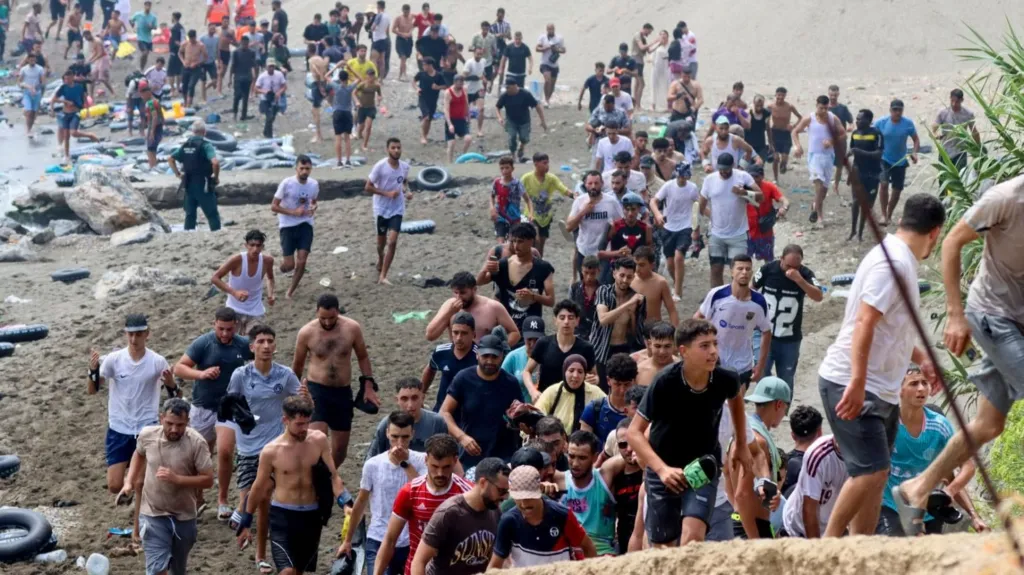
Migrants swim into Spain's enclave of Ceuta during a record border crossing from Morocco.
Spain has deployed military forces to its North African enclave of Ceuta after an estimated 49,000 migrants crossed from Morocco by land and sea within 24 hours, marking one of the largest border surges in the territory’s history.
Thousands of people, including men, women and children, were seen swimming into Ceuta or crossing the border on foot as local authorities struggled to contain the influx. Officials estimate that around 7,000 of those who entered are minors, while at least 18 people have died in recent days attempting the dangerous journey.
The unprecedented Ceuta Migration surge came shortly after Spain’s Supreme Court ruled that migrants intercepted at sea while trying to reach Ceuta or Melilla cannot be immediately returned to Morocco. Although officials have not linked the ruling directly to the mass crossings, the decision has intensified debate over migration management and border security.
Ceuta, located on Morocco’s northern coast, forms one of the European Union’s only land borders with Africa. Spanish authorities described chaotic scenes as border controls appeared to collapse, with the estimated number of new arrivals exceeding half of the enclave’s population of around 83,600.
Khuzdar Operation Foils Deadly VBIED Plot as Security Forces Kill Four Militants
In response, Spain reinforced security by deploying armed forces to Ceuta and neighbouring Melilla, where authorities also recorded between 300 and 400 illegal crossings overnight. The Interior Ministry said it is coordinating with Moroccan authorities to return those who entered illegally as quickly as possible.
Prime Minister Pedro Sánchez is expected to visit Ceuta as the government works to restore order and assess the humanitarian and security challenges created by the sudden influx.
The crisis has also heightened diplomatic tensions. Morocco and Spain have long disagreed over the sovereignty of Ceuta and Melilla, territories that Morocco claims while Spain considers integral parts of its national territory.
The latest surge follows renewed friction over Western Sahara after Sánchez recently visited Algeria, which supports the territory’s independence movement. Analysts have drawn comparisons with the 2021 migration crisis, when about 8,000 migrants crossed into Ceuta during a separate diplomatic dispute between Madrid and Rabat.
Italy also weighed into the crisis, with Prime Minister Giorgia Meloni describing the scenes as “shocking” and warning that uncontrolled migration poses a security risk to Europe. Her comments prompted criticism from Spanish Foreign Minister José Manuel Albares, who accused Italian leaders of politicising the issue and called for European solidarity instead.
Authorities said crossings and clashes along the border continued overnight, while investigations remain ongoing into what triggered the unprecedented movement of migrants from Morocco.