Beyond Friendship: Building the Next Chapter of Pakistan-China Cooperation
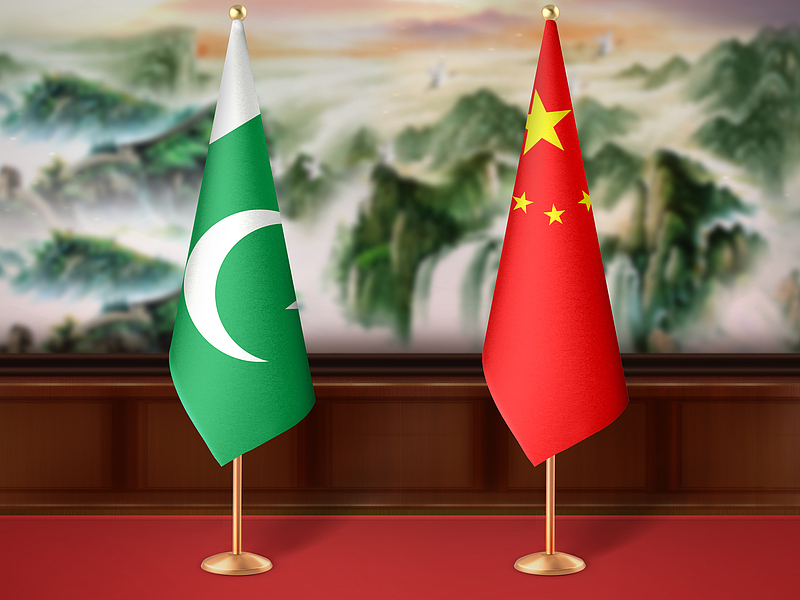
 The celebration of the 75th Anniversary of diplomatic relations between Pakistan and China is far more than a ceremonial milestone. It is an opportunity to reflect upon one of the most enduring and successful bilateral relationships in contemporary international relations and, more importantly, to envision its future trajectory.
Since the establishment of diplomatic relations on 21 May 1951, Pakistan and China have developed a partnership that has consistently
demonstrated resilience, mutual trust, strategic understanding, and unwavering support. Throughout changing political environments, shifting global power dynamics, economic uncertainties, and regional challenges, the friendship between the two countries has remained steadfast.
Today, as the world undergoes profound economic, technological, and geopolitical transformation, the Pakistan-China relationship stands at another important crossroads.
Traditionally, bilateral relations are measured through trade volumes, investment figures, infrastructure projects, defense cooperation, and diplomatic engagement. While these indicators undoubtedly reflect the strength of a relationship, the true foundation of Pakistan-China ties lies in a deeper principle: consistency.
For seventy-five years, both nations have maintained a relationship rooted in mutual respect, sovereign equality, and a shared commitment to long-term cooperation. This consistency has transformed a diplomatic relationship into what is often described as an “All-Weather Strategic Cooperative Partnership.”
China’s remarkable transformation over the past four decades represents one of the most extraordinary development achievements in human history. Hundreds of millions of people have been lifted out of poverty, modern industrial capabilities have been established, innovation has flourished, and world-class infrastructure has been developed at an unprecedented scale.
China’s success offers valuable lessons not only for Pakistan but for all developing nations. It demonstrates that national progress is driven by vision, planning, discipline, investment in human capital, and long-term policy continuity.
As we celebrate seventy-five years of friendship, our focus should not remain confined to the achievements of the past. The more important question is what kind of Pakistan-China partnership we aspire to build by 2050.
The first phase of bilateral cooperation was largely characterized by diplomatic engagement, strategic collaboration, defense cooperation, infrastructure development, and connectivity. Landmark initiatives such as the China-Pakistan Economic Corridor (CPEC) have already transformed the economic landscape and strengthened regional connectivity.
However, the next phase of cooperation must increasingly focus on people-centered development.
The future of Pakistan-China relations should be driven by innovation, knowledge, entrepreneurship, research, education, and technological advancement. The young entrepreneur in Karachi, the engineer in Lahore, the researcher in Islamabad, the scientist in Beijing, and the software developer in Shenzhen will collectively shape the future of this partnership.
The global economy is entering an era defined by artificial intelligence, advanced manufacturing, biotechnology, renewable energy, smart logistics, digital commerce, and green technologies. Nations that innovate, educate, and collaborate will emerge as leaders in this new economic order.
Pakistan and China possess enormous potential to deepen cooperation in these strategic sectors. Future collaboration should focus on technology transfer, joint research initiatives, industrial modernization, agricultural innovation, vocational and technical training, digital infrastructure, renewable energy, and sustainable development.
While the Pakistan-China partnership has achieved remarkable success over the past seventy-five years, significant opportunities remain untapped. The next phase of cooperation should focus on creating a more diversified and innovation-driven economic relationship.
Bilateral trade between Pakistan and China has grown substantially over the years, yet considerable potential exists to further enhance market access, promote value-added exports, and encourage greater participation of small and medium enterprises in cross-border trade. Both countries should work toward expanding trade in agricultural products, information technology services, engineering goods, pharmaceuticals, and high-value manufacturing sectors.
As CPEC enters its second phase, the focus must increasingly shift from infrastructure development toward industrial cooperation, technology partnerships, export-oriented manufacturing, and sustainable economic growth. Greater emphasis should now be placed on industrialization, export-oriented manufacturing, Special Economic Zones (SEZs), and the development of integrated supply chains. Chinese investment in manufacturing industries can help accelerate Pakistan’s industrial modernization while creating employment opportunities and increasing export competitiveness.
Technology transfer must become a cornerstone of future cooperation. Pakistan can benefit significantly from China’s advancements in artificial intelligence, smart manufacturing, e-commerce, fintech, digital infrastructure, telecommunications, and automation technologies. Joint ventures, research partnerships, and technology incubation programs can help bridge knowledge gaps and accelerate innovation-driven growth.
Equally important is collaboration in green energy and sustainable development. As the world moves toward cleaner energy solutions, Pakistan and China can expand cooperation in solar energy, wind power, electric mobility, energy storage systems, and climate-resilient infrastructure. Such initiatives would not only support economic growth but also contribute to environmental sustainability and long-term energy security.
The digital economy represents another promising frontier. Enhanced cooperation in digital commerce, digital payments, logistics technology, cybersecurity, and innovation ecosystems can unlock new opportunities for entrepreneurs and businesses in both countries. By leveraging technological innovation and human capital development, Pakistan and China can together build a modern partnership capable of meeting the challenges and opportunities of the twenty-first century.
Equally important is the need to strengthen institutional partnerships between universities, research centers, think tanks, chambers of commerce, and private sector organizations in both countries. Greater cultural exchanges, academic collaborations, tourism promotion, and youth engagement initiatives can further strengthen the people-to-people bonds that have long served as the foundation of Pakistan-China friendship.
The China-Pakistan Economic Corridor remains one of the most significant symbols of bilateral cooperation. Yet its greatest legacy should not be measured solely through highways, ports, railways, or power plants.
Its true success will ultimately be measured by the opportunities it creates, the industries it develops, the investments it attracts, the jobs it generates, and the lives it improves.
Economic development must always translate into human development.
A famous Chinese proverb states: “If you want prosperity for one year, grow grain. If you want prosperity for ten years, grow trees. If you want prosperity for one hundred years, educate people.”
This wisdom provides an ideal framework for the next phase of Pakistan-China cooperation.
Investment in human capital, education, skills development, innovation, and leadership must become central pillars of future collaboration. Roads and infrastructure connect cities, but education and knowledge connect futures.
As we commemorate this historic anniversary, we must recognize that friendship is not merely inherited; it must be continuously renewed and strengthened by each generation.
The responsibility now passes to our youth, our entrepreneurs, our academics, our policymakers, and our business leaders to carry this relationship forward with the same spirit of trust and cooperation that has defined the past seventy-five years.
The Pakistan-China relationship has already become a model of enduring friendship and strategic partnership. Yet its most promising chapter may still lie ahead.
If both countries continue to invest in people, innovation, knowledge, and shared prosperity, the next twenty-five years can become even more transformative than the previous seventy-five.
As Pakistan and China celebrate this historic milestone, let us look toward the future with confidence, optimism, and determination. Together, Pakistan and China can build a partnership that not only advances the prosperity of our two nations but also contributes to regional stability, sustainable development, and a more cooperative and interconnected world.
Pakistan-China Friendship Zindabad.