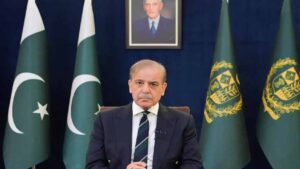
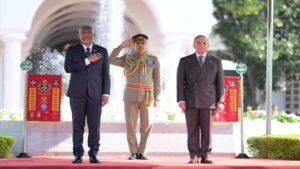
Iran Visit: Iranian President Masoud Pezeshkian arrives in Islamabad for high-level talks with Pakistani leadership
Red Zone security tightened as Pakistan and Iran prepare to review trade, energy, and regional cooperation amid ongoing diplomatic engagements
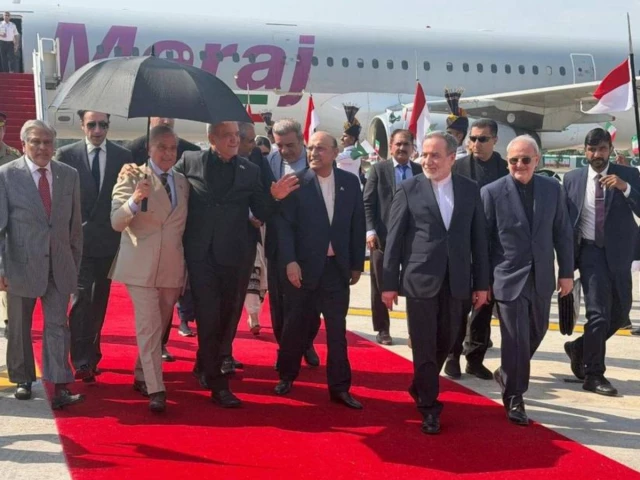
Iranian President Masoud Pezeshkian arrives in Islamabad for official talks amid heightened security arrangements
Iranian President Masoud Pezeshkian arrived in Islamabad on Tuesday for an official visit aimed at strengthening bilateral relations, according to state broadcaster PTV. Masoud Pezeshkian is visiting at the invitation of Prime Minister Shehbaz Sharif for a series of high-level meetings with Pakistan’s top leadership.
During the visit, Pezeshkian will hold talks with Prime Minister Shehbaz Sharif and meet President Asif Ali Zardari. Senior officials, including Senate Chairman Yousuf Raza Gilani, National Assembly Speaker Ayaz Sadiq, and Deputy Prime Minister Ishaq Dar, are also expected to call on the Iranian president.
The Foreign Office said this marks Pezeshkian’s second visit to Pakistan as president and will allow both sides to review the full scope of bilateral relations, including trade, energy cooperation, border security, people-to-people contacts, and regional connectivity.
Officials said the visit comes at a sensitive diplomatic moment following the signing of the Islamabad Memorandum of Understanding and recent US-Iran engagement in Switzerland. Islamabad described the visit as an opportunity to discuss ongoing diplomatic developments and broader regional stability.
SECP Approves Second SPAC IPO, Marking 14th Listing Approval in FY 2025-26
Authorities imposed strict security measures across Islamabad’s Red Zone ahead of the visit. Judicial work at the Islamabad High Court was suspended for the day, while the Federal Constitutional Court also halted proceedings due to restricted access. Government employees working in Red Zone offices were directed to work from home, with some essential institutions exempted.
Bus terminals across the capital were shut down overnight, and major hiking trails were closed as part of the security lockdown. Entry into the Red Zone has been restricted to authorised personnel only until the Iranian president’s departure.
Diplomatic discussions follow recent US-Iran talks held in Switzerland, mediated by Pakistan and Qatar, where both sides agreed on a framework to continue negotiations over the next 60 days. Officials say those talks included discussions on regional conflict de-escalation and maritime security in the Strait of Hormuz.
Pakistan has played a mediating role in facilitating dialogue, which officials say has contributed to renewed communication channels between Washington and Tehran. Further technical negotiations are expected to continue in the coming weeks.