Hormuz Crisis: US Launches Fresh Strikes on Iran as Regional Tensions Escalate
Washington expands military operations targeting Iranian capabilities while Tehran threatens regional energy exports and vows further retaliation.
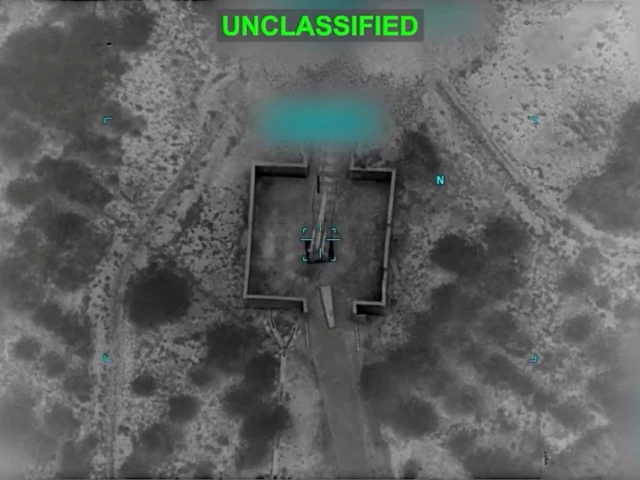
US military operations and rising tensions intensify the conflict around the Strait of Hormuz.
The Hormuz Crisis intensified on Wednesday after the United States launched a fresh wave of military strikes against Iran, prompting new threats from Tehran and raising fears of wider conflict across the Middle East.
US Central Command (CENTCOM) said the operation began at 6:00 a.m. EST (3:00 p.m. Pakistan time) and targeted Iranian military assets used to threaten commercial shipping in the Strait of Hormuz. The seven-hour campaign involved fighter aircraft, drones and naval vessels that struck missile sites, drone facilities, naval capabilities and coastal defense systems.
Iran’s Islamic Revolutionary Guard Corps (IRGC) warned that it could halt energy exports from the Middle East, declaring that regional oil and gas exports would either continue for everyone or for no one. The group also threatened to block additional strategic shipping routes beyond the Strait of Hormuz.
Iranian media reported that US strikes killed at least seven military personnel at an army base near Iranshahr in southeastern Iran after missiles hit accommodation buildings, guard posts and other facilities. Iranian officials said several others suffered injuries and promised a decisive response.
Government spokeswoman Fatemeh Mohajerani said recent attacks in southern Iran had killed more than 30 civilians. She did not specify the locations or provide further details.
Authorities also reported damage to civilian infrastructure. Officials said US projectiles struck the maritime traffic control center at Chabahar Port, a facility that supports maritime safety, search and rescue operations and commercial shipping. Officials also confirmed strikes on a wheat storage silo and another site in Khuzestan province. They reported no casualties at those locations.
Iran’s Health Ministry said the latest attacks injured more than 260 people. Health ministry spokesman Hossein Kermanpour said medical teams treated 222 people and discharged them from hospitals, while at least two people died. Three of the injured were children.
Meanwhile, Bahrain said its air defenses intercepted several Iranian missiles and drones that targeted civilian areas, while Jordan’s military announced it had shot down three ballistic missiles that entered its airspace without causing casualties or damage.
The conflict also widened diplomatically at the United Nations. Chinese Ambassador Sun Lei accused the United States of pushing the Middle East toward a “dangerous precipice” and urged Washington to avoid creating further instability. US Ambassador Mike Waltz responded by accusing China of failing to stop the flow of dual-use goods and technology to Iran and the Iran-backed Houthis.
US President Donald Trump warned that Washington could target Iran’s power plants and critical infrastructure if Tehran refuses to return to negotiations. He said US officials had urged Iran to reach an agreement but warned that military pressure would continue if diplomacy failed.
The renewed fighting has disrupted shipping through one of the world’s most important energy corridors. Oil prices climbed for a second consecutive day as traders reacted to growing concerns over supply disruptions in the Strait of Hormuz, a route that normally carries about one-fifth of global oil and gas shipments.