Federal Cabinet Approves Pakistan-Kuwait Defence Pact, LPG Reforms and New Currency Designs
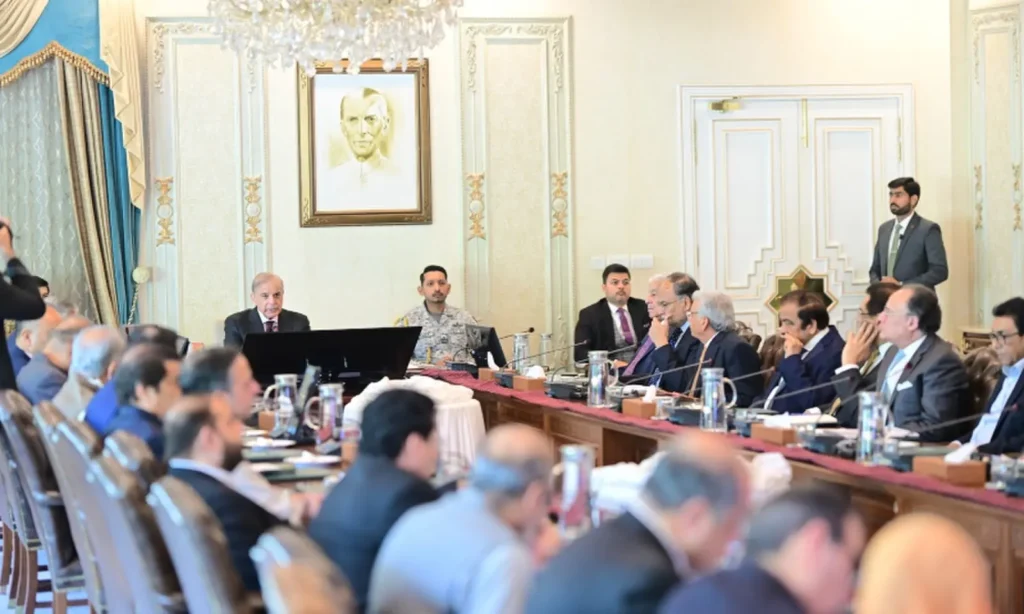
Federal Cabinet approves Pakistan-Kuwait defence cooperation, LPG reforms and new currency designs.
The federal cabinet on Wednesday approved a defence cooperation agreement between Pakistan and Kuwait to strengthen institutional ties between the armed forces of the two countries.
The cabinet also approved a competitive mechanism for allocating liquefied petroleum gas (LPG) quotas and transferred the powers of the Khyber Pakhtunkhwa chief minister to Governor Faisal Karim Kundi during the provincial emergency.
Prime Minister Shehbaz Sharif chaired the cabinet meeting, according to a statement issued by the Prime Minister’s Office.
Pakistan and Kuwait Strengthen Defence Cooperation
The cabinet ratified the defence cooperation agreement signed by Pakistan and Kuwait on June 11, 2023.
The agreement aims to strengthen defence cooperation and institutional links between the armed forces of both countries. The Kuwaiti government ratified the agreement on July 19, the PMO statement said.
Addressing the cabinet, Prime Minister Shehbaz also discussed recent diplomatic engagements aimed at reducing regional tensions.
He referred to two visits by Pakistani delegations to Tehran and a visit by Field Marshal Asim Munir. He also mentioned visits to Pakistan by the Saudi defence minister and Turkish official Ibrahim Kalin.
The prime minister said the discussions had remained constructive. He added that the engagements aimed to ease tensions and promote cooperation under a proposed trilateral arrangement involving Pakistan, Türkiye and Saudi Arabia.
Government Introduces Competitive LPG Quota System
The prime minister announced a transparent and competitive mechanism for allocating LPG quotas, aiming to end what he described as a decades-old monopoly in the sector.
Under the proposed system, companies will obtain locally produced LPG through supervised competitive auctions. Importing companies will also have to follow prescribed procedures.
Shehbaz said the government would deposit revenue from the auctions into the national exchequer. It would then use the proceeds to support subsidies and provide relief to ordinary citizens.
The prime minister attributed the country’s energy challenges mainly to high international petroleum prices and disruptions to maritime routes.
However, the closure of Iranian border crossings has also disrupted LPG supplies. The resulting shortages have reportedly pushed open-market cylinder prices to twice the official rate.
To prepare for winter demand, the government is holding meetings every two to three days. These meetings review energy requirements and contingency plans.
Refineries Asked to Help Avoid Petrol Price Increase
Shehbaz said Petroleum Minister Ali Pervaiz Malik, his team, the Oil and Gas Regulatory Authority (OGRA) and the relevant committee had approached refineries over their windfall profits.
The move aims to prevent a proposed Rs15 per litre increase in petrol prices from reaching consumers.
The prime minister praised the decision and said the government’s fuel subsidy programme, launched in September, would continue until the end of December.
He said the government had spent Rs28 billion on the programme so far. According to the prime minister, around 15 million people had benefited directly, representing an estimated 75 million people when their families were included.
Shehbaz described the programme as successful and transparent. He said the Intelligence Bureau was monitoring its implementation.
However, intelligence agencies had identified irregularities at some petrol pumps. The prime minister directed the petroleum minister to close the outlets involved and impose heavy financial penalties.
KP Governor Receives Chief Minister’s Powers
The cabinet transferred the powers of the Khyber Pakhtunkhwa chief minister to Governor Faisal Karim Kundi to manage administrative affairs during the provincial emergency.
The federal government imposed governor’s rule in KP on October 11 after talks with the opposition and the then-ruling party failed.
Under the cabinet’s decision, the governor will submit monthly reports to the federal government on the use of his delegated powers.
The cabinet also expressed hope that the KP Advisory Council, under the governor’s leadership, would work to improve public welfare, promote prosperity and restore law and order.
The prime minister said the government had finalised a comprehensive Rs160 billion development and security package for the province.
He expressed confidence that the sacrifices of the armed forces and law enforcement agencies, improved security arrangements and provincial cooperation would help eliminate terrorism.
Cabinet Approves New Currency Designs and Rs10 Coin
The cabinet approved designs for a new series of currency notes on the recommendation of the Ministry of Finance.
It also approved the introduction of a Rs10 coin to replace the existing Rs10 banknote.
The cabinet was informed that the government had invited artists and designers nationwide to submit designs. A prime ministerial cabinet committee had also conducted consultations with relevant stakeholders.
The new banknotes will feature enhanced security measures and advanced materials. These changes aim to prevent counterfeiting and improve the notes’ durability.
Other Cabinet Decisions
The cabinet endorsed decisions taken by the Cabinet Committee on State-Owned Enterprises during its October 26 meeting.
It also ratified decisions made by the Cabinet Committee on Legislative Cases during meetings held on January 22, February 26, August 5, 18 and 27, and September 11 and 22.