DG ISPR Says Makkah Defence Alliance Has No Regional Aspirations
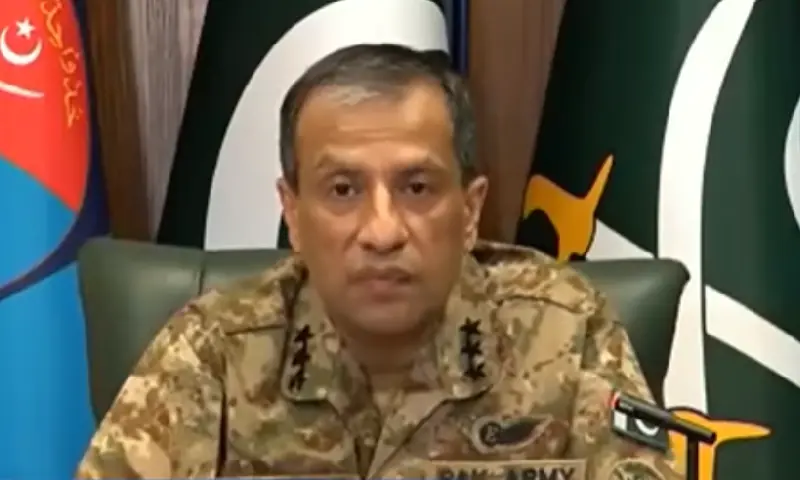
DG ISPR Lieutenant General Ahmed Sharif Chaudhry discusses the Makkah Defence Alliance during an Al Arabiya interview.
Inter-Services Public Relations (ISPR) Director General Lieutenant General Ahmed Sharif Chaudhry has described the Makkah Defence Alliance as a defensive arrangement focused on collective deterrence.
Speaking to Al Arabiya English on the programme Global News Today, he said the pact between Pakistan, Saudi Arabia and Türkiye had no regional military aspirations.
The interview was conducted by host Tom Burges Watson. Lt Gen Chaudhry discussed the alliance, Pakistan’s regional diplomacy, India, Afghanistan and counter-terrorism.
Makkah Alliance Focused on Collective Defence
Lt Gen Chaudhry said the agreement formalises Pakistan’s longstanding ties with Saudi Arabia and Türkiye.
He said the three countries had deep relationships in defence and collective deterrence. Moreover, he stressed that the pact contains no aggressive or expansionist objective.
“It is defensive. There’s nothing aggressive. There are no regional aspirations. It is collective deterrence,” he said.
Pakistan, Saudi Arabia and Türkiye signed the Makkah Joint Defence Agreement in Makkah on August 7. The agreement states that an armed attack against one member will be regarded as an attack against all three.
The Pakistani Foreign Ministry has also described the agreement as defensive and said it aims to strengthen collective deterrence against aggression.
Operational Details Will Remain Classified
Asked how Pakistan would respond if another member came under attack, Lt Gen Chaudhry declined to disclose operational details.
He said such arrangements normally do not reveal the methods used to implement defence commitments.
Indonesian Navy Chief Meets Pakistan Naval Chief in Islamabad
According to the military spokesperson, the three countries would decide how to operationalise their commitments if circumstances required action.
He also described the alliance as “complementary”. The three members, he said, maintain independent relationships with other countries, blocs and alliances.
Alliance Not in Competition With China
Lt Gen Chaudhry rejected the idea that the agreement could compete with Pakistan’s relationship with China.
He said Pakistan’s relations with Saudi Arabia and Türkiye had developed over decades. The new agreement, he added, formalises those established strategic relationships.
“All the three countries that are part of it, they have a wonderful relationship with China,” he said.
Furthermore, he said the pact was intended to support regional peace and stability rather than challenge another country or alliance.
No Exclusive Muslim Bloc, Says DG ISPR
The ISPR chief also rejected the description of the alliance as an exclusive Muslim-world security bloc.
He said nothing in the agreement defines it as a Muslim alliance. Instead, he described it as an arrangement focused on regional stability.
Lt Gen Chaudhry said the agreement could eventually include other willing partners. However, any expansion would depend on decisions by the leadership of Pakistan, Saudi Arabia and Türkiye.
Potential partners, he said, would need to share principles such as non-aggression, non-interference, peace and collective deterrence.
Pakistan Offers to Mediate Between US and Iran
The interview also covered Pakistan’s efforts to facilitate dialogue between the United States and Iran.
Lt Gen Chaudhry said the Makkah agreement did not complicate Pakistan’s position towards Tehran. He described Pakistan’s mediation efforts as part of its broader commitment to regional peace.
Pakistan, he said, maintains relationships with countries across the world. That position allows Islamabad to act as an “objective arbiter of peace and an honest broker of peace”.
He stressed that effective mediation requires objectivity and neutrality.
Therefore, Pakistan’s political and military leadership would continue engaging with the parties involved rather than publicly taking positions on sensitive developments.
Pakistan Seeks Negotiated Regional Settlement
Asked about the prospects for resolving the US-Iran conflict, Lt Gen Chaudhry stressed the need for a negotiated outcome.
He questioned whether there was a preferable route to ending the conflict other than mediation.
Pakistan, he said, wanted a peaceful settlement and believed countries capable of sincere mediation should continue their efforts.
The ISPR chief also addressed concerns about the conflict affecting Pakistan’s western borders.
He said Pakistan remained confident in protecting its territorial integrity and sovereignty. At the same time, he acknowledged that regional conflicts could create wider security concerns.
DG ISPR Discusses India Dialogue
The interview also turned to Pakistan-India relations and the military confrontation between the two countries in May 2025.
Lt Gen Chaudhry said a military conflict between two nuclear-armed neighbouring states should not occur.
He said Pakistan had demonstrated its military capabilities during the confrontation. However, he also said sustained communication between the two countries remained important.
Communication between the directors general of military operations, he noted, remained effective during and after the May conflict.
He said Pakistan was prepared for engagement with India on equal terms while respecting sovereignty and territorial integrity.
Any formal political dialogue, he added, would remain a matter for the political leadership.
Afghanistan and Cross-Border Terrorism
On Afghanistan, Lt Gen Chaudhry said Pakistan’s objective was aligned with the broader national policy set by the political leadership.
He said Pakistan wanted Afghanistan to avoid interference in Pakistan and prevent terrorism from its territory.
The military spokesperson referred to Article 51 of the United Nations Charter while discussing Pakistan’s right to self-defence.
He said the state had an obligation to protect the lives, honour and property of its citizens.
According to Lt Gen Chaudhry, Pakistan had conducted around 42,000 intelligence-based operations during the year. He also claimed that 2,100 terrorists had been killed during those operations.
Balochistan Operations
The ISPR chief also discussed security operations in Balochistan.
He rejected the description of the situation as an insurgency and characterised it instead as terrorism.
Lt Gen Chaudhry said more than 32,000 of the reported 42,000 intelligence-based operations had taken place in Balochistan.
He said security forces were targeting groups the military considers terrorist proxies.
At the same time, he said the government, people of Balochistan and military shared an understanding that security efforts must combine counter-terrorism operations with engagement with the province’s population.
Overall, the interview presented Pakistan’s stated position that the Makkah Defence Alliance is defensive, while Islamabad continues to pursue regional diplomacy and security cooperation.