BlueNet+ Calls for Integrated Policies to Unlock Pakistan’s Blue Economy
World Maritime Day 2026 seminar in Karachi brings government, business, academia and maritime experts together to promote investment, research and sustainable ocean development.
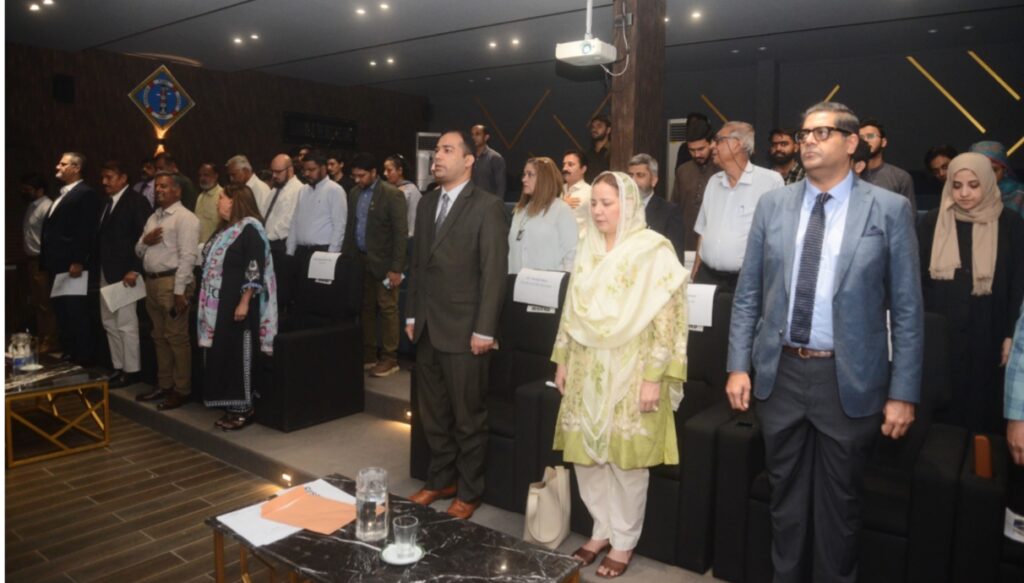
BlueNet+ seminar in Karachi highlights policy, investment and research for Pakistan’s Blue Economy.
KARACHI, October 1, 2026: BlueNet+ has called for stronger policy integration to unlock Pakistan’s Blue Economy potential.
The call came at a World Maritime Day 2026 seminar in Karachi. The event focused on turning maritime policies into practical action.
The seminar was held under the theme, “From Policy to Practice: Powering Maritime Excellence.” The theme is also the International Maritime Organization’s focus for 2026 and 2027.
Blue Economy Needs Policy Integration
Dr Nuzhat Khan, Founder and CEO of BlueNet+, said Pakistan needs better coordination among existing policies.
She said the Blue Economy should become part of national economic planning.
Pharmacists Play Backbone Role in Healthcare System, Wasif Khan Says
“Maritime and Blue Economy considerations must run through our economic, trade, investment, climate, tourism, fisheries, environmental, science and technology policies,” she said.
Dr Khan said the country also needs stronger links between policy, investment and implementation.
She identified three key pillars of the Blue Economy. They are economic prosperity, ecosystem health and human well-being.
These pillars require science, governance, finance, technology and effective policy.
Business Sector Seeks More Investment
Shabbir Hassan Mansha also spoke at the seminar. He is Chairman of PALIMA and Mansha Group.
Mansha called for greater private-sector participation in maritime trade and investment.
He said Pakistan needs an enabling business environment. He also highlighted the importance of efficient ports and logistics.
He urged stronger cooperation between the public and private sectors.
Experts Highlight Science and Data
Engr Naimatullah Sohoo, Director General of the National Institute of Oceanography, stressed the role of research.
He said ocean data can help improve policy decisions and investment planning.
Sohoo also called for stronger links between scientific research and government policy.
He said scientific knowledge should support sustainable maritime development.
Maritime Sector Faces Major Challenges
The seminar covered several areas of Pakistan’s maritime economy.
These included maritime trade, fisheries and coastal tourism. Speakers also discussed climate resilience and marine biodiversity.
Pollution, waste management and digitalisation also featured in the discussions.
Other topics included entrepreneurship, women’s participation and youth engagement.
Participants stressed the need for responsible ocean governance.
Media Role in Maritime Development
Iram Tanveer, Director General of PID Karachi, highlighted the role of media.
She said strategic communication can bring Blue Economy issues into the national debate.
Media can also connect government policies with businesses and communities.
The seminar brought together representatives from government, business, academia and maritime organisations.
Researchers, environmental experts, tourism representatives and fisheries stakeholders also participated.
From Research to Practical Action
Participants outlined a common pathway for maritime development:
Research and data ? Evidence ? Integrated policy ? Investment ? Implementation ? Impact
Dr Nuzhat Khan said Pakistan must move from policy discussions to practical implementation.
“From policy to practice must become our collective pathway,” she said.
She added that Pakistan’s Blue Economy should support economic growth while protecting maritime resources.
Pakistan’s wider maritime policy agenda also stresses sustainable shipping, digital transformation and stronger maritime capabilities. The government has linked these efforts with long-term economic development.
The seminar concluded with a call for closer cooperation among government, science, business, academia, media and local communities.