Balochistan Police: Athletes Turned Officers as Sports Careers Stall
The crowd at Railway Ground in Quetta watched every movement as Noshki faced Kech in a qualifying match of the 6th Chief Minister Balochistan Gold Cup. Standing beyond the touchline was Hamza — once a celebrated defender for the Pakistan Police Football team, now assigned to guard the match in police uniform.
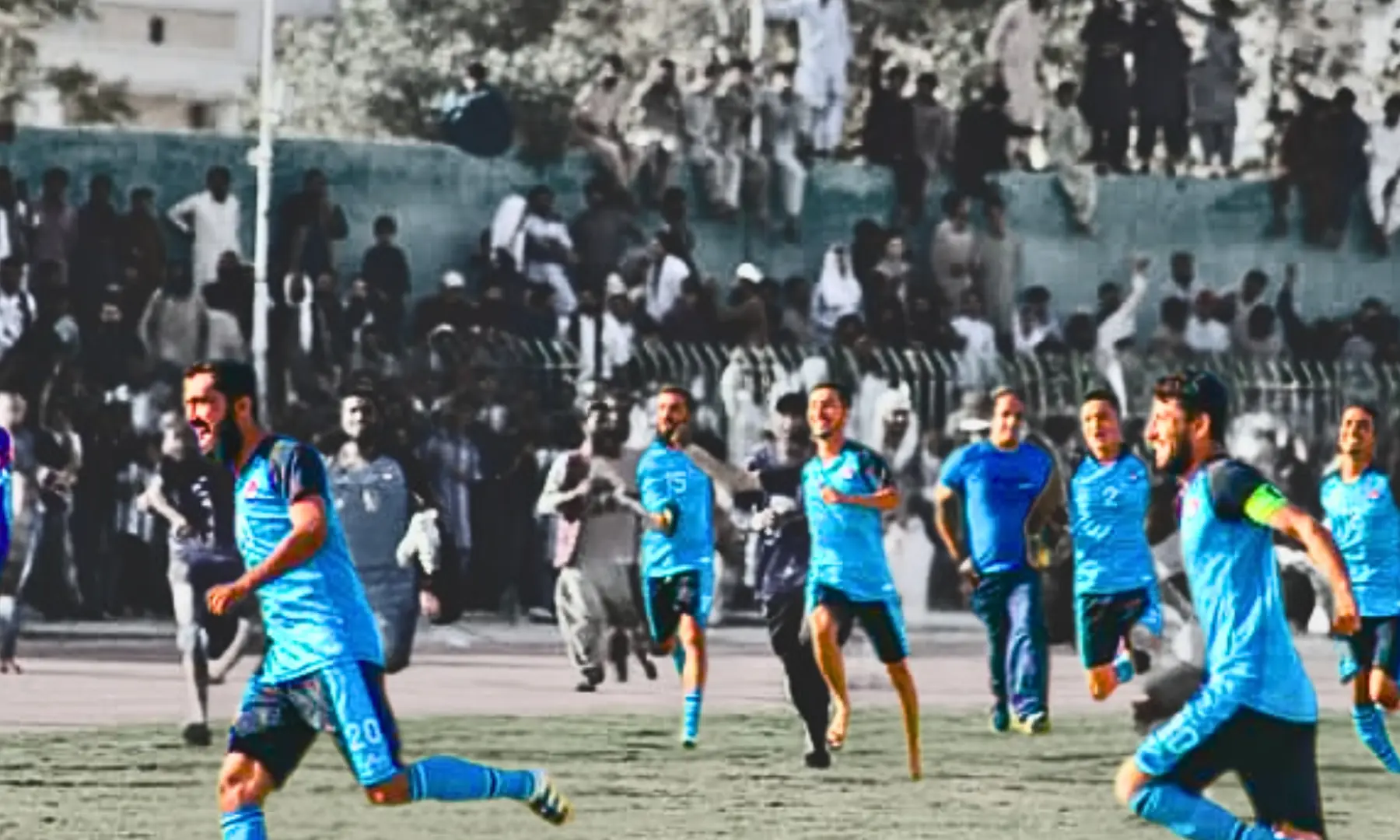
Police athletes watch football from the sidelines after reassignment to security duties.
The crowd at Railway Ground in Quetta watched every movement as Noshki faced Kech in a qualifying match of the 6th Chief Minister Balochistan Gold Cup. Standing beyond the touchline was Hamza — once a celebrated defender for the Pakistan Police Football team, now assigned to guard the match in police uniform.
For Hamza, the scene reflected a painful reality.
“Sometimes it feels like I am watching the death of my own career,” he said.
After winning the Balochistan Gold Cup in 2022 and lifting the National Games trophy a year later, members of his team found themselves transferred from football grounds to police stations, checkpoints and patrol units.
While football continues to attract passionate crowds across Pakistan, one of Balochistan’s most successful teams has quietly disappeared from competition.
US Senate Vote: Senate Approves Measure Urging Trump to End Iran War or Seek Congressional Approval
Hamza joined the Pakistan Police Football team in 2021 through Balochistan’s Police Sports Programme, which recruits athletes through competitive trials rather than conventional examinations. Recruits become Grade 7 police constables and receive government salaries while focusing primarily on sport.
Historically, athletes trained daily under sports officers and only occasionally supported emergency assignments such as election security or public campaigns. Their preparation differed significantly from regular police personnel and did not focus on frontline security operations.
The programme has roots stretching back to 1972, when Balochistan Police assumed responsibility for the Pakistan Police Football team and became the only department representing Pakistan police football nationally.
That structure changed abruptly at the end of 2025.
After returning from Karachi following the 35th National Games, players received a notification informing them that sports activities had been suspended and athletes would now serve in security and administrative roles.
Officials cited worsening law-and-order conditions and growing demand for policing resources. Coaches and former sports officials questioned the decision, arguing that transferring approximately 124 athletes would make little difference to wider security challenges.
“The law and order situation has existed for decades,” coach Sardar Raheem Mohammad Shahi said. “Yet the teams continued to function.”
For many athletes, the announcement disrupted years of planning and sacrifice. Some had left education unfinished while others rejected alternative career paths because sport offered long-term opportunity.
Goalkeeper Javed Akhtar now serves on security deployments. Another footballer, Kami, manages crowds at checkpoints instead of performing before them.
The impact extends beyond football.
Karate athlete Muhammad Azam Shad joined the department in 2005 and represented Pakistan internationally, including victories at the Peace and Friendship Cup in Iran. Today, his duties involve municipal work rather than coaching or competition.
Former boxing coach Waheed Agha, who spent 25 years developing athletes, was recently denied permission to leave duty and train competitors for an event in Tanzania.
Several international athletes also remain in uncertainty.
Boxer Muhammad Umair has been selected to represent Pakistan in Sri Lanka this July, while boxer Abdul Saboor has also earned international selection. Both continue to perform extended police shifts and are still awaiting departmental clearance to travel.
Despite years of sporting achievements, many athletes remain at the same rank they held when recruited.
Economic pressures make leaving difficult. Most come from working-class families across Balochistan where household income depends on modest daily earnings.
“I even thought about resigning,” Hamza said. “But poverty and responsibility towards my family would not allow it.”
Critics outside the department have also raised concerns. Sports advocates argue that athletes were never trained for high-risk security environments and warn that redirecting them may damage both careers and long-term sporting development.
Across Quetta, football grounds remain crowded and tournaments continue. But many of the athletes who once inspired those audiences are no longer playing.
The matches continue.
The players no longer do.