AMC-X Concludes in Karachi with Push to Turn Financial Inclusion into Economic Growth
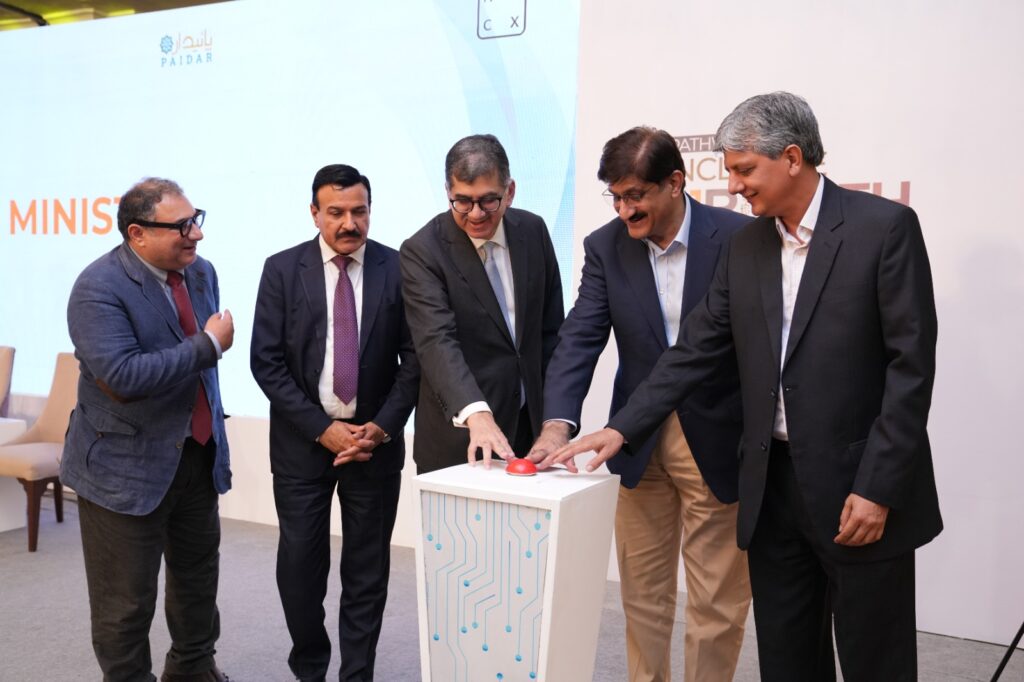
Participants attend the 10th Annual Microfinance Conference in Karachi focused on inclusive growth and financial inclusion.
The 10th Annual Microfinance Conference (AMC-X) concluded in Karachi with a call to turn financial inclusion into measurable economic progress for women, farmers, microenterprises and underserved rural communities.
Organised by the Pakistan Microfinance Network (PMN) in collaboration with the United Nations Industrial Development Organization (UNIDO), the two-day conference was held under the EU-funded Poverty Alleviation and Inclusive Development Across Rural Sindh (PAIDAR) programme.
Under the theme “Pathways for Inclusive Growth: Unlocking Synergies,” AMC-X brought together government officials, regulators, financial institutions, development partners and industry experts.
The discussions focused on moving beyond financial access. Instead, participants called for greater emphasis on client progression, resilience and measurable economic outcomes.
Focus on Financial Inclusion and Economic Growth
Addressing the conference virtually, Federal Minister for Finance and Revenue Senator Muhammad Aurangzeb linked financial inclusion with Pakistan’s transition from macroeconomic stabilisation towards sustainable growth.
He called for greater use of cash-flow-based lending instead of traditional collateral-based lending. In addition, he supported digital credit tools and alternative data to expand formal financing for agriculture and small and medium-sized enterprises.
“It’s not just how much you lend, how many borrowers, but also start measuring outcomes,” he said.
10th National Road Cycling Championship 2026 to Begin in Karachi
According to the minister, borrower graduation, job creation and women’s economic participation should become important measures of success.
Opening AMC-X, PMN Chairman and HBL Microfinance Bank President and CEO Amir Khan called for microfinance to become part of the wider financial system.
“The principle behind everything to follow is to mainstream microfinance into the financial ecosystem, not a parallel track,” he said.
He added that the sector’s next decade should be judged not only by outreach. Instead, it should also consider whether clients can build stronger businesses, increase assets and achieve greater financial independence.
PAIDAR Financing to Expand
On the second day, Jeroen Willems, Head of Cooperation at EU Pakistan, addressed the conference virtually. He welcomed Chief Minister Sindh Syed Murad Ali Shah and reaffirmed continued European Union collaboration in Sindh’s development.
Meanwhile, Chief Minister Murad Ali Shah said financial inclusion must move beyond basic access. He stressed the importance of quality and relevance, with financial products designed around clients’ incomes, seasonal needs and risks.
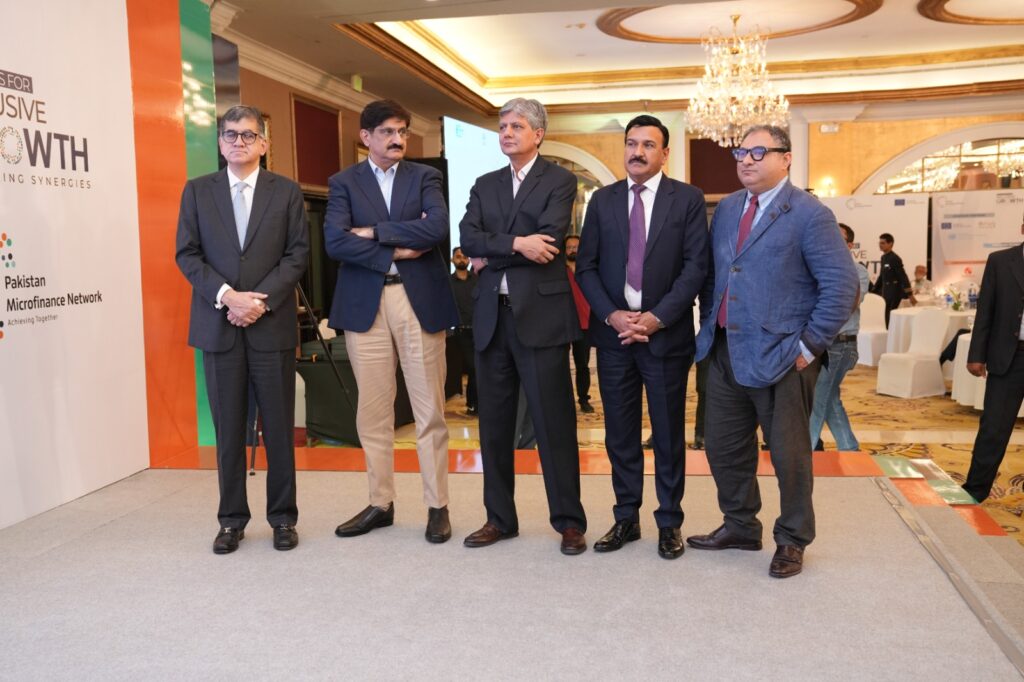
Furthermore, he highlighted the value of early coordination between government, lenders and development partners to tackle poverty and support enterprise development.
The Chief Minister also welcomed the launch of the PAIDAR Innovation Labs. The initiative will bring financial institutions and rural enterprises together to design and test products for underserved markets in Sindh.
A major outcome of AMC-X was the expansion of the PAIDAR guarantee-based financing facility with the National Credit Guarantee Company Limited (NCGCL).
Under Phase II, the financing facility will increase from PKR 200 million to PKR 4.2 billion. At the same time, participation will expand from three to eight financial institutions.
The programme will cover borrowers in Larkana, Badin, Thatta, Sujawal and Tharparkar. Importantly, women will be targeted for at least 50% of the allocated financing.
NCGCL will provide risk-sharing support for direct microenterprise lending. It will also provide guarantees for commercial bank and development finance institution credit lines to microfinance institutions.
The facility is supported by a €2 million grant under the EU-funded UNIDO PAIDAR programme. The grant will support beneficiary identification, technical assistance and mark-up support.
Renewable Energy Financing
Another major development was the signing of a PKR 1 billion financing facility between Pakistan Microfinance Investment Company (PMIC) and the National Rural Support Programme (NRSP).
The facility was signed under the PMIC-KfW Renewable Energy Initiative through Microfinance (PRIME) Programme.
Meanwhile, AMC-X sessions examined emerging trends across the microfinance sector. Topics included women’s access to finance, regulation, artificial intelligence, climate resilience, Islamic microfinance, digital platforms, liquidity and the future of the industry through 2035.
Participants repeatedly stressed that financial inclusion should not be measured only by the number of accounts or borrowers.
Instead, they called for greater focus on actual usage, economic progression and improvements in clients’ lives.
In a fireside discussion, State Bank of Pakistan Deputy Governor Saleem Ullah also stressed customer-centred innovation and commercial sustainability. He called for a shift from measuring access towards meaningful financial inclusion.
Women and Climate Resilience
Kashf Foundation Managing Director Roshaneh Zafar highlighted two major risks facing the microfinance industry: mission drift and climate vulnerability.
At the same time, sessions on women’s access to finance called for greater attention to agency, control and financial independence.
Discussions on the future of microfinance also identified customer graduation, productive finance, savings, insurance and climate resilience as priorities for the next decade.
Pakistan Microfinance Awards 2026
AMC-X also recognised leading institutions through the Pakistan Microfinance Awards 2026.
HBL Microfinance Bank received the award for the best microfinance bank. Meanwhile, the National Rural Support Programme (NRSP) won the award in the best non-banking microfinance company (NBMFC) category.
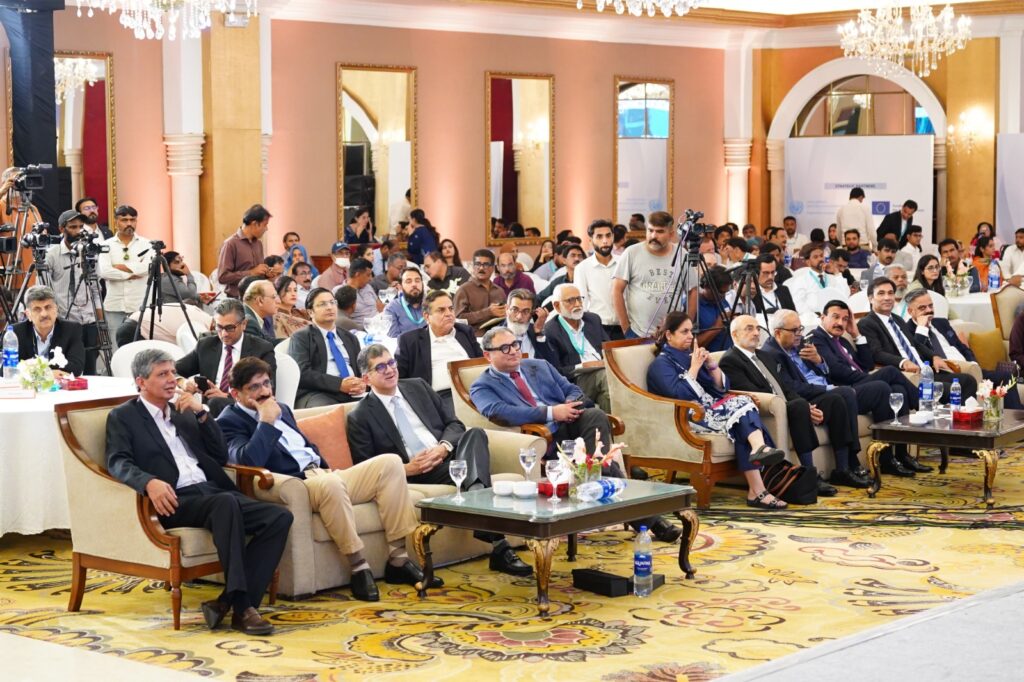
Dr Muhammad Amjad Saqib was recognised for pioneering and scaling Akhuwat’s dignity-based, interest-free model of financial inclusion.
Naved A. Khan was also recognised for linking mainstream banking leadership and financial-sector governance with innovative financing for microfinance institutions and underserved communities.
Finally, marking a decade of AMC, the Pakistan Microfinance Network reaffirmed its role as a platform for policy dialogue, partnerships and collective action.
The network said stronger collaboration will be essential to turn financial inclusion into sustainable and inclusive economic growth across Pakistan.