Ahmed Shah: Karachi Press Club Honours Arts Council President With “Jo Hum Pe Guzri” Evening
Arts Council of Pakistan Karachi chief traces his journey from Nazimabad to the head of the city’s leading cultural institution, and says a society that loses its culture weakens its foundations
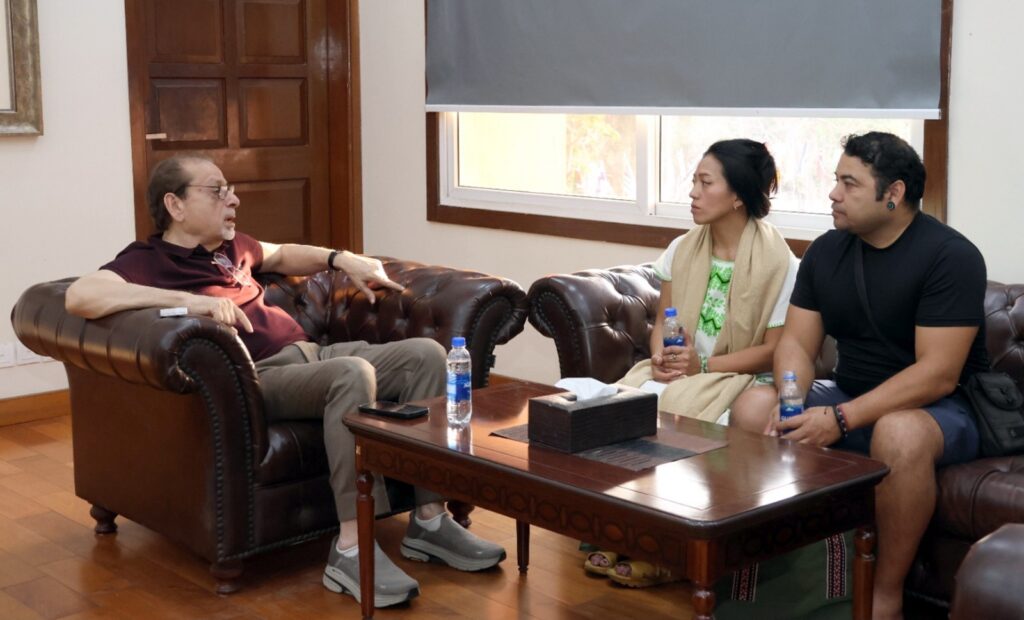
Arts Council President Muhammad Ahmed Shah addresses a special evening at the Karachi Press Club.
KARACHI (): Ahmed Shah, President of the Arts Council of Pakistan Karachi, received a special tribute at the Karachi Press Club. The club’s Literary Committee organised the evening, titled “Jo Hum Pe Guzri: Muhammad Ahmed Shah Ki Kahani, Khud Un Ki Zubani”. Friends and associates reflected on his journey, literary interests, theatre work and contribution to arts and culture. Organisers also screened a showreel of his literary and cultural services.
Culture and identity matter as much as borders
Shah thanked Press Club President Fazil Jamili, Secretary Muhammad Aslam Khan and Literary Committee Secretary Javed Saba. Preserving culture and identity matters as much as protecting borders, he said. A society that loses its culture weakens its foundations.
A childhood shaped by family and war
Shah recalled his childhood in Nazimabad No. 4. At the age of six, he walked to school with his friends. A marriage hall now stands on the site. During the 1965 war, his family sheltered in trenches. In the mornings, the children collected fragments from anti-aircraft guns. Football with Baloch friends was another memory, and the team called itself Lasbela Eleven.
His ancestors migrated from Iran and settled in different areas. His father was deeply religious, loved the Quran and poetry, and helped others without expecting anything in return. The father’s recitation of Saif-ul-Malook inspired Shah’s own love of literature.
Shah said his father taught him to judge people by character and knowledge, not by position, rank or wealth. Growing class divisions and materialism worry him. His father travelled from his ancestral area to Lahore and then Bombay, where he sold everyday goods near a cinema. That journey, Shah said, showed the value of hard work, enterprise and self-confidence.
University, the Press Club and literature
The University of Karachi marked a key phase in Shah’s intellectual development. There, he met influential teachers, writers and friends, including Faheem Zaman Khan, Shakeel Azhar Jafri, Haider Naqvi and Nusrat Mangi. His association with the Press Club dates back to 1981. Both institutions shaped him, he said. In those years, he also met political figures such as Ghaus Bakhsh Bizenjo, Khan Abdul Wali Khan, Attaullah Mengal and Benazir Bhutto.
Urdu literature caught his interest in the eighth grade. A meeting with poet Sabir Zafar in the ninth grade drew him towards literary gatherings. Writers and poets such as Sar Jamal Ehsani, Saleem Hashmi and Javed Saba widened his interests. Programmes featuring Shaukat Siddiqui and Ajmal Sultanpuri also left a mark. Together with friends, he worked to improve Press Club facilities despite limited resources.
Under General Zia-ul-Haq’s rule, the media faced restrictions on free expression. Shah opposed any environment that suppressed literature and creativity. He defines open-mindedness as the ability to understand new ideas and examine them critically. Journalism was his first ambition, but low salaries pushed him towards other fields. His interest in journalism and intellectual debate never faded.
Theatre for a wider audience
Shah co-founded a theatre group with artists including Hussain, Rahat, Yasmin Ismail and Sajid Hasan. The group staged four plays at Regent Plaza at affordable ticket prices. That approach opened theatre to a wider audience. Theatre also pushed Shah to study English literature, philosophy and French theatre.
Giving young talent a chance
Supporting young talent remains one of Shah’s foremost priorities. He recalled hearing a young performer sing at the Arts Council. The experience convinced him that gifted children often need only guidance and an opportunity.
Children from Lyari, Gadap and Orangi Town have immense potential, he said, whatever their religion or community. Students of the Arts Council’s art school prove the point. Galleries in Ireland and Canada are exhibiting paintings by children from Lyari, Lalukhet and Orangi Town. The recognition gives these young artists confidence and a chance to change their lives. Shah knows the struggles of underprivileged youth from his own experience.
Transforming the Arts Council
The Arts Council once received an annual grant of only Rs1 million. Shah and his colleagues amended its constitution, introduced elections and gave representation to different groups. Strengthening the institution and creating opportunities for others was the aim, he said, not securing positions.
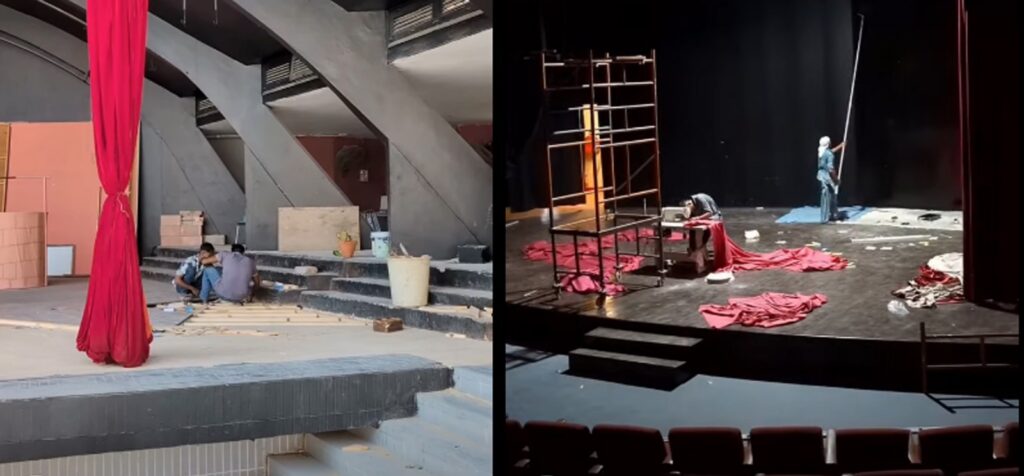
In 2008, Shah launched the International Urdu Conference with extremely limited resources. Organisers housed out-of-town guests in guesthouses and friends’ homes and moved them around in an old van. Despite those challenges, the conference attracted media attention. It established the Arts Council as a significant platform for Urdu literature and intellectual exchange.
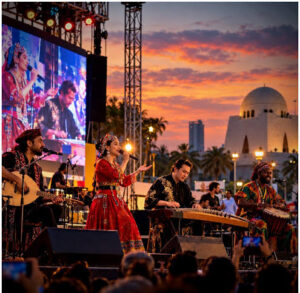
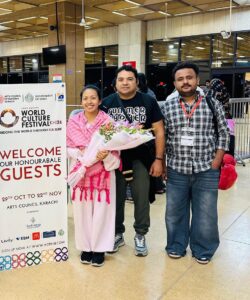
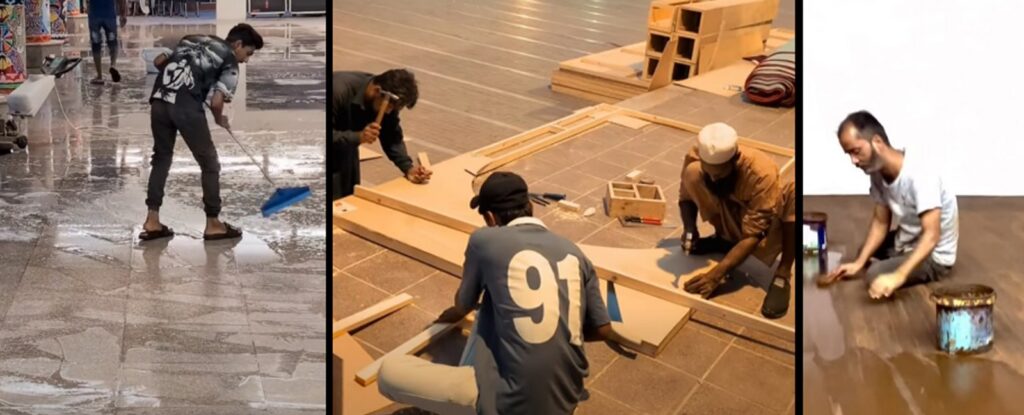
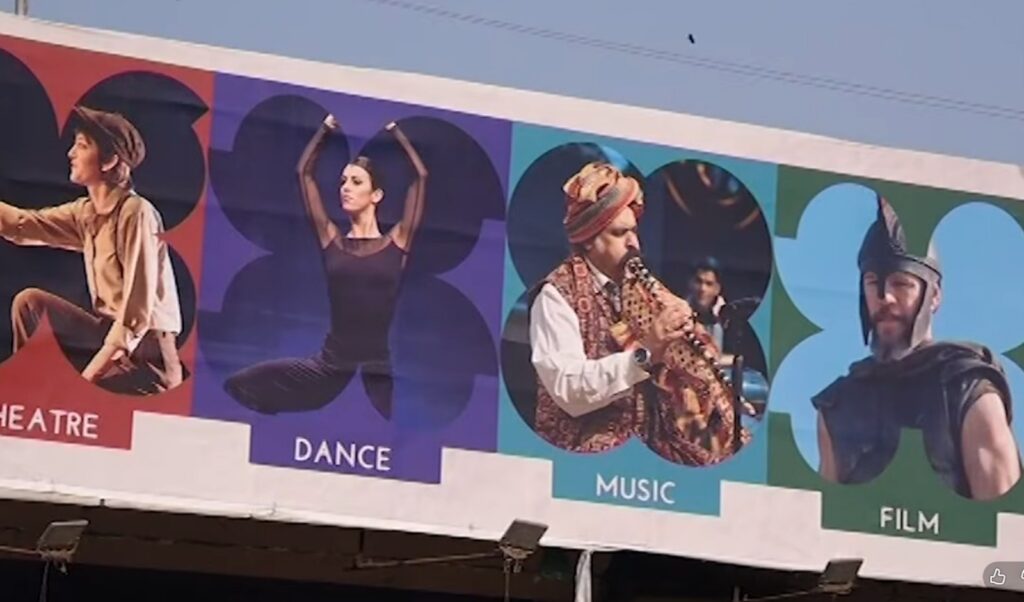
Its success encouraged youth festivals, literary festivals and other cultural activities. The Pakistan Literature Festival then took literary programmes to several cities. The World Culture Festival, Shah said, is another product of collective effort by young people from diverse linguistic and ethnic backgrounds.
Death threats and a vision for every region
Shah revealed that he once received death threats. Even so, he kept working to protect the institution and strengthen its cultural role. Writers, poets and intellectuals backed him in preserving Pakistan’s literary and cultural traditions.
His vision is to take art and culture to every part of the country. Arts councils now operate in Sukkur, Larkana, Mirpurkhas and Khairpur, where children learn fine arts, performing arts and music. All Pakistani languages, regions and cultures deserve equal representation, he insisted.
The personal cost of public service
Shah spoke candidly about the personal cost of his work. His greatest wealth, he said, is the people who value his efforts. He devoted much of his life to the Arts Council and left little time for his family. His wife carried most of the responsibility for raising their children. Prolonged pressure also harmed his health, he acknowledged, but he sees these sacrifices as part of his commitment.
Shah called the Karachi Press Club an important platform for freedom of opinion and dialogue. Strong institutions need unity, he said. People should resolve disagreements through discussion, not hostility. He thanked the club’s office-bearers and his friends and reiterated that hatred cannot solve problems. Dialogue, he said, remains the best way to overcome differences.
Tributes from the Press Club
Earlier, Fazil Jamili said people widely recognise Shah’s achievements and standing. He recalled that the Arts Council once had limited activities and closed its doors in the evening. Shah turned it into one of Pakistan’s leading cultural centres and gave it an international identity.
The Press Club has always been a home for Shah, Jamili added, and awarded him lifetime membership for his literary and intellectual contributions. The “Jo Hum Pe Guzri” series explores the life journeys of distinguished people, from childhood to their present standing. It also covers the hardships and disappointments they faced.
Secretary Muhammad Aslam Khan said Shah needs no introduction. Shah kept promoting theatre and cultural activities despite Karachi’s difficult circumstances, Khan noted. He said the World Culture Festival has brought international recognition to Karachi and Pakistan. Khan also called Shah’s contributions, particularly the International Urdu Conference, noteworthy.