
Andy Burnham: Andy Burnham Becomes UK Prime Minister, Promising a New Direction for Britain
The former Greater Manchester mayor takes office after Keir Starmer’s resignation, pledging economic reform, political stability and immediate action on the cost-of-living crisis.
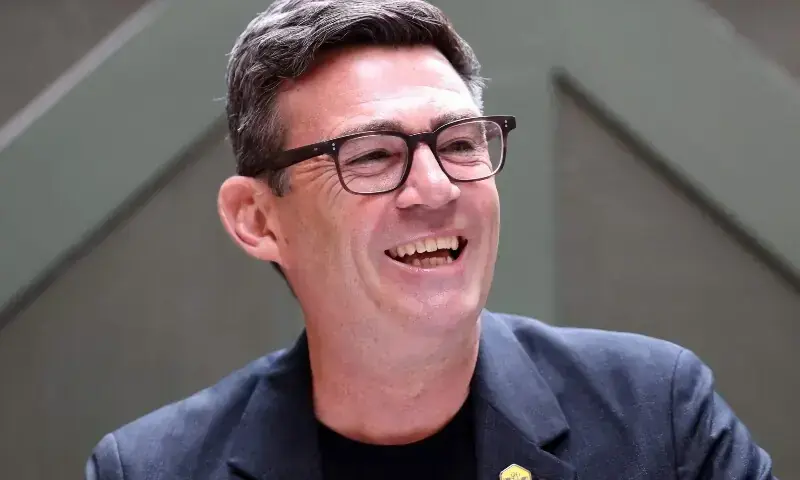
Andy Burnham delivers his first address after becoming the UK's new prime minister.
Andy Burnham officially became the United Kingdom’s new prime minister on Monday after King Charles III invited him to form a government, marking another major leadership change in British politics.
The 56-year-old succeeds Keir Starmer, who stepped down just two years after leading the Labour Party to a landslide general election victory that ended 14 years of Conservative rule. Burnham is Britain’s sixth prime minister since 2016, highlighting a decade of political instability.
Following Starmer’s farewell outside 10 Downing Street and his formal resignation to King Charles III at Buckingham Palace, Burnham is scheduled to deliver his first address as prime minister. He is expected to acknowledge the public’s desire for a more stable political era and outline his government’s immediate priorities.
In an interview with The Times, Burnham said Britain needed a fresh approach after years of political and economic uncertainty.
“What we’ve been doing hasn’t been working. That’s the way I see it,” he said.
“I am going to try and do things in a different way.”
His office said the speech will focus on restoring confidence in government, easing the cost-of-living crisis and giving Britain greater economic stability. Burnham will also highlight plans to boost economic growth and expand powers for regional communities.
Attention is also turning to the formation of his new Cabinet, with the appointment of a successor to Finance Minister Rachel Reeves expected to be one of his first major decisions.
Known as the former mayor of Greater Manchester and widely referred to as the “King of the North,” Burnham returned to Parliament only weeks ago before Labour selected him to replace Starmer. Party members believe his popularity and regional leadership experience could help counter the growing influence of Nigel Farage’s Reform UK party.
Deputy Labour leader Lucy Powell said Burnham’s experience outside Westminster gives him a practical understanding of local communities and the bold reforms needed to deliver Labour’s promises.
FIFA World Cup 2026: Pakistani Celebrities React as Spain Beat Argentina in Final
Burnham faces significant economic challenges from the outset. His government inherits slow economic growth, rising public borrowing costs, increasing welfare spending and continued pressure over irregular migration across the English Channel. Global uncertainty, including fluctuating energy prices linked to tensions in the Middle East and an unpredictable international economic environment, will add further pressure to his administration.
Burnham said his government would adopt a different economic strategy by investing earlier in public services and focusing on prevention rather than paying for long-term policy failures. He also promised swift measures to help households struggling with the rising cost of living, saying financial pressures dominated conversations with voters during the leadership campaign.
Starmer announced his resignation in June after his government faced a series of political controversies, policy reversals and declining public support. Burnham now has limited room for fiscal manoeuvre because of high public debt and strict budget rules that require government spending to remain aligned with tax revenues.
The transition of power began with Starmer’s visit to Buckingham Palace to submit his resignation before Burnham met King Charles III and formally accepted the role of prime minister. Burnham described the moment as one of reflection and determination, saying Britain must confront its challenges with honesty and decisive leadership.
Burnham previously served as a Labour MP between 2001 and 2017 and held ministerial positions under former prime ministers Tony Blair and Gordon Brown. During his years as Greater Manchester mayor, he built a reputation as a strong regional leader through community-focused policies and an accessible public image.
With the next general election expected in 2029 and Reform UK gaining momentum in opinion polls, Burnham acknowledged the pressure facing his leadership. Speaking to supporters, he described his appointment as Labour’s “last chance” to rebuild public trust and secure another election victory.
His first major policy decision came before formally entering Downing Street when he cancelled the previous government’s nationwide digital identity programme, valued at £1.8 billion over three years. His office said the funding would instead support measures aimed at easing the cost-of-living crisis and addressing more urgent national priorities.