Medicinal Plants: PHDEC Launches Initiative to Boost Gilgit-Baltistan Exports
Workshop explores export opportunities for high-value medicinal plants with a focus on expanding access to the Chinese market.
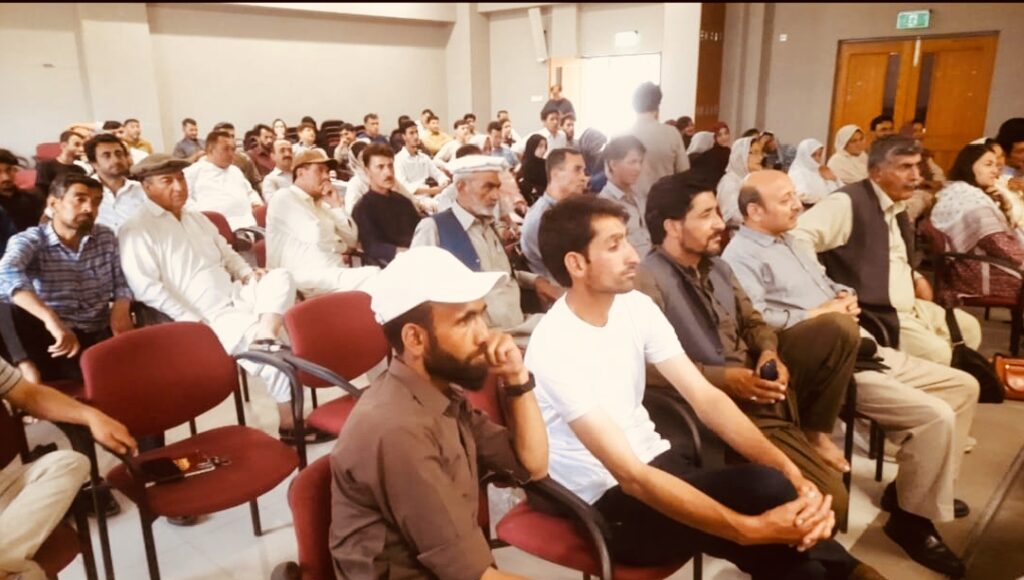
PHDEC and KIU host a workshop in Gilgit to explore medicinal plant export opportunities.
Pakistan Horticulture Development & Export Company (PHDEC), in collaboration with Karakoram International University (KIU), launched an initiative to promote exports of medicinal and aromatic plants from Gilgit-Baltistan through a workshop focused on developing new international market opportunities.
Held on July 1 at Karakoram International University in Gilgit, the workshop explored the export potential of high-value medicinal plants from the region, with particular attention to growing demand in China for herbal medicines, nutraceuticals, and natural health products.
Deputy Director of the Agriculture Extension Department Gilgit, Ghulam Ullah Saqib, presented an overview of medicinal plant resources in Gilgit-Baltistan and said the region contains more than 600 medicinal plant species across its mountain ecosystems.
He said the high-altitude environment and relatively low pollution levels contribute to strong phytochemical quality. He also highlighted the need for sustainable harvesting practices, scientific resource mapping, commercial cultivation, improved post-harvest management, and conservation efforts to support long-term export growth.
Bahria University: Industry Leaders Host Luncheon to Support Students and Strengthen Collaboration
Professor Dr. Sher Wali Khan from the Department of Plant Sciences at Karakoram International University emphasized the importance of research institutions in species identification, propagation, quality assurance, and conservation.
He said scientific research and the preservation of indigenous knowledge can help protect the region’s biodiversity while creating new economic opportunities for rural communities through sustainable use of natural resources.
Chief Executive Officer of Mamobar Organics Pvt. Ltd., Muhammad Ali Faizi, discussed challenges across the supply chain and called for stronger producer networks, processing infrastructure, traceability systems, private-sector investment, and greater focus on value-added products including herbal extracts, essential oils, botanical ingredients, herbal teas, and nutraceutical products.
Joining virtually from Beijing, Trade and Investment Officer Muhammad Ayyaz outlined demand trends in China and briefed participants on export requirements, buyer expectations, certification standards, and regulatory compliance needed to enter premium international markets.
Zulfiqar Ali Ghazi highlighted the need to strengthen research and development within the medicinal plants sector and stressed that closer cooperation between academia, government institutions, and private industry is essential to support innovation and commercialization.
FPCCI PSDF: FPCCI and PSDF Sign MoU to Boost Skills Development and Employment
In his concluding remarks, Athar Hussain Khokhar said PHDEC will support GACC registration for herbal and medicinal plant companies to improve market access to China. He also announced that PHDEC will conduct a research study to evaluate export potential and supply availability in Gilgit-Baltistan.
Based on the findings, PHDEC plans to launch a targeted initiative to strengthen the medicinal plants supply chain through collaboration with universities, researchers, and industry stakeholders to develop a sustainable and export-ready ecosystem.