

Finance Bill 2026: Lawmakers Push for Mobile Tax Relief and Wider Airline Support
Finance Bill 2026 moved closer to parliamentary approval on Sunday after lawmakers finalised recommendations while calling for relief on mobile phone taxation, broader support for airlines and greater clarity on electric vehicle policy.
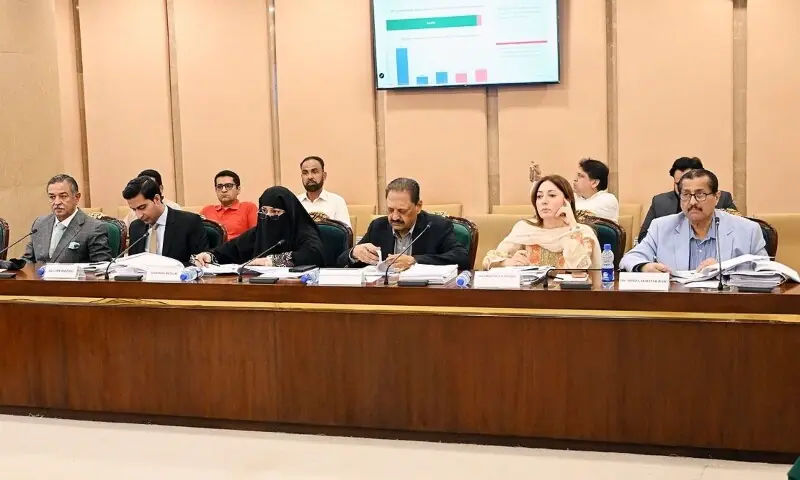
Lawmakers review proposals during discussions on Finance Bill 2026.
Finance Bill 2026 moved closer to parliamentary approval on Sunday after lawmakers finalised recommendations while calling for relief on mobile phone taxation, broader support for airlines and greater clarity on electric vehicle policy.
The National Assembly Standing Committee on Finance, chaired by MNA Naveed Qamar, completed its clause-by-clause review of the Finance Bill 2026 and submitted its recommendations to the National Assembly.
During the proceedings, lawmakers raised concerns over the existing tax structure for imported mobile phones and proposed taxation on higher-end electric vehicles.
Iran World Cup: Team Melli Stay Unbeaten Despite Travel Restrictions
Committee members also filed dissenting notes, with Sharmila Faruqui objecting to aspects of the electric vehicle policy and Muhammad Javed Hanif questioning the mobile taxation framework.
Officials briefed the committee on mobile taxation slabs, explaining that devices priced up to $30 face a 25 per cent tax rate, while phones between $31 and $100 carry a 36 per cent levy.
Handsets priced between $101 and $200 attract a 40 per cent tax, while devices above $500 face an effective tax rate of 41 per cent.
According to officials, the tax burden ranges from Rs1,500 to Rs141,500 depending on the handset category.
Members expressed concern over the increasing use of non-PTA registered phones and proposed introducing an instalment-based payment mechanism for mobile taxes.
Committee Chairman Naveed Qamar directed the Federal Board of Revenue (FBR) to coordinate with the Pakistan Telecommunication Authority to develop a workable instalment plan.
FBR Chairman Rashid Mahmood Langrial informed the committee that imported mobile phones generate around Rs37 billion annually in revenue, with Apple devices contributing approximately Rs21bn.
He cautioned that reducing taxes on lower-priced phones could create a revenue shortfall of nearly Rs1bn.
The committee also examined proposals under the upcoming automobile policy, scheduled to replace the current framework after June 30.
Officials proposed reductions in duties and taxes across multiple vehicle categories to lower business costs and rationalise tariffs.
However, members questioned the taxation structure for electric vehicles and highlighted concerns over charging infrastructure and policy consistency.
Separately, the committee approved extending sales tax exemptions on aircraft leases and spare parts purchases to all airlines rather than limiting relief to Pakistan International Airlines.
Under the revised proposal, new aircraft leases and spare parts procurement would remain exempt from 18 per cent sales tax.
Lawmakers argued that aviation incentives should apply equally across the industry to maintain fair competition and avoid creating market distortions.
Members also insisted that any financial relief granted to airlines should ultimately benefit passengers through lower ticket prices.
The recommendations will now move to the National Assembly as part of the broader approval process for Finance Bill 2026.