BMP Budget 2026–27 Businessmen Panel rejects taxation measures, demands industrial safeguards
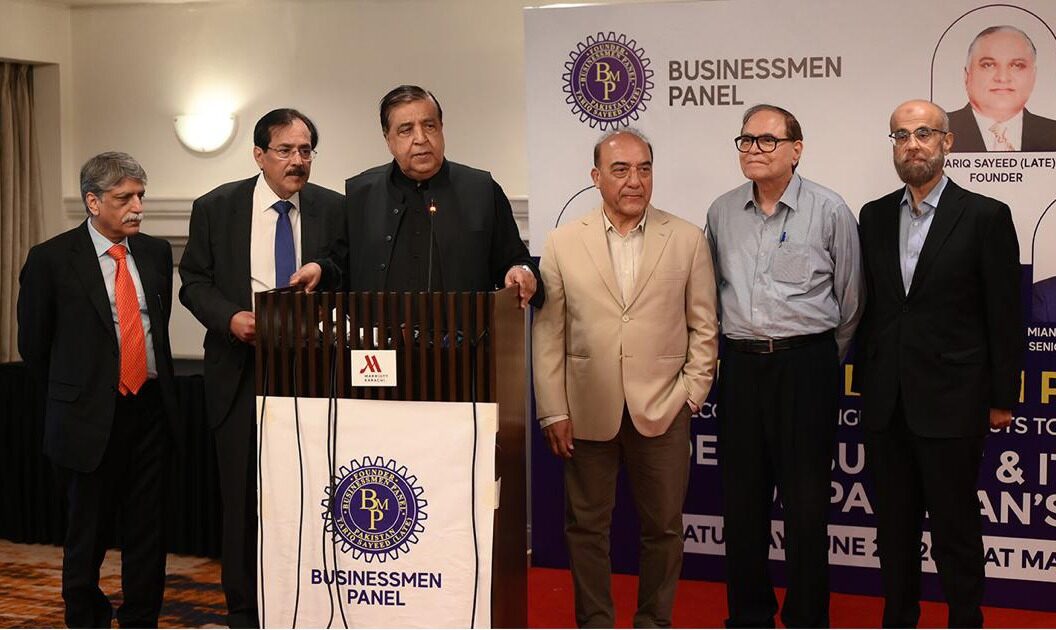
Business leaders discuss the Karachi Declaration at BMP seminar in Karachi
The Businessmen Panel (BMP) has rejected key taxation measures in the Federal Budget 2026–27. It warned that the current fiscal framework could pressure documented taxpayers and risk industrial slowdown across Pakistan.
Japan World Cup Ayase Ueda double leads 4-0 win over Tunisia in landmark 1,000th match
The stance emerged during a seminar titled “Federal Budget & Its Implications for Pakistan’s Economy” held in Karachi. Business leaders, manufacturers and trade representatives attended the event. They jointly discussed a policy memorandum for the Finance Ministry and the Federal Board of Revenue (FBR).
Call for fiscal balance and stability
Sheikh Sultan Rehman opened the session and argued that economic stabilisation must not come at the cost of industrial decline. He noted that Pakistan operates under tight IMF conditions. However, he stressed that policy design must still protect productive sectors.
In this context, he urged policymakers to balance fiscal discipline with industrial sustainability.
Concerns over production costs
Engineer M.A. Jabbar highlighted rising production costs. According to him, high energy tariffs and expensive borrowing have weakened manufacturing competitiveness.
As a result, he called for a predictable ceiling on electricity and gas prices. He also demanded customs duty exemptions on key raw materials to prevent capital outflow.
Budget measures and sectoral relief
Shariq Vohra outlined several budget initiatives aimed at easing economic pressure. These include revised income tax slabs for salaried individuals. In addition, withholding taxes on property transactions have been reduced.
Moreover, he pointed to tariff rationalisation measures designed to improve industrial competitiveness through adjustments in customs and regulatory duties.
Tax enforcement and regulatory debate
Zakaria Usman raised concerns over Finance Act amendments and FBR directives. He said enforcement mechanisms increasingly target existing taxpayers instead of expanding the tax base.
Furthermore, he criticised expanded discretionary powers granted to tax officials. He stressed that tax policy should bring new sectors into the system rather than overburden compliant filers.
Structural economic pressures and reforms
Mian Nasser Hyatt Maggo highlighted broader macroeconomic challenges. He pointed to export losses linked to border closures and urged expansion into Central Asian markets.
Additionally, he emphasised the need for free trade zones and stronger investment frameworks. He suggested formalising digital and crypto economies to improve transparency and attract investment.
Meanwhile, he warned that low growth and weak investment ratios continue to deepen structural pressures in the economy.
Karachi Declaration and policy demands
The session concluded with a vote of thanks by Suleman Chawla, who presented the Karachi Declaration. The declaration was passed through consensus among participants.
It called for immediate energy tariff rationalisation. It also demanded limits on FBR discretionary powers. Furthermore, it urged the government to introduce a Taxpayers’ Bill of Rights.
Finally, the declaration recommended reforms to restore investor confidence and prevent industrial shutdowns.