FY27 Budget: Aurangzeb says budget will accelerate Pakistan’s sustainable growth
Web Desk June 20, 2026Finance Minister Muhammad Aurangzeb on Saturday said the proposed budget for the next fiscal year would build on Pakistan’s recent economic progress and create the conditions for faster and more sustainable growth.
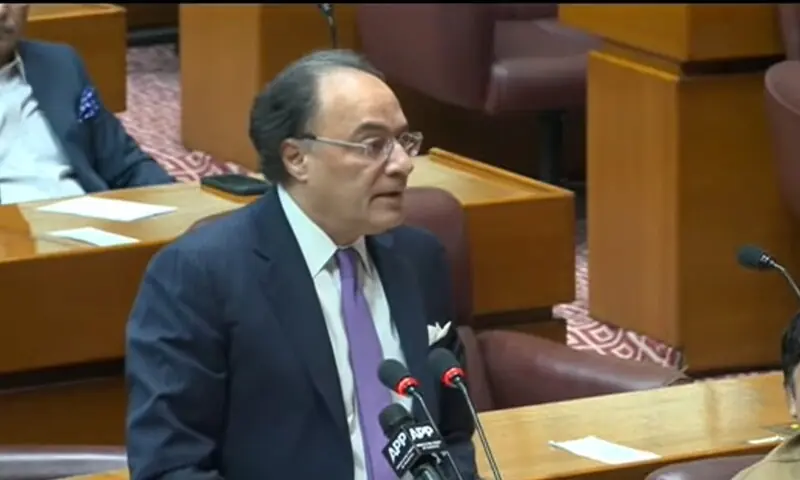
Finance Minister Muhammad Aurangzeb addresses the National Assembly during the budget session
Finance Minister Muhammad Aurangzeb on Saturday said the proposed budget for the next fiscal year would build on Pakistan’s recent economic progress and create the conditions for faster and more sustainable growth.
Judicial Integrity: Supreme Court says judges with damaged credibility should be dismissed
Addressing the National Assembly after discussions on Senate recommendations for the budget, Aurangzeb said feedback from lawmakers and stakeholders suggested the budget was broadly viewed as growth-oriented and supportive of economic expansion.
He said the government’s central objective remained achieving sustainable and inclusive export-led growth while improving productivity across the economy.
Aurangzeb argued that the budget seeks to shift away from placing most of the tax burden on the documented corporate sector and salaried class. Instead, the government aims to broaden and deepen the tax base rather than increase pressure on existing taxpayers.
He said reforms introduced in the previous budget had continued in FY27 with additional measures designed to reduce the burden on salaried individuals, small businesses, exporters and industrial sectors while maintaining fairness and equity.
The finance minister announced that concessional financing would remain available for importers and the agriculture sector and highlighted the introduction of the Fixed Asaan Tax Scheme to expand tax registration.
Discussing structural reforms, Aurangzeb said tax policy had been separated from tax administration and announced a new operating model intended to reduce direct interaction between taxpayers and tax officials.
Under the proposed system, audit, identification and implementation processes will increasingly move towards automated mechanisms, he added.
Aurangzeb also defended the government’s economic reporting methodology after concerns were raised over GDP growth figures and per capita income calculations.
He said no changes had been made to the methodology used for measuring economic indicators and maintained that calculations remained consistent with international standards.
According to the minister, Pakistan recorded 3.7 per cent real GDP growth based on constant prices, while nominal GDP expanded from $408.2 billion in FY25 to $452.1 billion in FY26.
He added that large-scale manufacturing posted growth of 6.6 per cent, its strongest performance in four years.
Aurangzeb said the external account remained stable and noted that Pakistan recorded a current account surplus during the first 11 months of FY26.
Highlighting overseas inflows, he pointed to record remittances of $4.25bn in May and expressed confidence that annual remittances would reach $41bn.
The minister also said exports had improved, particularly in value-added sectors including garments, home textiles and information technology. He added that IT exports increased by 20 per cent and freelance earnings reached a record $1.6bn.
Referring to regional diplomacy, Aurangzeb described Pakistan’s role in facilitating dialogue between the United States and Iran as a significant development and said lower global oil prices had contributed to the government’s decision to reduce domestic petroleum prices.