Ambassador Khazar Farhadov Advances Academic Cooperation With Greenwich University
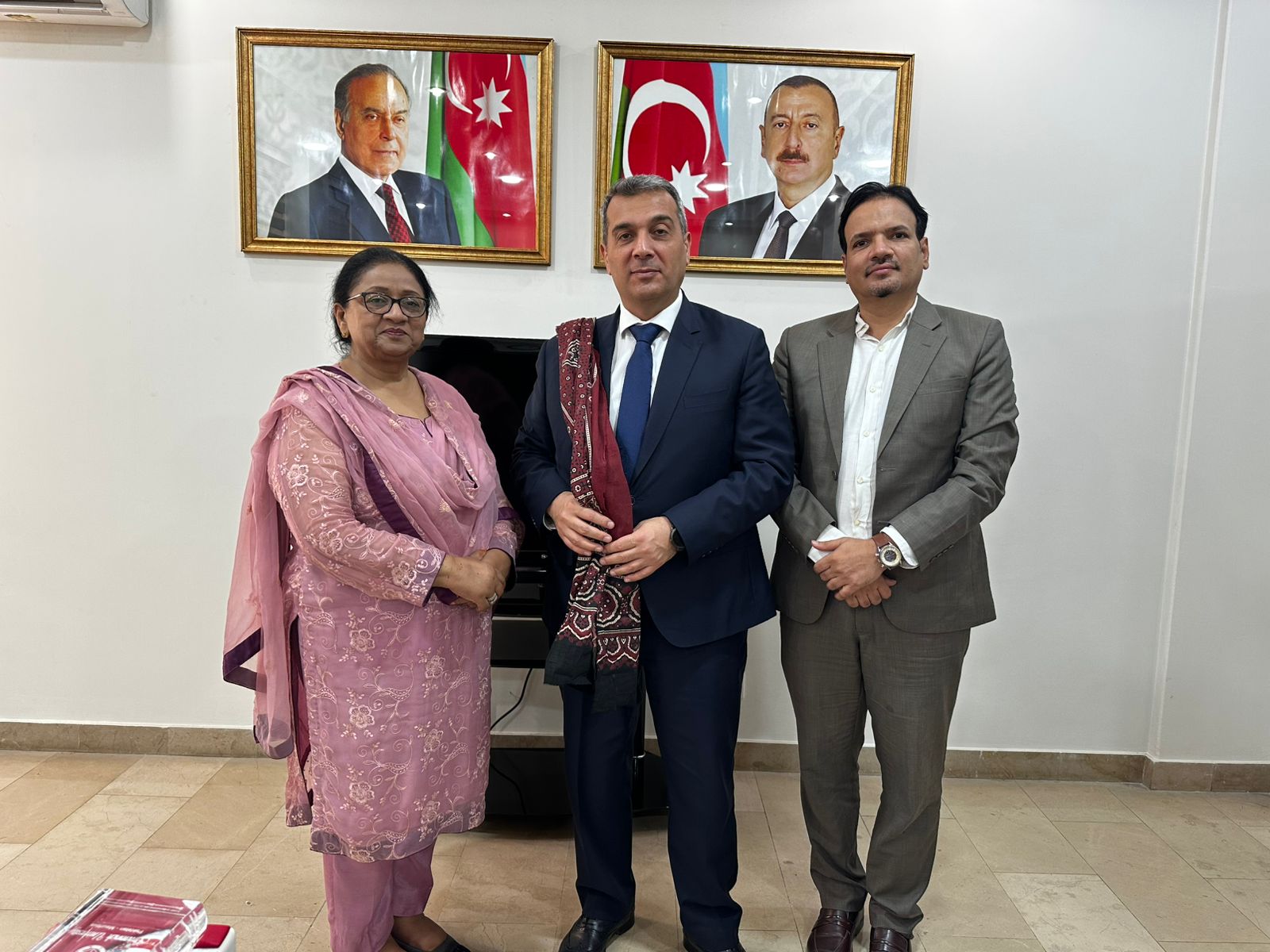
Diplomatic meeting between Greenwich University and Azerbaijan ambassador in Islamabad discussing academic cooperation initiatives.
The academic cooperation talks between Greenwich University and Azerbaijan Embassy opened new opportunities in Islamabad. The meeting focused on expanding education partnerships and cross-border learning initiatives.
The academic cooperation discussion gained attention as both sides explored student exchange programs and joint research. It highlighted why international education links are becoming increasingly important for Pakistan and Azerbaijan.
Greenwich University Academic Cooperation
Greenwich University led the delegation in this academic cooperation initiative. Chancellor Dr. Seema Mughal and Director QEC Dr. Rab Nawaz represented the institution.
During the meeting, both sides discussed long-term academic cooperation strategies. These included institutional partnerships, curriculum development, and quality assurance frameworks.
Moreover, the university emphasized building structured academic pathways. These proposals aim to connect students with international learning opportunities.
The delegation also shared plans for capacity-building programs. These efforts are designed to improve educational standards through collaboration.
For more: Rotary District 3271 Announces Wreath Laying Ceremony in Karachi
Azerbaijan Embassy Education Dialogue
The meeting took place with Khazar Farhadov in Islamabad. He expressed strong support for expanding academic cooperation between both countries.
He reportedly assured full facilitation for institutional partnerships. This includes MoUs with leading universities in Azerbaijan.
Additionally, discussions focused on collaborative research and internship programs. These initiatives aim to strengthen academic and cultural understanding.
The embassy also highlighted language promotion and student exchange programs. These areas are expected to enhance bilateral education ties.
Seema Mughal Cooperation Proposals
Dr. Seema Mughal presented detailed academic cooperation proposals during the discussion. She emphasized 2+2 academic pathway programs and foundation-level education development.
She also proposed faculty exchange and teacher training initiatives. These programs aim to improve teaching quality and curriculum standards.
Furthermore, she highlighted the importance of international qualifications access. This step can help students compete globally.
The proposals also included quality enhancement systems. These systems are expected to align with global academic benchmarks.
Exchange Programs Academic Cooperation
Both sides agreed that academic cooperation should focus on student and faculty exchanges. These programs will help build stronger educational understanding.
They also discussed internships and socio-cultural visits. These activities aim to connect academic learning with real-world exposure.
In addition, joint research initiatives were strongly supported. These will encourage innovation and shared academic output.
The meeting concluded on a positive note. Both parties expressed commitment to long-term educational collaboration.