PM Shehbaz Orders Completion of 100MW Solar Project in Gilgit-Baltistan by Mid-2027
PM Shehbaz Orders Completion of 100MW Solar Project in Gilgit-Baltistan by Mid-2027
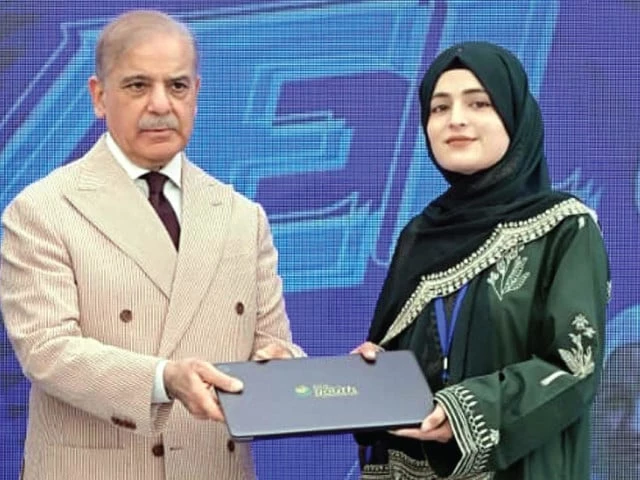
GILGIT: Shehbaz Sharif on Thursday directed authorities to complete a 100-megawatt solar energy project in Gilgit-Baltistan by the middle of next year while inaugurating and laying foundation stones for several development projects during his official visit to the region.
“No One Can Harm Pakistan”: DG ISPR Says Armed Forces Crushed India During Marka-e-Haq
The prime minister arrived in Gilgit on a one-day visit and was received by Governor Syed Mehdi Shah and caretaker Chief Minister Yaar Muhammad.
Addressing a ceremony in Gilgit, PM Shehbaz reaffirmed the federal government’s commitment to the development of Gilgit-Baltistan and Azad Jammu and Kashmir, pledging that all available resources would be utilised to address the region’s challenges.
The premier announced that four Daanish Schools would be established in Gilgit-Baltistan to provide free education, meals and uniforms to students.
He said the schools would be equipped with modern facilities, including smart boards and e-libraries, to improve educational standards in the mountainous region.
PM Shehbaz also distributed laptops and business and agriculture loan cheques under the Prime Minister’s Youth Programme, stating that the support was provided purely on merit.
“The laptops are recognition of the hard work and talent of our youth,” he said.
Discussing regional affairs, the prime minister claimed Pakistan had played a significant role in facilitating a ceasefire between the United States and Iran, expressing hope that the agreement would lead to lasting peace and stability in the region.
The premier was accompanied by several senior federal ministers, including Ahsan Iqbal, Awais Leghari, Attaullah Tarar, Abdul Aleem Khan, Khalid Maqbool Siddiqui and Adviser to the Prime Minister Rana Sanaullah.
During the visit, PM Shehbaz also held separate meetings with the governor and caretaker chief minister to review the progress of ongoing development schemes, governance matters and the law and order situation in Gilgit-Baltistan.
Officials said the visit reflected the federal government’s continued engagement with the region on development and administrative affairs.