NASA’s Artemis II Mission Set to Launch Four Astronauts on Historic Lunar Flyby
Web Desk April 1, 2026NASA is preparing to launch four astronauts on a 10-day mission around the moon, marking the most ambitious U.S. space endeavor in decades and a major step toward returning humans to the lunar surface before China’s first crewed landing.
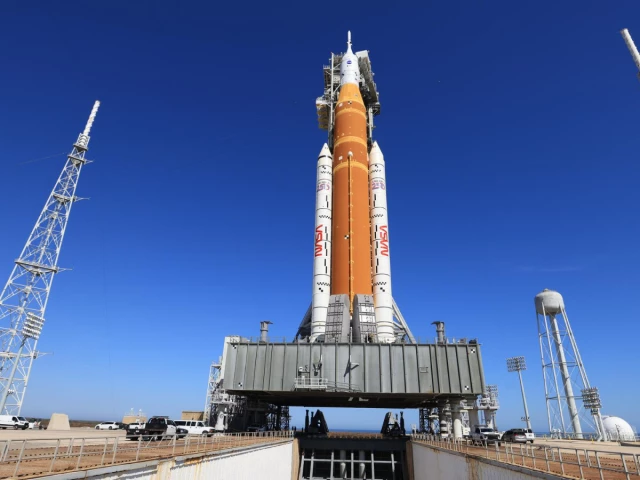
NASA is preparing to launch four astronauts on a 10-day mission around the moon, marking the most ambitious U.S. space endeavor in decades and a major step toward returning humans to the lunar surface before China’s first crewed landing.
The Artemis II mission is scheduled to lift off from Kennedy Space Center in Florida as early as Wednesday at 6:24 p.m., after years of delays caused by technical setbacks, including a hydrogen leak that required the rocket to be rolled back for inspection.
The crew includes Americans Reid Wiseman, Victor Glover, and Christina Koch, alongside Canadian Jeremy Hansen. The astronauts will orbit the moon without landing, similar to Apollo 8’s 1968 mission. This flight will feature the first woman, the first person of color, and the first non-American to journey around the moon, as well as NASA’s new Space Launch System (SLS) rocket.
NASA Administrator Jared Isaacman shared updates about the launch on his X account. The mission will launch from the same Kennedy Space Center pad used during the Apollo era more than 50 years ago.
In the lead-up to launch, the crew completed a two-week quarantine and spent time with their families at the Kennedy Space Center beach house, a traditional pre-flight retreat for astronauts. Launch director Charlie Blackwell-Thompson expressed confidence on Monday, saying the team is “in excellent, excellent shape” for liftoff.
Weather forecasts remain favorable, with only a 20% chance of conditions causing a delay. If necessary, NASA could attempt launch again through April 6, with the next major window opening April 30.
The Artemis II mission will take astronauts 252,000 miles (406,000 km) from Earth — the farthest humans have traveled in history. The current record of 248,000 miles was set by Apollo 13 in 1970, a mission that failed to land due to an oxygen tank explosion.
This mission will put the Orion spacecraft and SLS rocket to a critical test. Astronauts will evaluate life-support systems, communications, and crew interfaces, and take manual control of Orion three hours after launch to ensure its maneuverability in space. Lockheed Martin built the Orion spacecraft, while Boeing and Northrop Grumman have overseen SLS development since 2010, despite ballooning costs of $2 billion to $4 billion per launch.
Artemis II is part of NASA’s broader multibillion-dollar Artemis program, which aims to establish a long-term presence on the lunar south pole. Meanwhile, private companies SpaceX and Blue Origin continue racing to develop lunar landers for future missions.