US Deploys Ukrainian Counter-Drone System at Saudi Air Base Amid Rising Drone Threats
Web Desk April 22, 2026Washington/Riyadh: The United States military has quietly deployed Ukrainian-developed counter-drone technology at a key air base in Saudi Arabia in recent weeks, highlighting growing concerns over drone warfare vulnerabilities and the rapid evolution of battlefield technologies shaped by the war in Ukraine.
Washington/Riyadh: The United States military has quietly deployed Ukrainian-developed counter-drone technology at a key air base in Saudi Arabia in recent weeks, highlighting growing concerns over drone warfare vulnerabilities and the rapid evolution of battlefield technologies shaped by the war in Ukraine.
According to multiple sources familiar with the matter, a Ukrainian command-and-control system known as Sky Map has been introduced at Prince Sultan Air Base, where US forces have faced repeated drone and missile attacks in recent months. The deployment has not been previously reported.
The system, widely used by Ukraine’s military in its ongoing conflict with Russia, is designed to detect incoming drone threats and coordinate countermeasures, including the deployment of interceptor drones. Ukrainian military personnel reportedly visited the base to train US personnel in its operation.
The move underscores how Ukraine’s battlefield innovations—developed during its four-year war with Russia—are increasingly influencing Western defence strategies, particularly in counter-drone warfare. Ukrainian forces have used Sky Map to track Iranian-designed Shahed drones and other aerial threats in real time.
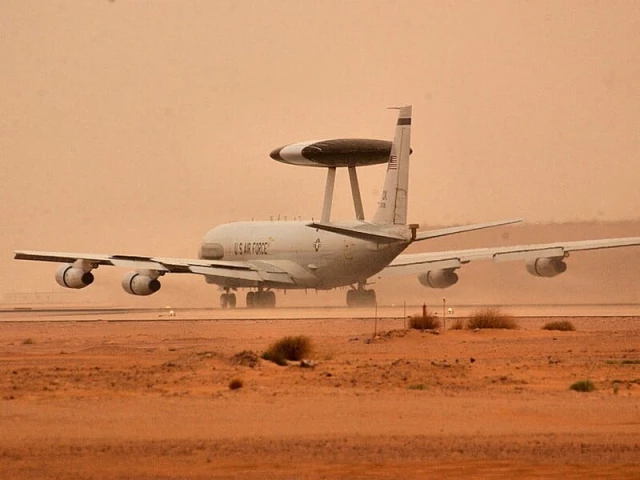
Prince Sultan Air Base, located roughly 640 kilometres from Iran, has reportedly been targeted in multiple drone and missile attacks since the outbreak of regional hostilities involving the United States, Israel, and Iran. The base has suffered damage to aircraft, infrastructure, and personnel, including the reported destruction of an E-3 AWACS surveillance aircraft and damage to KC-135 refuelling tankers in earlier strikes.
Military analysts say the deployment of Ukrainian systems highlights persistent gaps in US air and missile defence capabilities, particularly against low-cost, mass-produced drones increasingly used in modern warfare.
Timothy Walton, a senior fellow at the Hudson Institute, noted that weaknesses in US global air defence coverage have been recognised for years but remain insufficiently addressed despite growing threats.
The development also comes months after US President Donald Trump publicly rejected Ukrainian President Volodymyr Zelenskiy’s offer to assist in countering Iranian drone threats, stating at the time that Washington did not require external help in drone defence.
Alongside Sky Map, the US has also introduced other advanced counter-drone systems at the base, including interceptor drones developed under US defence initiatives. One such system, the Merops interceptor—linked to a US-based defence project—has also been tested at the facility, though officials acknowledged early operational challenges during field trials.
In one reported incident, a Merops interceptor reportedly lost control during a test and crashed into a structure on the base, underscoring the technical difficulties involved in rapidly deploying emerging drone defence systems.
The Pentagon has significantly expanded investment in counter-drone technologies, committing hundreds of millions of dollars to new systems under its broader defence modernisation strategy. Officials have emphasised that no single technology can fully neutralise evolving drone threats, which continue to grow in scale and sophistication across multiple conflict zones.
The Prince Sultan base has relied on a layered defence system, including radar tracking platforms and short-range interceptors such as the Coyote drone system, developed by RTX, alongside command-and-control software originally used by the US Army.
Defence contractors involved in these systems maintain that they have performed effectively in combat environments, though military officials continue to refine integration between legacy systems and newer technologies.
The introduction of Ukrainian-developed software into US defence infrastructure marks a notable shift in international military cooperation, reflecting how active conflict zones are increasingly serving as testing grounds for next-generation warfare technology.
As drone warfare continues to reshape global security dynamics—from Eastern Europe to the Middle East—military planners are accelerating efforts to integrate real-time battlefield innovations into established defence networks.