Pakistani consumers increasingly use AI tools while shopping online. PHOTO FILE
AI Shopping is rapidly transforming how consumers in Pakistan discover products, compare prices, and make purchasing decisions. A new study by Visa reveals widespread adoption of artificial intelligence tools, while highlighting an ongoing need for trust and security during online transactions.
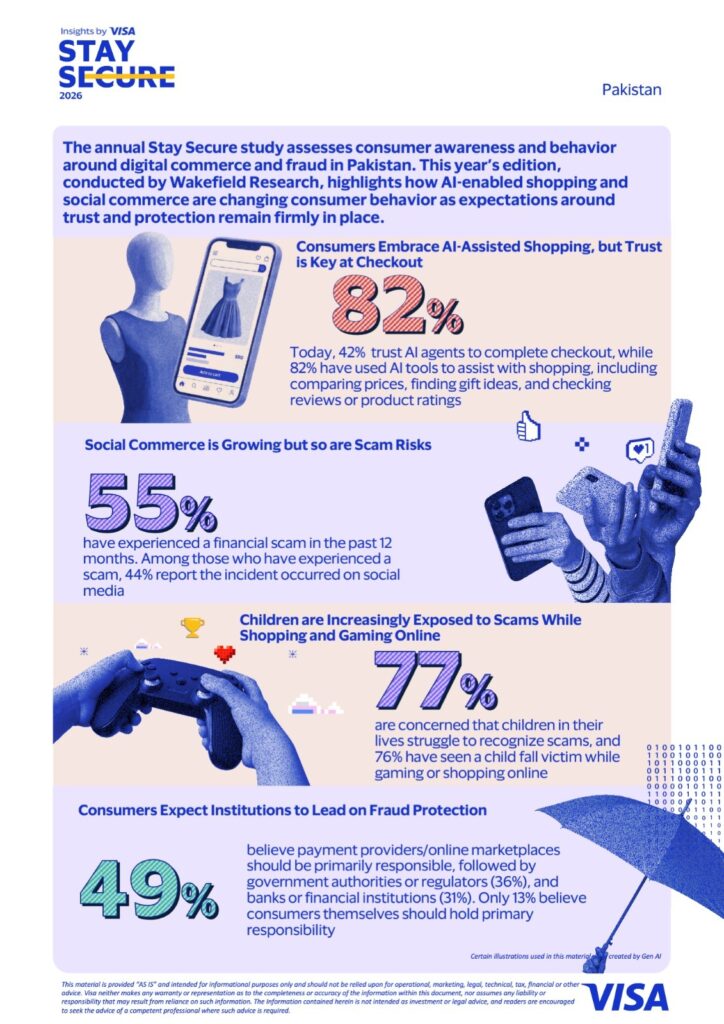
According to Visa’s Stay Secure 2026 study, 82% of consumers in Pakistan have used AI-powered tools to assist with shopping. Moreover, 93% believe AI technologies make online shopping faster and easier. The findings matter because digital commerce continues to expand, creating both opportunities and new security challenges for consumers.
Visa AI Shopping Trends in Pakistan
The study shows that consumers increasingly rely on AI tools throughout their shopping journey. Many respondents reported using AI for comparing prices, checking reviews, and discovering gift ideas.
Specifically, 56% use AI to compare prices, while 53% use it to review product ratings. Additionally, 47% turn to AI for gift recommendations. As a result, AI is becoming a regular part of the online shopping experience.
Furthermore, 55% of respondents said they often discover new brands or retailers while shopping online. This trend suggests AI-driven recommendations and digital platforms continue to influence purchasing decisions.
Visa Highlights AI Shopping Trust Gap
Despite growing adoption, consumers remain cautious when AI becomes directly involved in transactions. The report found that only 42% of respondents currently trust AI agents to complete checkout on their behalf.
This finding highlights a significant trust gap in the evolution of AI-powered commerce. While consumers appreciate convenience, they still want control over final purchasing decisions.
At the same time, attitudes toward AI’s role in fraud prevention remain positive. Around 65% of respondents believe AI has made scams easier to recognize. Meanwhile, 87% think AI will play a critical role in protecting consumers from fraud in the future.
Visa Reports Social Commerce Fraud Risks
Social commerce continues to gain momentum across Pakistan. According to the study, 82% of consumers have purchased products directly through social media platforms.
However, fraud risks remain a growing concern. The report found that 55% of respondents experienced a financial scam during the past 12 months.
Among consumers who encountered scams, 44% reported that the incident occurred on social media. Consequently, social platforms emerged as the most common source of scam-related experiences compared to websites, marketplaces, and shopping applications.
Leila Serhan Discusses Future of AI Shopping
Leila Serhan stated that consumers across the region are increasingly embracing digital commerce and AI-powered experiences.
According to her interview statement, trust remains a consistent priority as digital ecosystems evolve. She noted that consumers seek convenience, but they also expect confidence and control throughout the purchasing process.
Serhan further stated that Visa is working with partners to strengthen secure digital ecosystems through advanced technology, real-time protections, and secure-by-design innovation.
Visa Study Examines Child Online Safety Concerns
The research also explored concerns surrounding children’s exposure to online scams. According to the findings, 77% of respondents believe children struggle to recognize scams.
In addition, 33% reported seeing a child become a victim of a scam while gaming or shopping online. These concerns appear alongside growing access to digital payment technologies.
The study found that 44% of Pakistani parents have children who can access mobile payment applications or digital wallets. Therefore, awareness and education remain important as younger users engage more frequently with digital commerce.
Visa Survey Reveals Consumer Fraud Protection Expectations
Consumers also expect institutions to play a leading role in combating online fraud. Nearly half of respondents, 49%, believe payment providers and online marketplaces should carry primary responsibility for fraud protection.
Meanwhile, 36% pointed to government authorities and regulators, while 31% identified banks and financial institutions. Only 13% believe consumers themselves should bear the main responsibility.
Additionally, respondents expressed interest in stronger security measures. Around 51% said real-time alerts from banks or payment apps would increase their confidence when shopping online. Furthermore, 33% said a familiar and trusted logo at checkout would help them feel more secure.
Visa Stay Secure Study Findings
The Stay Secure 2026 study was commissioned by Visa and conducted by Wakefield Research between January and February 2026.
Researchers surveyed 5,800 adults across 17 markets in Central and Eastern Europe, the Middle East, and Africa, including Pakistan. The study reflects consumer perceptions and behaviors at the time of research and does not predict future outcomes.
As AI Shopping continues to expand, the findings suggest consumers welcome innovation but remain focused on security, transparency, and trust during online transactions.