Trump’s Ireland Visit Raises Questions Over His Call for Irish Unity
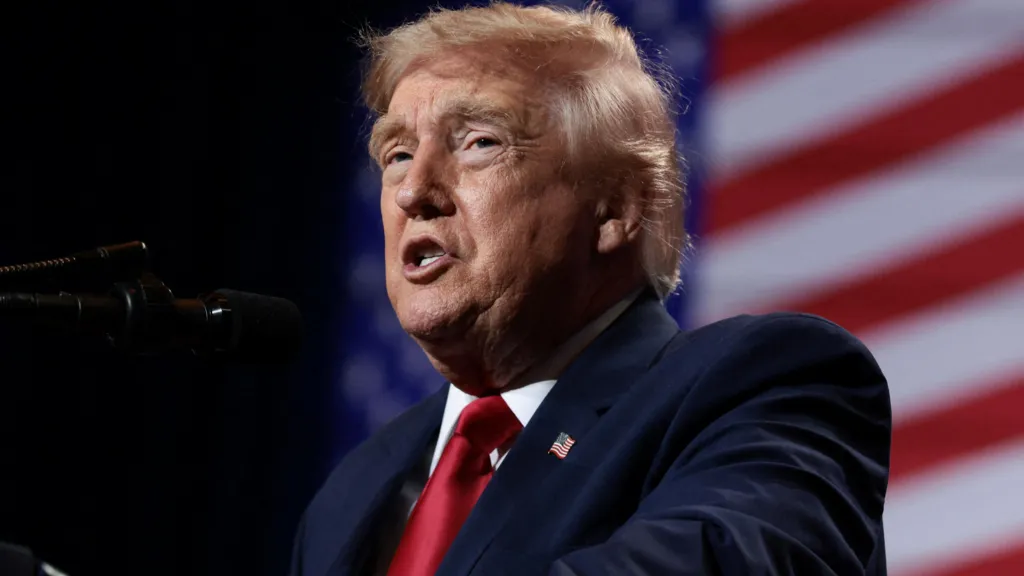
US President Donald Trump meets Irish Prime Minister Micheál Martin during his visit to Ireland.
US President Donald Trump’s two-day visit to Ireland took an unexpected turn after he said he would like to see a unified Ireland, prompting debate over whether the remarks signal a change in US policy.
Trump made the comments during a press appearance alongside Irish Prime Minister Micheál Martin.
The remarks quickly became the main international story from his first day in Ireland. However, questions remain over whether Trump was outlining a new policy or simply expressing a personal view.
Trump’s Remarks Trigger Political Debate
Trump later repeated his support for Irish unity during a speech at the US ambassador’s residence in Dublin.
The comments immediately drew attention in both Ireland and Britain. Northern Ireland’s constitutional future remains closely linked to the Good Friday Agreement and the principle of consent.
Former Republican Congressman Mick Mulvaney, who served as Trump’s special envoy to Northern Ireland during his first presidency, urged caution.
Mulvaney said the remarks did not represent a change in US foreign policy. He also stressed that Washington remained committed to the Good Friday Agreement.
Democratic Congressman Brendan Boyle offered a similar assessment.
Ship Attack Reported in Strait of Hormuz as Iran-Related Energy Risks Grow
He said bipartisan support for the agreement remained strong and was unlikely to change.
US Policy on Northern Ireland Remains Unclear
Both Mulvaney and Boyle acknowledged that Irish reunification could eventually happen.
However, they did not suggest that Washington was preparing to actively campaign for constitutional change.
The distinction matters because the Good Friday Agreement provides the framework for Northern Ireland’s political future.
Any change in the region’s constitutional status would require the consent of its people through the established democratic process.
Therefore, Trump’s comments do not necessarily indicate an immediate shift in Washington’s approach.
Trump Moves Beyond His Prepared Speech
Trump’s address to Irish and Irish-American business leaders also attracted attention for another reason.
The speech was expected to last about 20 minutes. Instead, Trump spoke for roughly twice that time.
Moreover, much of the address focused on US domestic politics rather than Ireland.
Trump frequently moves between subjects during public appearances. He has described this speaking style as “the weave”.
During the Dublin speech, he praised his administration’s record on immigration, business deals and defence production.
He also repeated criticism of Britain over its position on the US military operation in Iran.
US Midterms Add Political Pressure
Trump’s comments came as the United States approaches the November midterm elections.
Republicans face a difficult political environment, with the party potentially at risk of losing control of one or both chambers of Congress.
That raises questions about Trump’s intended audience during his Dublin appearance.
His remarks were delivered to Irish and Irish-American business leaders. However, the speech was also broadcast to a large US audience.
Around one in 10 Americans claim Irish ancestry. Yet Irish-American voters do not form a single political bloc.
Many have shifted between Republicans and Democrats in recent elections.
Irish-American Voters Remain Politically Important
Trump could therefore have been addressing Irish-American voters who remain politically independent or are open to changing their allegiance.
Some Irish-Americans support the idea of a united Ireland. As a result, Trump’s comments could resonate with part of this important voting population.
Former President Bill Clinton demonstrated the political importance of Irish-American voters during his presidential campaigns.
Clinton promised greater US engagement in the Northern Ireland peace process. After winning office, his administration played an active role in the process that helped lay the groundwork for the Good Friday Agreement.
However, Irish America has changed significantly since then.
American politics have also become more polarised. The current midterm campaign shows few signs of that trend reversing.
Focus Turns to the Rest of Trump’s Ireland Visit
For political leaders in Ireland, Trump’s remarks have created an unexpected issue during his visit.
The comments have revived discussion about Irish unity at a time when Dublin and Washington are also focused on wider political and economic relations.
For now, US officials have not indicated that Washington is changing its established position on Northern Ireland.
Meanwhile, Trump’s visit is expected to continue with a focus on business and other engagements.
Irish political leaders may now hope that the next major headline from the visit concerns something less politically sensitive perhaps the president’s golf game.