PTI Demands Remain Unresolved as Naqvi Accuses KP Government of Backtracking
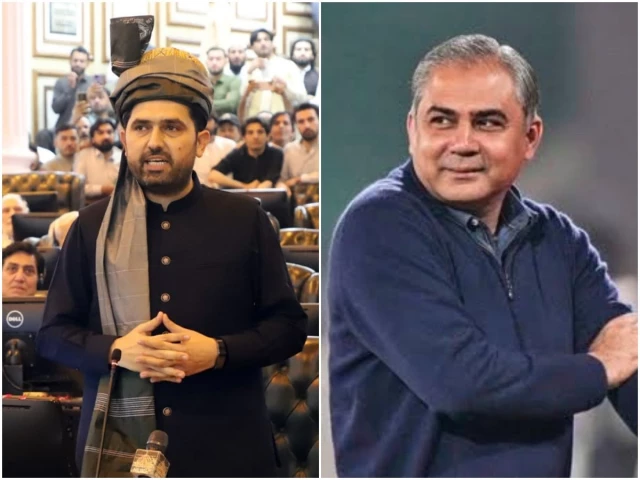
Sohail Afridi and Mohsin Naqvi remain divided over PTI demands and the October 4 long march.
Khyber Pakhtunkhwa Chief Minister Sohail Afridi has released a seven-point PTI demands draft after marathon government-opposition talks failed to resolve the dispute over the party’s planned long march.
Afridi said the demands submitted to the negotiating committee were constitutional and lawful. He maintained that the PTI would not withdraw its demands and linked the cancellation of the march to written assurances from the federal government.
The development followed two rounds of negotiations chaired by National Assembly Speaker Ayaz Sadiq. The talks failed to produce an agreement before the PTI’s October 4 protest deadline.
Afridi Releases Seven-Point Draft
Afridi’s draft calls for regular meetings between the prime minister and opposition leaders to discuss political, constitutional, legal and democratic issues.
It also proposes a joint political negotiating committee involving the government coalition, Pakistan Peoples Party and opposition parties. The committee would continue consultations and seek consensus on outstanding national and political issues.
The draft calls for freedom for democracy, politics, the judiciary and journalism.
Nehal Hashmi Calls for Stronger Early Childhood Education
It also demands legal, human and medical rights for PTI founder Imran Khan and his wife Bushra Bibi. The proposal includes access to family members, lawyers and authorised associates under prison rules.
Another demand seeks prompt consideration of legal applications filed by Imran, Bushra and other prisoners, where legally permissible. It also calls for the release of women, elderly and sick prisoners on humanitarian grounds.
PTI Links March to Written Assurances
On Khyber Pakhtunkhwa’s security situation, the draft calls for sustained consultation between the federal and provincial governments.
It proposes a formal meeting within 72 hours to develop a joint strategy for law and order and counterterrorism. The draft says implementation should remain within the Constitution and existing laws.
The seventh point links cancellation of the long march to written assurances from the federal government on implementing the agreed measures.
The PTI says it would retain the right to peaceful and legal protest if the government violates agreed assurances or unnecessarily delays the negotiations.
Naqvi Rejects KP Government’s Position
Interior Minister Mohsin Naqvi, meanwhile, accused the KP government of backing away from security-related commitments made during the final stage of negotiations.
According to Naqvi, the provincial government had agreed to sign a written agreement and submit a 72-hour implementation plan covering counterterrorism and security measures.
He said the proposed commitments included reviewing the Police Act 2026, preventing terrorist groups from establishing safe havens in the province and condemning militant organisations.
Naqvi also claimed that the KP government had agreed to support the national policy on Afghan refugees, strengthen counterterrorism funding and cooperation with security institutions, and implement the National Action Plan.
The interior minister said the provincial government backed out of these commitments during the final phase of talks. He argued that security issues should not become part of political disputes.
PTI Cites Counterterrorism Dispute
PTI leader Salman Akram Raja offered a different account of the breakdown.
He said disagreement over the federal government’s proposed approach to counterterrorism in KP was the main reason the talks failed. Raja said the PTI wanted counterterrorism measures to be agreed between the federal and provincial governments and discussed with political parties represented in the provincial assembly.
He also opposed unilateral measures that could cause civilian casualties or displacement. Raja said counterterrorism policies should rely on local intelligence and have the support of the population.
The PTI leader further called for consideration of recommendations from a jirga held in the KP Assembly.
Three Issues Remain Central
PTI Sindh leader Haleem Adil Sheikh identified three major issues that he said remained unresolved: access to Imran Khan, his medical treatment and the security policy for KP.
Sheikh said the opposition wanted a meeting with Imran before deciding whether to cancel the march. He also said the PTI wanted Imran’s personal doctors to participate in his treatment.
On security, Sheikh said decisions should not be taken unilaterally. He called for consultation between federal and provincial authorities and other political stakeholders.
The government and opposition therefore remain divided over both political and security-related issues. With the October 4 protest already scheduled, the deadlock has kept tensions high despite the two rounds of negotiations.