Trump Weighs Iran Deal Proposal, Warns of Possible Renewed Strikes
Trump Weighs Iran Deal Proposal, Warns of Possible Renewed Strikes
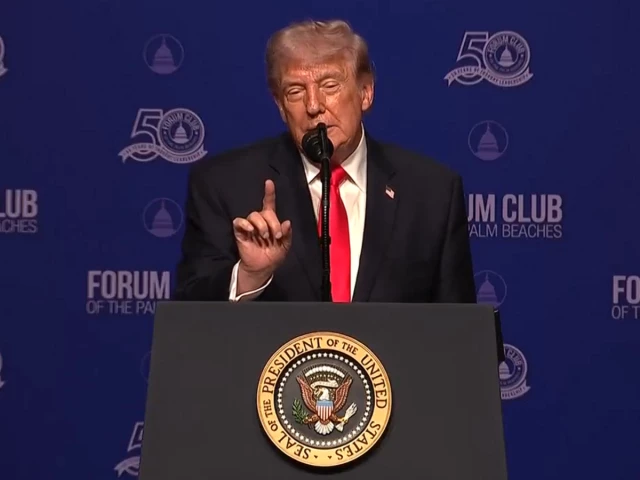
WASHINGTON: US President Donald Trump said on Saturday that he has been briefed on the concept of a potential deal with Iran but is awaiting its full details, while cautioning that military action remains an option if tensions escalate.
Oil Price Surge May Push Pakistan Inflation Above 11%, Growth Outlook Weakens: Analysts
Speaking before departing from Florida, Trump indicated skepticism about the proposal, stating that he was not convinced it would meet US expectations. He warned that if Iran “misbehaves,” the possibility of resuming strikes cannot be ruled out.
The development comes amid ongoing tensions in the strategically vital Strait of Hormuz, a critical route for global oil shipments. A senior Iranian official revealed that Tehran has proposed reopening shipping in the strait and ending the US blockade, while deferring negotiations over its nuclear programme to a later stage.
Trump also drew attention with remarks describing the role of the US Navy during the conflict, saying it was acting “like pirates” in enforcing a blockade of Iranian ports and seizing vessels and cargo.
On the Iranian side, military officials signalled readiness for further confrontation. Mohammad Jafar Asadi warned that renewed conflict with the United States remains possible, alleging that Washington has not upheld past commitments. He added that “surprise measures” could be taken if hostilities resume.
Despite the heightened rhetoric, Iran’s leadership has reiterated its willingness to pursue diplomacy. Tehran’s proposal reportedly includes reopening maritime routes, lifting sanctions, unfreezing assets, and securing guarantees against future attacks, while postponing detailed discussions on nuclear restrictions.
The conflict, involving the United States and Israel, has significantly disrupted global energy markets, with the Strait of Hormuz—through which around 20 per cent of the world’s oil and gas supplies pass—remaining partially blocked for weeks.
While a ceasefire has paused large-scale hostilities, both sides remain far from a comprehensive agreement. Analysts warn that continued uncertainty could have far-reaching consequences for global energy supplies, financial markets, and geopolitical stability.