

Transporters’ Strike Halts Movement of 400,000 Vehicles, Threatening Pakistan’s Supply Chains
Goods transporters and oil tankers have vowed to continue their nationwide strike until talks with the government on Monday, raising fears of factory shutdowns and export delays.
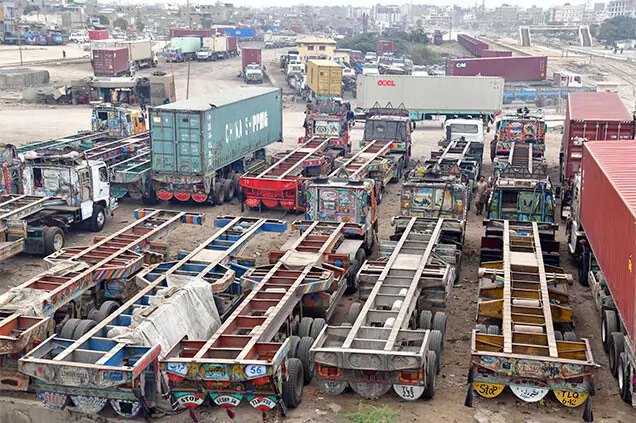
Goods transporters halt nationwide operations, raising concerns over Pakistan’s industrial supply chains.
A nationwide transporters’ strike has suspended the movement of more than 400,000 goods-carrying vehicles across Pakistan, threatening industrial supply chains and raising concerns over production and export commitments.
The strike by goods transporters and oil tankers began on Saturday, with operators saying they will continue the protest until talks with the government take place on Monday.
Pakistan Goods Transporters Alliance Chairman Nisar Hussain Jafry said transporters planned to meet ministers responsible for petroleum, transport and ports to discuss their demands. He said the movement of vehicles, ranging from small trucks to large cargo carriers, had been halted pending the outcome of the talks.
According to Jafry, transporters have already unloaded their containers at ports and are waiting for the government to address their concerns.
At the centre of the dispute is the government’s recently introduced daily fuel price mechanism. Transporters argue that daily changes in fuel prices make it difficult to determine transportation costs, particularly for intercity routes where journeys can take between one and three days.
Jafry called for the government to restore the monthly fuel price system and reduce the withholding tax imposed on transporters from 7 per cent to 2pc. He pointed out that oil carriers currently pay a 2pc withholding tax on services.
Transporters have also complained that several commitments agreed with the government under a charter of demands signed in December 2025 have yet to be implemented.
Another major concern is the number and cost of toll plazas. Jafry said toll plazas had been established at intervals of roughly 30 kilometres, adding to the financial burden on transport operators.
The alliance also raised concerns about parking facilities for heavy vehicles around ports and issues related to driving licences.
Industry warns of wider disruption
Industrial groups have warned that the strike could create serious problems for manufacturers if the movement of raw materials and finished products remains suspended.
Industries are already dealing with high production costs, expensive energy and economic uncertainty. A prolonged interruption in cargo transportation could force factories to slow or stop production and make it harder for exporters to meet delivery deadlines.
SITE Association of Industry President Abdul Rehman Fudda described the situation as alarming for the manufacturing sector.
He said factories depend on the timely arrival of raw materials and the transportation of finished products. Any prolonged disruption, he warned, could interrupt production schedules and increase financial pressure on businesses.
The export sector could face additional difficulties if consignments fail to reach international buyers on time. Manufacturers could potentially face penalties, price reductions or compensation claims because of delayed deliveries.
Fudda urged the government to intervene immediately and resolve the dispute through negotiations with transporters before the disruption spreads further through the economy.
He warned that an extended strike could affect not only factories but also exports, employment and broader economic activity.
The industry representative also called for urgent measures to reduce pressure on manufacturers, saying high electricity and gas tariffs, rising production expenses, expensive financing and inconsistent economic policies were undermining industrial activity.
He urged authorities to provide energy at competitive rates, simplify the taxation system, clear outstanding refunds and improve the ease of doing business.
Fudda also called for investor-friendly policies, arguing that the business community had continued supporting economic activity despite mounting challenges.
The government’s talks with transporters on Monday are now expected to be crucial in determining whether the nationwide strike ends or continues, with industries closely watching the outcome as concerns grow over further disruption to Pakistan’s supply chains.