
How Pakistani Dramas Are Quietly Changing the Way Families Think
From remarriage and family control to childhood trauma and honour, popular dramas are turning familiar stories into lessons about healing and social change.
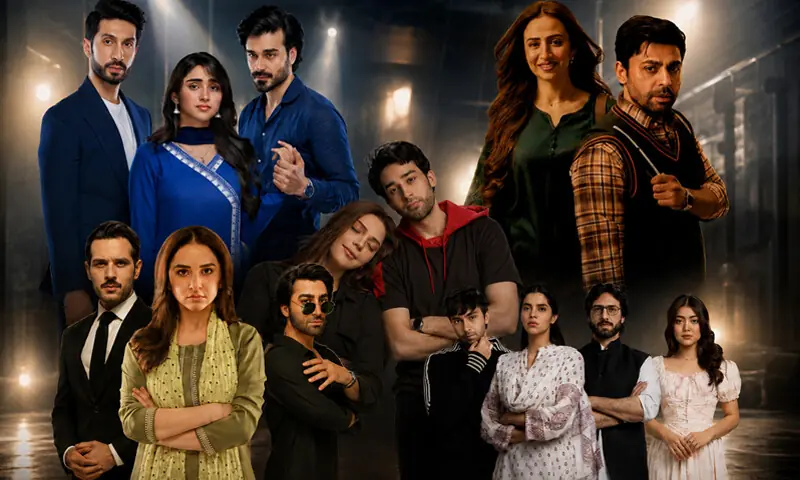
Pakistani television dramas are increasingly exploring trauma, family relationships and social change.
For millions of viewers, Pakistani dramas have long offered an escape into romance, family conflict, heartbreak and familiar social situations. But the country’s television landscape appears to be evolving. Beneath the traditional storylines, a growing number of dramas are examining deeper questions about family dynamics, emotional wounds, social prejudice and inherited patterns of behaviour.
Shows such as Dobara, Qarz-i-Jaan, Kafeel, Jama Taqseem, Bas Tera Sath Ho and Zabt are moving beyond conventional entertainment. Their stories increasingly explore subjects that are rarely discussed openly, including intergenerational trauma, unhealthy attachment, discrimination, social stigma and the struggle for personal autonomy.
In that sense, television is becoming an accessible form of social education. At a time when professional therapy remains out of reach for many Pakistanis, dramas are creating conversations about mental health and relationships in living rooms across the country.
A woman’s life does not end with marriage
One of the strongest messages emerging from recent dramas concerns widows and divorced women. Although remarriage is permissible in Islam, cultural attitudes can still make it difficult for women to begin their lives again.
Dobara challenged these attitudes through Mehru, played by Hadiya Kiyani, a widow who chooses to marry Mahir, portrayed by Bilal Abbas Khan. Her decision triggers strong opposition from those around her, yet she refuses to allow society to define her future.
Qarz-i-Jaan explores the issue from another angle. Nashwa Behzad, played by Yumna Zaidi, helps her widowed mother Bisma, portrayed by Tazeen Hussain, reconnect with a lost love. What initially appears to be a family decision becomes an emotional intervention, allowing a woman who has spent years living with grief to reclaim part of her life.
Nashwa’s own journey also reflects the same principle. After being forced into marriage to protect family property interests, she eventually receives a divorce from Ammar, played by Nameer Khan, allowing her to pursue a relationship based on her own choice.
Kafeel offers another hopeful perspective. Zeba, played by Sanam Saeed, escapes an emotionally destructive marriage, secures khula and eventually marries Jamal, a widower played by Hasan Khan.
The wider message is clear: the stigma surrounding second marriage is primarily cultural rather than religious. A woman’s identity and worth do not disappear after divorce or widowhood.
Family should not become a tool of control
The joint family remains an important part of Pakistani society. But several dramas are now questioning what happens when family traditions become instruments of control.
Jama Taqseem particularly challenges the idea that love marriages are inherently inferior to arranged marriages. Laila, played by Mawra Hocane, openly expresses her feelings for Qais, portrayed by Talha Chahour, and approaches marriage through a family framework.
Instead of celebrating her courage, Qais’ conservative relatives judge her for her clothes, domestic skills and decision to work.
The drama exposes a range of double standards often experienced by daughters-in-law. Women can be criticised for seeking privacy, maintaining careers or making independent choices, while similar behaviour may be accepted from other members of the family.
Yet Jama Taqseem does not simply portray tradition as the problem. Its more nuanced message is that traditions can survive when families are willing to adapt.
Qais’ parents, played by Javed Sheikh and Beo Rana Zafar, eventually recognise the inequalities created in the name of culture and begin changing their behaviour.
The lesson is that a joint family does not have to become a battleground. Respect, boundaries and equality can allow tradition and individual freedom to coexist.
Every child deserves to feel wanted
Another recurring theme is the treatment of orphaned and abandoned children.
In Bas Tera Sath Ho, Anas, played by Farhan Saeed, experiences discrimination within his paternal family. His grandfather, played by Salman Shahid, and aunt, played by Shagufta Ejaz, challenge the attitudes surrounding his status and rights.
Zabt presents a similarly painful story through Aoun, played by Sachal Afzal. After his parents separate, he is raised by his maternal grandmother, Bi Jaan, portrayed by Samina Ahmed. Despite having a home and extended family around him, he is repeatedly made to feel like an outsider.
These stories highlight an important distinction: providing a child with shelter is not the same as providing emotional security.
Children need to know they are valued, protected and wanted. Constantly forcing them to prove their worth can contribute to insecurity that follows them into adulthood.
The message is therefore much larger than charity. Supporting an orphan or abandoned child is about giving them the emotional foundation needed to develop healthy relationships and self-confidence.
Compassion should come before family honour
Few concepts carry as much social weight in Pakistan as honour. Several dramas are now challenging the way the word is sometimes used to justify silence and control.
Jama Taqseem addresses sexual harassment within an extended family through the story of Sidra, played by Nazeeha Zainab. When she is harassed by a cousin, the family’s initial response is focused on containing the scandal.
The drama ultimately rejects the familiar idea that the victim should be sacrificed to protect the family’s reputation. Instead, the grandparents stand beside Sidra.
Zabt approaches the subject through Ayla, played by Zoha Tauqeer, whose pregnancy after nikah but before rukhsati becomes the source of intense social judgment. Bi Jaan refuses to turn against her granddaughter and instead offers support after Ayla experiences humiliation, divorce and emotional trauma.
The message is powerful: compassion does not destroy honour. Protecting vulnerable family members can be an expression of honour itself.
Bas Tera Sath Ho brings the issue into the digital age. Anas and Ansa, played by Sana Javed, become victims of an AI-generated inappropriate video created by Anas’ cousin Shayan, played by Haris Waheed.
Although the video is fabricated, its consequences are real. Rather than demanding that Ansa prove her innocence, members of the family choose to protect her dignity.
The storyline reflects a growing modern threat: technology can manufacture false evidence, but social damage can still be devastating.
Israeli Settlers Attack Homes Near West Bank Village of Qusra
A son is not his mother’s possession
Zabt also explores one of the most sensitive dynamics within South Asian families: the unhealthy emotional dependence that can develop between mothers and sons.
Shami, played by Daniyal Khan, is deeply controlled by his mother Arfa, portrayed by Laila Wasti. His inability to establish boundaries eventually damages his marriage to Ayla.
The drama suggests that such behaviour may not simply be about a controlling parent. It can also emerge from loneliness, emotional dependence and years of conditioning.
A mother may unconsciously place emotional expectations on her son that should instead be fulfilled through adult relationships outside the parent-child bond. The son, meanwhile, can struggle to develop independence without feeling guilty.
The solution is not necessarily to portray the mother as a villain. Understanding the source of her insecurity is important, but understanding does not mean accepting harmful behaviour.
Healthy families require boundaries. A son can love his mother deeply while still building an independent life and marriage.
The impact of family trauma
The stories presented in these dramas reflect a broader psychological reality: children learn from the behaviour they witness around them.
When children see reputation valued above justice, they may learn that speaking out is dangerous. When they see daughters-in-law constantly competing for acceptance, they may begin to believe that affection must be earned.
When harassment is ignored, children learn that powerful relatives can escape consequences. When mothers treat sons as emotional partners, children may grow up viewing marriage as a competition rather than a partnership.
These patterns can pass from one generation to another.
But they are not permanent.
Recognising unhealthy behaviour is often the first step towards changing it.
Television’s quiet social revolution
The growing psychological depth of Pakistani television represents more than a change in storytelling. It may signal a broader cultural conversation.
Mental-health services and professional therapy remain inaccessible to many people. Television, however, reaches millions of households. As a result, dramas can introduce difficult subjects to audiences who may never encounter them in a formal counselling setting.
Social media has expanded that impact. Viewers increasingly discuss characters, relationships and family behaviour online, turning drama episodes into starting points for wider conversations about real-life experiences.
The most significant change may therefore happen away from the screen.
It occurs when a daughter begins questioning an unfair expectation. When a husband recognises the emotional burden carried by his wife. When an elder considers whether tradition has become control. Or when a woman watching a fictional character realises that she, too, deserves dignity and a second chance.
The question is gradually shifting from which drama should we watch? to what can we learn from what we watch?
And perhaps that is the most important transformation taking place on Pakistani television.