Supreme Court Bars Courts from Converting Dissolution Pleas into Khula Without Consent
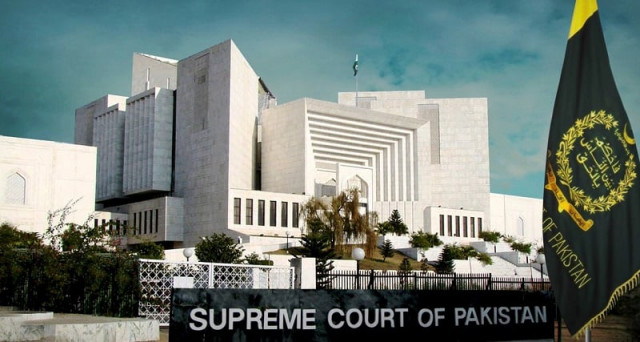
Supreme Court of Pakistan rules on Khula, Shiqaq and women’s dower rights.
The Supreme Court has ruled that a Family Court cannot convert a woman’s plea for dissolution of marriage into Khula without her clear and voluntary consent.
The court said such a conversion can affect a woman’s lawful right to dower. It held that courts must respect the legal basis chosen by a woman when she seeks dissolution of marriage.
A five-member bench also recognised Shiqaq as a possible ground for dissolution under Section 2(ix) of the Dissolution of Muslim Marriages Act, 1939.
The bench comprised Justice Shahid Waheed, Justice Naeem Akhter Afghan, Justice Muhammad Hashim Khan Kakar, Justice Ishtiaq Ibrahim and Justice Miangul Hassan Aurangzeb.
The judges issued the ruling while deciding cases involving Zainab Bibi and Iram Naz Begum. The court converted the petitions into appeals and partly allowed them.
Supreme Court Distinguishes Khula from Dissolution
Both women had approached Family Courts to seek dissolution on grounds including cruelty. They also claimed maintenance, dower and dowry articles.
The Family Courts found that the women had not proved cruelty. However, reconciliation efforts failed. The courts then dissolved the marriages through Khula.
They also directed the women to return or surrender their dower.
UN Chief Guterres Concludes Three-Day Pakistan Visit
The Supreme Court found this approach legally unsustainable. Neither woman had chosen Khula as an alternative basis for ending her marriage.
The court noted that statutory dissolution and Khula represent separate legal remedies.
A woman may seek dissolution under the grounds listed in the 1939 Act. Khula, however, gives a woman a separate right to seek release from a marriage that she considers intolerable.
The court said a Family Court cannot simply change one remedy into another.
Court Protects Women’s Dower Rights
The Supreme Court also highlighted the financial difference between the two remedies.
Section 5 of the Dissolution of Muslim Marriages Act protects a woman’s dower rights when the court dissolves her marriage under the Act.
Khula can carry different financial consequences. In such cases, a woman may have to return or surrender the benefit she received from the marriage.
The court therefore rejected any approach that creates Khula without the woman’s voluntary choice.
The judgment made clear that failure to prove cruelty does not allow a court to impose Khula on a woman.
The judges also referred to earlier rulings, including Khurshid Bibi, Saima Khan and Dr Faryal Maqsood.
Those judgments establish that a claim for dissolution does not automatically become a claim for Khula. A court must obtain the woman’s clear and voluntary election before granting Khula.
Supreme Court Recognises Shiqaq
The court did not simply cancel the dissolution of the two marriages.
Instead, it examined whether another legal ground could support the dissolution on the existing evidence.
The bench focused on Section 2(ix) of the 1939 Act. The provision allows dissolution on another ground recognised as valid under Muslim law.
The court held that Shiqaq can fall within this provision when its legal and factual requirements exist.
Shiqaq refers to serious and continuing discord between spouses. It describes a marital rupture that makes the essential purposes of marriage difficult or impossible to achieve.
The court stressed that every disagreement does not amount to Shiqaq.
A temporary dispute, ordinary incompatibility or occasional conflict is not enough. The relationship must suffer a genuine and continuing breakdown.
The court must also find that meaningful reconciliation has failed.
Shiqaq Differs from Cruelty
The Supreme Court drew a clear distinction between cruelty and Shiqaq.
Cruelty involves a matrimonial wrong that falls within the statutory grounds of the 1939 Act.
Shiqaq focuses on the condition of the marriage itself. It concerns a serious breakdown that prevents the spouses from continuing their relationship in a meaningful manner.
The court also sought the opinion of the Council of Islamic Ideology.
The council said serious discord may amount to Shiqaq when the spouses can no longer live together according to the purposes of marriage.
It also noted that the circumstances may show no exclusive fault on either side. Failed reconciliation also remains an important factor.
The Supreme Court considered this position while examining the two cases.
Court Upholds Lawful Dissolution
The ruling allows courts to recognise Shiqaq where the evidence establishes a serious and continuing marital rupture.
At the same time, the judgment prevents courts from imposing Khula on women who did not choose that remedy.
The decision therefore separates two important issues: the legal ground for ending a marriage and the financial consequences that follow from that ground.
The Supreme Court stressed that courts may dissolve a failed marriage. However, they must not deprive either spouse of a lawful right without a proper legal basis.
The ruling also reinforces the need for meaningful reconciliation efforts before courts rely on Shiqaq as a ground for dissolution.