State Bank Policy Rate Expected to Stay Unchanged as Gulf Tensions Cloud Pakistan’s Economic Outlook
Economists expect the central bank to prioritize inflation control and macroeconomic stability over growth when it announces its monetary policy decision.
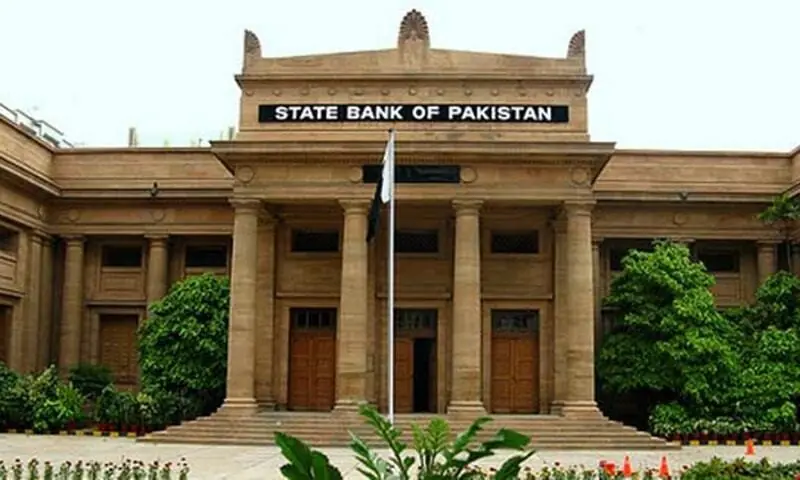
State Bank of Pakistan announces its National Conference on Pakistan's Economy in Karachi.
The State Bank Policy Rate is widely expected to remain unchanged when the State Bank of Pakistan (SBP) announces its latest monetary policy on Monday, July 27. Economists and financial analysts believe the central bank will maintain the benchmark interest rate as regional tensions and rising global oil prices continue to create uncertainty for Pakistan’s economy.
Regional Conflict Shapes Policy Outlook
Analysts say the ongoing conflict in the Gulf has pushed international oil prices above $100 per barrel, increasing inflationary risks for oil-importing economies, including Pakistan.
The higher energy costs have complicated the country’s economic outlook, prompting policymakers to adopt a cautious approach while monitoring global developments.
Punjab Flood Alert: Chenab Water Levels Ease as PMD Warns of Fresh Monsoon Spell from July 29
SBP Prioritizes Stability Over Growth
Market experts believe the State Bank is focused on preserving macroeconomic stability rather than stimulating economic growth through lower borrowing costs.
The central bank reduced its policy rate by 50 basis points to 10.5% in December 2025 before raising it to 11.5% in April 2026. Since then, it has resisted repeated demands from the business community for a reduction of at least 200 basis points.
Analysts expect policymakers to keep rates unchanged to avoid triggering fresh inflation while maintaining financial stability.
Inflation Remains a Key Concern
Although rising global oil prices have increased inflationary pressure, the federal government and the State Bank aim to keep average consumer inflation between 7% and 8% during FY2026-27.
Economists caution that achieving this target will largely depend on developments in the Middle East, where continued geopolitical tensions could keep energy prices elevated.
Private Sector Seeks Lower Borrowing Costs
Businesses have continued to call for lower interest rates to encourage investment and economic activity. However, commercial banks have largely preferred investing in government securities instead of expanding lending to private businesses.
During FY2025-26, banks invested approximately Rs5.9 trillion in government securities, while private-sector financing reached only Rs1.4 trillion, mostly for short-term working capital needs.
Market Expects No Surprise
Brokerage surveys indicate that more than 90% of market participants expect the State Bank to leave the policy rate unchanged. Only a small minority anticipates a modest increase.
Financial analysts say lowering interest rates could increase inflationary pressures, while raising rates would further slow economic growth. The World Bank recently projected Pakistan’s economic growth at below 4% for FY2026-27, slightly lower than the government’s target.
Outlook Depends on Global Developments
Economists believe Pakistan’s monetary policy outlook will continue to depend on developments in the Gulf region and international oil markets. Until inflation risks ease and regional uncertainty subsides, the State Bank is expected to maintain a cautious policy stance focused on protecting economic stability.