
Starmer exit: Keir Starmer steps down as UK political turmoil deepens
Britain set for seventh prime minister in a decade as Brexit legacy continues to drive instability.
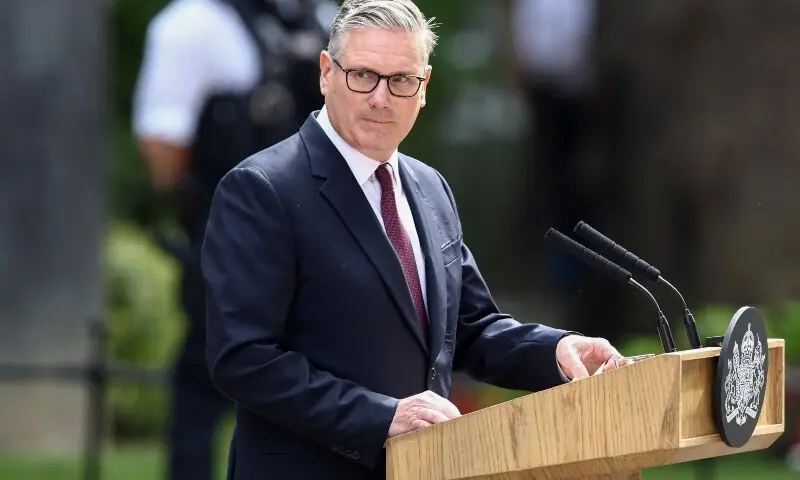
Keir Starmer announces resignation as Britain enters a new political phase.
LONDON — Starmer exit marks a major turning point in British politics as Prime Minister Keir Starmer announces he will step down, triggering fresh uncertainty and pushing the United Kingdom closer to its seventh leader in 10 years amid prolonged political turbulence.
The development comes against the backdrop of a decade of instability that began with the Brexit referendum, which reshaped Britain’s relationship with the European Union European Union and continues to define its domestic politics.
The crisis began in June 2016 when voters chose to leave the bloc, prompting then-Prime Minister David Cameron to resign. He was succeeded by Theresa May, who struggled to secure a parliamentary consensus on withdrawal terms and ultimately stepped down.
Her successor, Boris Johnson, delivered the slogan “Get Brexit Done” and secured a decisive election victory in 2019, later overseeing Britain’s formal exit from the EU in January 2020.
Salary hike: Jamaat-e-Islami Hafiz Naeem demands pay rise for private sector workers
Political instability returned after Johnson’s resignation in 2022, followed by the brief premiership of Liz Truss, whose economic programme triggered market turmoil and led to her departure after just 44 days. She was replaced by Rishi Sunak, who pledged to restore fiscal stability.
The latest phase of instability has unfolded under Starmer’s leadership, with growing pressure over economic conditions, welfare reforms and internal party divisions. Rising inflation, fiscal constraints and political fragmentation have further strained governance.
In recent months, opposition forces including Reform UK Reform UK, led by Nigel Farage, have gained traction in national polling, reflecting voter dissatisfaction with mainstream parties.
Labour’s internal tensions have also intensified. Former health minister Wes Streeting resigned amid leadership concerns, while Defence Minister John Healey also stepped down following disputes over defence spending priorities.
Greater Manchester Mayor Andy Burnham has emerged as a potential challenger within Labour after electoral gains that weakened Reform UK in key contests.
Since Brexit, Britain has faced persistent challenges including slow economic growth, rising public debt and an expanding welfare burden. Analysts say these pressures have intensified political fragmentation and shortened the lifespan of recent governments.
The resignation of Starmer signals yet another reset in British politics, with the country now confronting renewed uncertainty over leadership, economic direction and its post-Brexit identity.