Pakistani cinema: Mehreen Jabbar reflects on TV, films and storytelling
The acclaimed director discusses realism, the state of television, and why she still dreams of returning to film.
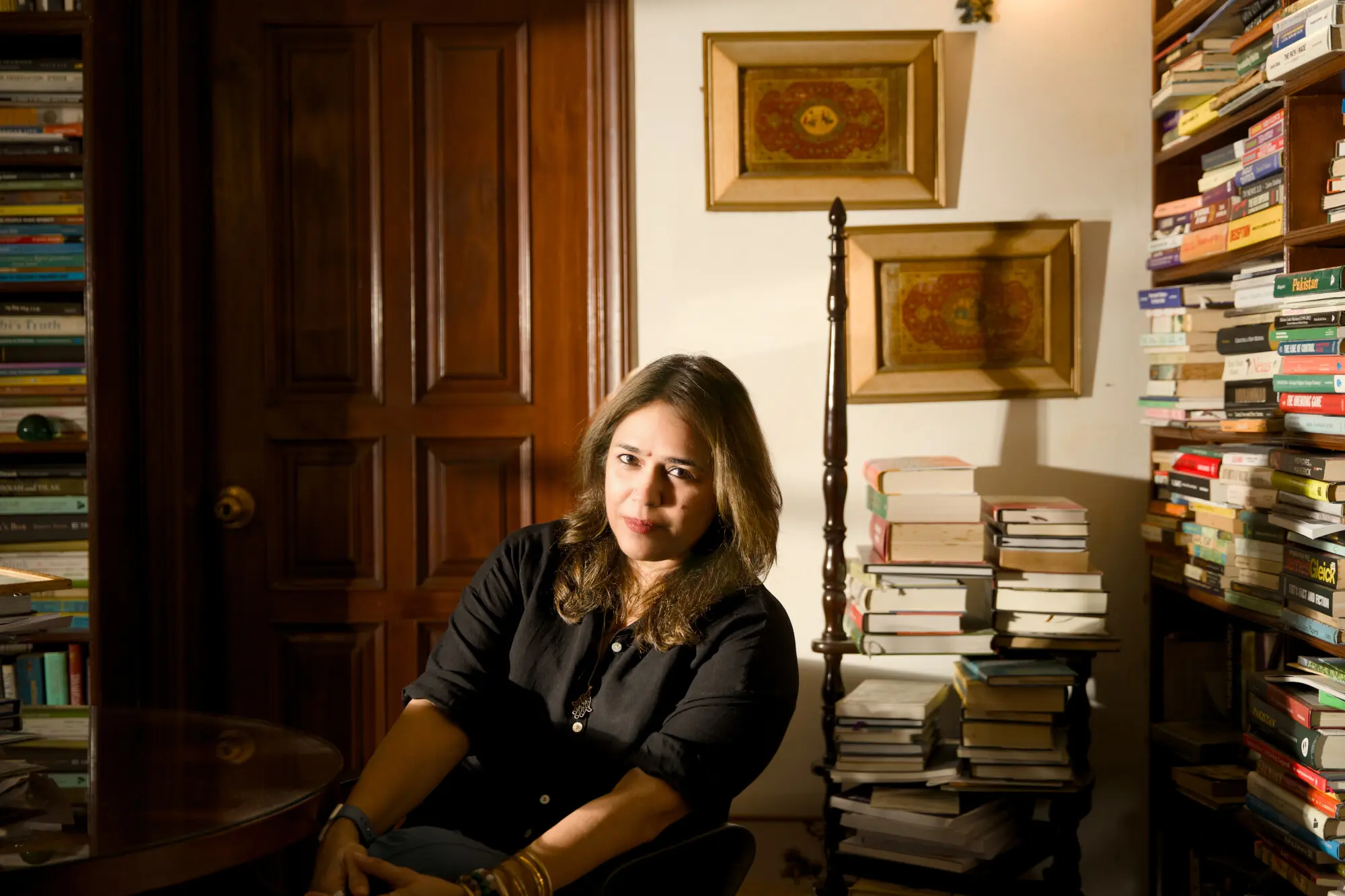
Mehreen Jabbar discusses her career and Pakistani cinema in Karachi interview.
Karachi — The conversation on Pakistani cinema unfolds on a humid Sunday afternoon in Karachi, where acclaimed director Mehreen Jabbar reflects on her career, the evolution of television drama, and her long-standing ambition to return to feature filmmaking.
Jabbar, currently receiving strong reviews for her television serial Dr Bahu, says the project was initially brought to her by actor-producer Humayun Saeed through his production house Six Sigma, with director Nadeem Baig encouraging her to take on the script despite her initial hesitation to return to long-form TV.
She explains that although the drama appeared to be a conventional family story, it was ultimately “fast-paced and layered”, and featured a strong female character with agency rather than a stereotypical portrayal of victimhood.
Across a career spanning more than three decades, Jabbar has directed several acclaimed television projects and films, including Ramchand Pakistani and Dobara Phir Se, both of which were widely discussed in the industry upon release.
Reflecting on the industry, she says technical standards have improved significantly over the years, although she believes production practices still operate under tight constraints. Some work, she notes, is still carried out with outdated equipment, and crews often manage demanding schedules on limited budgets.
However, she argues that content has become less experimental. According to her, the era when fewer television channels existed allowed greater creative freedom, as programming was not driven as heavily by ratings pressure.
She recalls earlier work such as Faraar, Putli Ghar, and Sham Se Pehlay, which explored unconventional themes ranging from independent women in Karachi to psychological drama and late-life romance.
Starmer exit: Keir Starmer steps down as UK political turmoil deepens
Jabbar also highlights concerns about industry economics, saying payment delays remain a persistent issue. She notes that a chain of delayed advertising revenue often results in production houses and crews being paid late, a problem she believes has worsened over time.
In her approach to filmmaking, she describes a preference for realism and restraint. Many of her characters, she says, are deliberately kept naturalistic, avoiding heavy styling to preserve authenticity. This style is evident in Dr Bahu, where actor Saba Hameed appears in a more subdued and realistic portrayal compared with some of her earlier roles.
Jabbar identifies herself with neorealism and says she often prefers long takes, arguing that excessive editing can dilute emotional intensity. At the same time, she acknowledges she is deeply rooted in television production and would need to consciously adjust her approach when returning to cinema.
She confirms that she is developing ideas for a future film, including both a psychological thriller and a social drama, but says financing and full creative commitment remain key challenges.
According to her, filmmaking requires total immersion, unlike television where projects are shorter and more structured. “A film lives with you for years,” she notes, describing cinema as a long creative process from writing to final release.
Jabbar also points to structural challenges in Pakistani cinema, including limited theatres and uneven production output. She argues that without expansion in exhibition infrastructure, the industry risks remaining stuck in a cycle of low output and limited reach.
While she rejects the idea that films should be judged against television aesthetics, she stresses that storytelling should always dictate form rather than scale or spectacle.
Beyond her professional life, Jabbar divides her time between Karachi and New York, describing one as a creative base and the other as a personal space for reflection and independence.
She says her perspective on life has shifted with age, marked by greater calm, self-assurance and reduced concern about external opinions. That sense of quiet introspection, she suggests, now influences her storytelling style as much as technical craft.
As the interview draws to a close, Jabbar returns to a theme that has defined her career: the enduring appeal of human stories. “There are so many facets of human behaviour to explore,” she says, adding that her interest lies in the “hidden emotional lives” of people.