Sindh’s Energy Wealth Has Yet to Deliver Broad-Based Prosperity
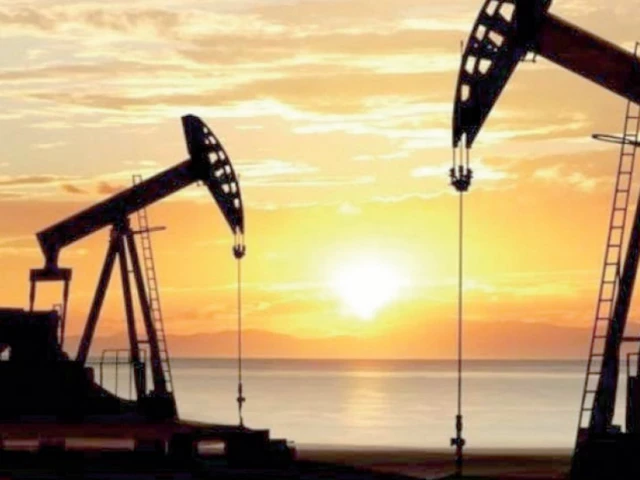
Sindh remains Pakistan’s major oil and gas producing province, but its resource wealth has yet to deliver broad-based prosperity.
Sindh is geographically about 29% larger than South Korea. Yet its economy, estimated at around $135 billion, remains far smaller than South Korea’s.
The contrast is striking. South Korea has limited indigenous energy resources and relies heavily on imports. Its energy import bill reached about $140 billion last year.
Sindh, by comparison, has supplied Pakistan with oil and gas for decades. However, its energy wealth has not translated into comparable improvements in living standards.
Sindh Remains Pakistan’s Energy Basket
Sindh has played a central role in Pakistan’s oil and gas sector since the country’s early years.
Of roughly 1,250 exploratory wells drilled across Pakistan since independence, about 66% have been drilled in Sindh. As a result, the province has remained at the centre of the country’s hydrocarbon industry.
Production began at the historic Mari discovery in 1967. By 1980, Mari was contributing about 6% of Pakistan’s indigenous gas production. By 1985, that share had increased to 23%.
The contribution grew further as additional fields came online. By 1995, Sindh supplied around 58% of Pakistan’s indigenous oil production and 37% of its gas.
Meanwhile, the province’s share reached about 60% for oil and 66% for natural gas by 2005.
The addition of northern fields later reduced Sindh’s oil share to about 38% by 2015. However, its contribution to national gas production remained around 66%.
The province continues to add new reserves. Recent discoveries such as Soho-1, Bobby Deep-1 and Shams-1 illustrate the remaining potential.
Vast Potential, Limited Development
Sindh remains significantly underexplored. Therefore, its role in Pakistan’s energy sector could continue for decades.
Netherlands Moves 86 Tonnes of Gold to London Amid Rising Geopolitical Risks
An intensive exploration programme could unlock even more reserves. Such a campaign could combine advanced geological studies, 3D seismic surveys and deep or ultra-deep exploratory wells.
Yet, the province faces a major contradiction. Sindh supplies a substantial share of Pakistan’s energy, but only around 10% to 15% of homes in interior Sindh are connected to piped gas.
The development gap extends beyond energy access. According to a government study on the Multidimensional Poverty Index, around 40% of Sindhis were multidimensionally poor.
The index measures several dimensions of deprivation, including health, education and living standards.
Poverty and Education Remain Major Challenges
The latest Pakistan Economic Survey also points to worsening poverty. Between FY2019 and FY2025, the share of Sindhis living below the poverty line increased by 8.1%, according to the figures cited in the analysis.
Education presents another serious challenge. According to UNICEF data cited in the analysis, 44% of children aged between five and 16 in Sindh are out of school.
The situation is even more troubling among vulnerable communities. The Hari Welfare Association has reported that Sindh has around 1.7 million bonded labourers, including about 700,000 children.
These figures raise a fundamental question: why has decades of energy production failed to generate broader prosperity in the communities surrounding major oil and gas fields?
Resource-Rich Districts Still Lag Behind
The development gap becomes clearer when individual districts are examined.
A recent SDPI study placed Badin and Sujawal among Sindh’s five lowest districts on the Human Development Index. Notably, both are major exploration and production districts.
Badin recorded an HDI score of 0.385, while Sujawal scored 0.308. Tharparkar, another resource-rich district known for its coal reserves, recorded an even lower score of 0.251.
HDI measures average socioeconomic conditions through indicators linked to health, education and living standards.
Ghotki provides another example. The district hosts the Mari and Qadirpur gas fields, among Pakistan’s largest gas-producing fields. Despite this, its literacy rate stands at only about 42%.
The cited SDPI study ranked Ghotki 57th among 116 districts. Its HDI score barely places it in the medium human development category.
Jacobabad ranked even lower at 68. Badin stood at 93 and fell within the low human development category.
By contrast, Islamabad topped the cited ranking with an HDI score of 0.92.
Karachi Dominates Sindh’s Economy
Sindh has more than 120 oil and gas fields. In theory, this resource base could support industrial and commercial clusters across the province.
Instead, most major industry remains concentrated in Karachi. As a result, Karachi contributes more than 80% of Sindh’s GDP, according to the figures cited in the analysis.
This economic concentration also influences the province’s political debate. In particular, the idea of making Karachi a separate province has periodically gained attention.
The concentration of industry and commerce may also have wider social consequences. Industrialisation can create jobs, expand skills and increase economic mobility. However, those benefits have not spread evenly across Sindh.
Land Ownership Adds to the Challenge
The province’s feudal structure remains another major obstacle to inclusive development.
A study by the Pakistan Institute of Education and Research found that 76% of rural families in Sindh are landless and work as tenants on land owned by large landholders.
At the same time, agricultural taxation remains limited. Despite repeated calls for stronger taxation of large landowners, all four provinces collectively collected only Rs5.62 billion in agricultural income tax during FY2025-26, according to the figures cited.
This creates a difficult development equation. Sindh possesses major energy resources, agricultural land and a large workforce. Yet, wealth and economic opportunity remain heavily concentrated.
What Sindh Can Do With Its Energy Wealth
Sindh needs a development strategy that connects resource wealth with local economic opportunity.
The most practical starting point could be the districts that already produce oil and gas. In FY2024-25 alone, Sindh collected around Rs60 billion in royalties from oil and gas fields.
Strategic investment of these funds could transform producing districts into stronger economic centres.
For example, technical and vocational education could become a priority. Skills-based training would allow young people to access jobs in energy, manufacturing, agriculture and services.
Community-based industrial cooperatives could provide another pathway. In particular, small factories could focus on food processing and products needed by the energy sector.
Such industries would create local employment while reducing dependence on imported products.
Land Reform and Human Capital
Skills development alone will not resolve Sindh’s structural problems. Therefore, land reform also deserves renewed attention.
South Korea provides a useful historical comparison. The country implemented major land reforms in the early 1950s and limited household landholdings to about 7.4 acres.
The reform helped broaden land ownership and supported a wider transformation of the rural economy.
Sindh faces very different political and economic circumstances. Nevertheless, the broader lesson remains relevant: inclusive development requires access to assets, education, skills and productive employment.
Turning Energy Wealth Into Inclusive Growth
Sindh has already demonstrated that it can supply enormous amounts of energy to Pakistan. The next challenge is to ensure that the communities producing that energy also share in its benefits.
That requires more than new discoveries. Instead, the province needs targeted investment in education, skills, healthcare, infrastructure, industrialisation and local enterprise.
Oil and gas royalties can help finance that transformation. Meanwhile, better data, transparent spending and district-level development plans can ensure that resource wealth reaches the areas where it originates.
The comparison with South Korea ultimately highlights a larger lesson. Natural resources alone do not create prosperity.
Human capital, land reform, industrialisation, effective institutions and inclusive economic policies do.
Sindh already has the energy resources. The real challenge is turning those resources into better lives for the millions of people who live above and around them.