

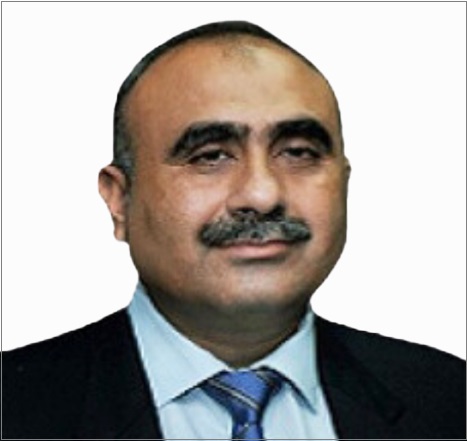
Khurram Ijaz calls for an independent review of Pakistan Customs' assessment model.
Power Sector Reforms must become an immediate priority as Pakistan’s electricity consumers continue to bear the financial burden of inefficiencies and delayed restructuring, Khurram Ijaz, Secretary General of the Businessmen Panel Progressive (BMPP) and former Vice President of the Federation of Pakistan Chambers of Commerce and Industry (FPCCI), said on Thursday.
Referring to the Auditor General of Pakistan’s Audit Report 2025-26, Ijaz urged the federal government to review the Debt Service Surcharge (DSS), arguing that the Rs3.23-per-unit levy has shifted the cost of institutional shortcomings onto households and businesses.
He said the audit highlights a significant gap between the government’s stated reform agenda and the actual performance of the power sector. Although the National Electricity Policy and the National Electricity Plan (2023-27) aim to establish a competitive, consumer-oriented and financially sustainable electricity market, the audit found that the sector recorded average deficits equivalent to 2.8 per cent of GDP between FY2014 and FY2024.
Ijaz noted that while circular debt declined from Rs2.39 trillion in June 2024 to Rs1.61 trillion by June 2025, the Auditor General concluded that the reduction resulted primarily from commercial borrowing and fiscal interventions rather than long-term structural reforms.
Gwadar Special Economic Zone: ABAD urges government to activate SEZ to boost trade and investment
He said relying on borrowing to reduce circular debt merely postpones the underlying problem while consumers continue to face rising electricity bills.
The audit also identified persistent operational inefficiencies within public sector power distribution companies (DISCOs). According to the report, DISCOs recorded nearly Rs265 billion in transmission and distribution losses and another Rs132 billion in poor recoveries during FY2024-25, significantly contributing to the circular debt crisis.
Ijaz said these figures demonstrate that key challenges, including electricity theft, technical losses, weak recoveries and governance failures, remain unresolved despite repeated reform commitments.
He also referred to the Auditor General’s observation questioning the fairness of imposing the Debt Service Surcharge on K-Electric consumers, despite the utility not contributing to the country’s circular debt. He said the issue raises broader concerns about transparency, consumer rights and equitable tariff policies.
According to the audit, actual transmission and distribution losses reached 17.55 per cent during FY2024-25, well above the National Electric Power Regulatory Authority’s approved benchmark of 11.77 per cent. Ijaz said electricity theft, defective metering, inaccurate billing and delayed recoveries continue to place additional financial pressure on consumers who regularly pay their bills.
He warned that recurring complaints regarding overbilling and billing inaccuracies have weakened public confidence in electricity distribution companies.
Ijaz also highlighted the country’s ageing transmission infrastructure, saying delays in upgrading the network contributed to capacity payments of nearly Rs1.9 trillion during FY2024-25 because available electricity generation could not be fully transmitted.
While welcoming the government’s proposed 800-megawatt market allocation and wheeling initiative, he said the measure alone would not introduce sufficient competition or reduce dependence on the existing single-buyer electricity model.
He called on the government to undertake a comprehensive review of electricity tariffs, reconsider the Debt Service Surcharge and accelerate structural reforms by improving DISCO governance, strengthening anti-theft measures, modernising transmission infrastructure, enhancing billing systems and encouraging greater private sector participation.
Ijaz said Pakistan’s industrial sector cannot improve its global competitiveness while electricity prices remain inflated by systemic inefficiencies instead of actual production costs. He added that lasting reforms, rather than temporary financial measures, are essential to protect consumers and restore confidence in the country’s power sector.