Pakistan’s Industrial Policy: The Real Test Begins Now
Economic analyst says long-term policy consistency, manufacturing growth, and export competitiveness will determine the success of Pakistan’s industrial reform agenda.
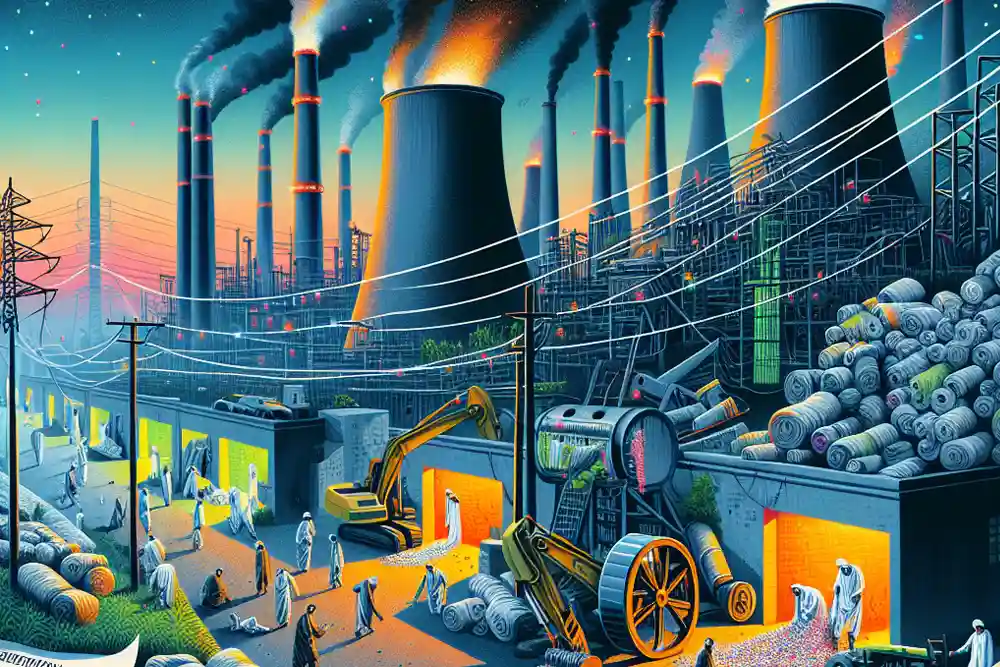
Industrial policy reforms aim to strengthen Pakistan's manufacturing sector and boost export competitiveness.
By: Shahid Anwar
 Every budget season, Pakistan’s economic debate follows a familiar pattern. We discuss taxes, inflation, electricity prices, interest rates, the exchange rate and the IMF program. These are important issues, but they are largely about managing today’s economy. Far less attention is paid to a more fundamental question: What should Pakistan produce to build tomorrow’s economy?
Every successful economy answers this question early. Pakistan has been debating it for decades.
Countries do not become industrial economies by accident. They become industrial economies by design. That is where industrial policy becomes important.
Industrial policy is often misunderstood as just another government document. In reality, it is a country’s long-term production strategy. At its best, it helps overcome market failures, encourages investment in competitive industries, promotes innovation, builds skilled human capital and integrates domestic firms into global value chains. It provides businesses with a clear sense of direction while enabling governments to align trade, taxation, infrastructure, skills development and technology policies behind a common national objective.
History offers ample evidence. South Korea, China, Vietnam and, more recently, Bangladesh did not build globally competitive manufacturing sectors through market forces alone. Each pursued a long-term industrial strategy, adapted it over time and, most importantly, implemented it consistently.
Against this backdrop, the government’s move to outline the National Industrial Policy 2025–30 as part of a broader industrial revival agenda is a welcome step. It reflects an important recognition: sustainable economic growth cannot be achieved through macroeconomic stabilization alone. A stronger manufacturing base is essential if Pakistan is to raise productivity, diversify exports and create quality jobs for its growing young population. But outlining a policy framework is the easier part.
Implementing it consistently is where the real challenge begins.
Pakistan’s problem has rarely been a lack of ideas. It has been the inability to convert good ideas into sustained action. Governments change, priorities shift, institutions often work in isolation and policies are revised before they have sufficient time to produce results. The country has introduced industrial strategies, export frameworks, SME programs and investment initiatives over the years. Many were well conceived. Few achieved their full potential because implementation lacked continuity.
This is perhaps Pakistan’s biggest economic policy challenge.
The country does not have an industrial policy deficit as much as it has an implementation deficit.
That distinction matters because investors do not make billion-rupee decisions on the basis of policy announcements. They invest when they believe the policy environment will remain broadly predictable over the life of their investment. A factory is built for decades, not for a single budget cycle.
The timing is significant. After several years of economic stress, Pakistan has regained a measure of macroeconomic stability. Inflation has eased, external pressures have moderated and industrial activity has begun to recover. According to the latest Economic Survey, the industrial sector returned to positive growth during FY2025–26, creating an opportunity to shift the national conversation from economic stabilization to long-term economic transformation. That opportunity should not be wasted.
The consequences of policy inconsistency remain visible across the economy. Manufacturing has struggled for years to increase its contribution to national output, while Pakistan’s export basket remains concentrated in a relatively narrow range of products, with textiles continuing to dominate merchandise exports. Businesses continue to face high energy costs, regulatory complexity, limited access to finance and uncertainty about future policies. Small and medium enterprises, which account for around 90 percent of businesses in Pakistan, still face barriers that limit their productivity, innovation and export potential.
The biggest cost of policy inconsistency is not only what Pakistan has lost. It is what Pakistan never had the chance to build. It is measured in factories that were never established, investments that were never made, technologies that were never adopted, products that were never exported and productive jobs that were never created. These missed opportunities rarely appear in official statistics, yet they quietly reduce Pakistan’s long-term economic potential year after year.
Pakistan can draw an important lesson from the experience of successful industrial economies. Industrial policy cannot be treated as the responsibility of one ministry alone. It must become a whole-of-government strategy. Decisions on taxation, tariffs, energy pricing, infrastructure, technical education, investment promotion, trade facilitation and innovation all influence industrial competitiveness. If these policies move in different directions, industrial policy will struggle to achieve its objectives.
The government’s broader Uraan Pakistan vision rightly emphasizes exports, digital transformation, energy, environmental sustainability and inclusive growth. A competitive industrial sector is the common thread that connects all these priorities. Without stronger manufacturing, export diversification will remain limited. Without technology-intensive industries, productivity gains will remain modest. Without productive enterprises, creating quality jobs for Pakistan’s rapidly growing workforce will remain an uphill task.
The encouraging news is that the government has begun pursuing tariff rationalization, investment facilitation measures and sector-specific industrial initiatives while outlining the National Industrial Policy framework. These reforms point in the right direction. Whether the policy is ultimately viewed as a formal document, a policy framework or an evolving reform agenda is less important than whether it changes investment decisions, strengthens manufacturing and improves export competitiveness.
If the industrial reform agenda is to succeed, four conditions are essential.
First, policy stability must become non-negotiable. Investors need confidence that taxation, tariffs and industrial incentives will remain reasonably predictable over the medium term. Long-term investments cannot flourish in an environment of frequent policy reversals.
Second, Pakistan should focus on sectors where it can build genuine international competitiveness rather than attempting to support every industry equally. Public support should encourage productivity, exports, innovation and technology adoption instead of creating permanent dependence on protection.
Third, SMEs deserve far greater policy attention. Easier access to finance, simplified regulations, stronger technology support and better integration into domestic and global value chains would enable thousands of smaller businesses to become engines of industrial growth, exports and employment.
Finally, implementation should receive the same attention as policy formulation. Clear targets, annual public progress reports and independent performance reviews would strengthen accountability, improve policy credibility and build investor confidence.
Pakistan possesses many strengths: a young workforce, entrepreneurial businesses, a strategic geographic location and a large domestic market. What has often been missing is consistency. Industrial transformation is not achieved through one policy announcement or one budget. It is achieved through years of predictable decisions that encourage businesses to invest, innovate and compete.
For decades, Pakistan’s economic conversation has focused largely on how to manage growth. The next stage of that conversation must focus on something even more fundamental—how to create it.
Budgets determine how governments spend money. Industrial policy helps determine how nations earn it. Pakistan has produced many sound policy documents over the years. Some were ambitious, others were well researched, and many identified the right priorities. Yet history offers a consistent lesson: policies do not transform economies, consistent implementation does.
The government’s industrial reform agenda presents an opportunity to place Pakistan on a more productive, competitive and export-oriented path. Whether that opportunity is realized will depend not on the quality of policy documents, but on the consistency with which they are implemented and the confidence they inspire among businesses and investors.
The real challenge, therefore, is no longer deciding what needs to be done. It is doing what has already been decided. Pakistan’s economic future will depend less on the policies it announces and more on the consistency with which it implements them.
[The writer is an Economic Analyst and former Secretary General of the Federation of Pakistan Chambers of Commerce and Industry (FPCCI). He has also served as Senior Director Research at the Institute of Cost and Management Accountants of Pakistan (ICMAP). He can be reached at shahid.anwar.writer.26@gmail.com]