Pakistan, IMF Reach Agreement on New Auto Sector Policy Framework
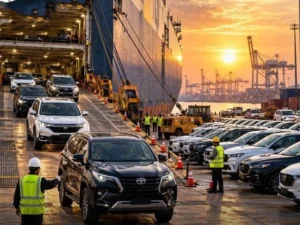
The government and the International Monetary Fund (IMF) have reached a preliminary agreement on a new auto sector policy framework aimed at liberalising imports, reducing tariffs, and improving competitiveness in the domestic automobile market.
The government and the International Monetary Fund (IMF) have reached a preliminary agreement on a new auto sector policy framework aimed at liberalising imports, reducing tariffs, and improving competitiveness in the domestic automobile market.
Pentagon Unveils Record $1.5 Trillion Defense Budget, Marking Largest Post-WWII Increase
According to official documents, the policy is expected to be finalised by the federal government this month before being submitted to the IMF for formal approval. It will subsequently be placed before the federal cabinet for endorsement next month.
Under the proposed framework, additional customs duties and regulatory duties on imported vehicles will be gradually phased out over the next four years. Authorities have agreed on a structured reduction plan designed to ensure a smooth transition while limiting immediate market disruption.
Sources in the Ministry of Industries and Production said that customs duty rates will be progressively reduced until 2030, with the broader objective of creating a more transparent and competitive import regime. The reforms are part of wider structural adjustments linked to Pakistan’s ongoing IMF programme.
A key feature of the policy is the relaxation of import restrictions on used vehicles. After fiscal year 2027, vehicles up to seven years old will be permitted for import, marking a significant shift in existing regulatory limits.
In addition, from FY2027 onwards, additional duties on vehicles will be reduced by 10 percent annually under a phased liberalisation plan, aimed at aligning Pakistan’s auto trade regime with international standards.
The government also plans to introduce the Motor Vehicle Development Act in Parliament to strengthen safety standards and regulate local manufacturing practices. The legislation is expected to ensure compliance with modern safety and production benchmarks across the domestic auto industry.
Officials say the policy is designed to balance consumer choice, industry competitiveness, and fiscal sustainability, while aligning with broader IMF-backed economic reforms.